Kagoshima to Osaka is 342 miles (550 km), a flight of about 55 minutes.
Right-side seats win for the full journey: Sakurajima and Kinko Bay dominate the departure, and the flight path northwestward means right seats maintain better views of the Seto Inland Sea's eastern passages and coastal features during cruise before the landing approach favors left seats.
Flight Path
The flight path crosses the Seto Inland Sea, passing over or near the Bisan Strait. Right-side passengers see the eastern Seto Inland Sea's island chains (Itsukushima and surrounding islands) and the Hiroshima Bay region. The terrain transitions from volcanic Kyushu to the more complex island geography of the Seto Inland Sea, with numerous small islands and shipping lanes visible at cruise altitude.
Great circle distance and headings ›Phase by phase
Takeoff from KOJ
RIGHTRight-side seats capture the Kinko Bay inlet and Sakurajima volcano immediately after departure. Kagoshima typically departs runway 34 (northeast heading), so right seats face toward the bay and volcanic landscape that dominates the region.
Landing at ITM
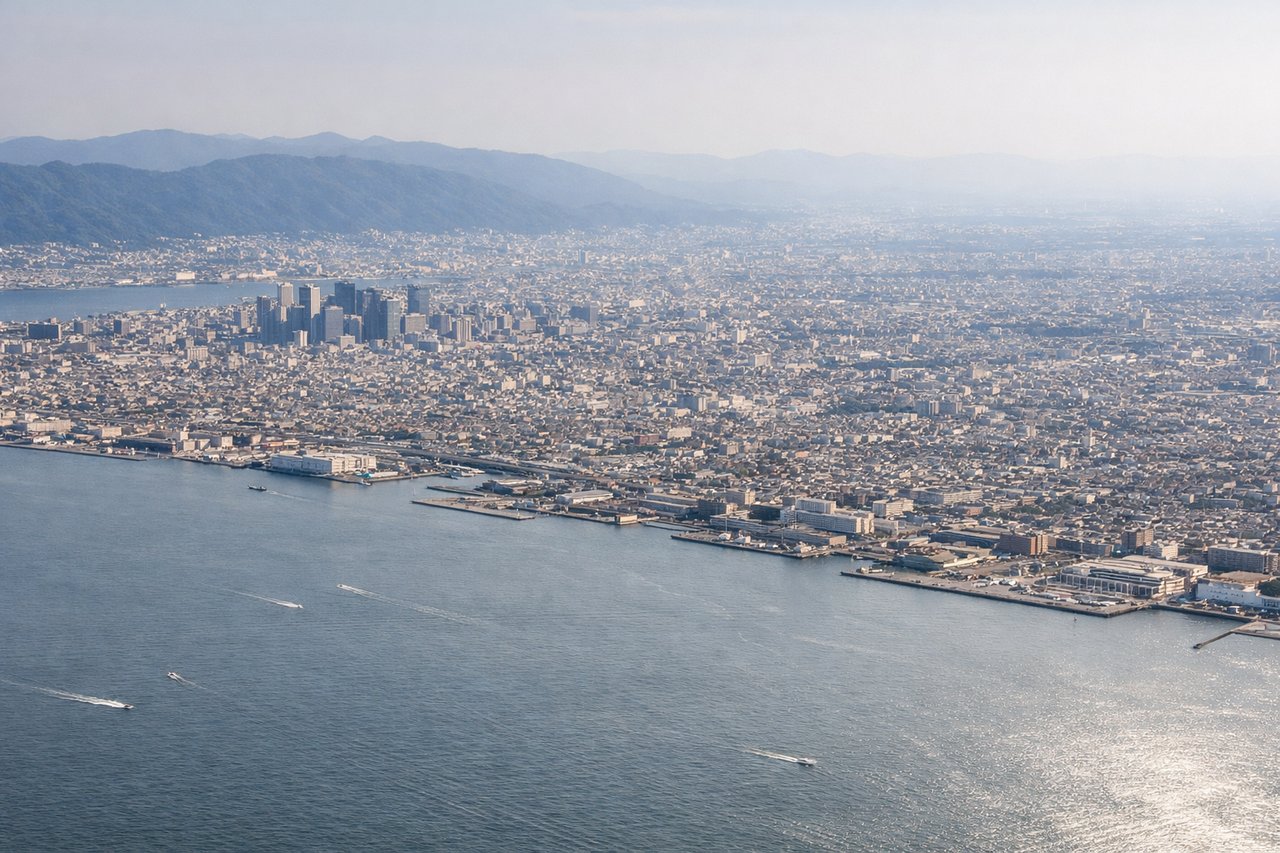
LEFTLeft-side seats provide views of Osaka Bay's eastern shoreline and the Yodo River delta as you descend into Itami. Itami typically uses runway 32 (northwest approach), so left seats face the bay and coastal features during final approach.
Will your flight be in sunlight?
Pick a date and time in the Sun Map to watch the sun move across your whole flight.
About This Route
Which side of the plane should I sit on flying from Kagoshima (KOJ) to Osaka International (ITM)?
Sit on the Right side of the plane for the best views on flights from Kagoshima to Osaka. Right-side seats win for the full journey: Sakurajima and Kinko Bay dominate the departure, and the flight path northwestward means right seats maintain better views of the Seto Inland Sea's eastern passages and coastal features during cruise before the landing approach favors left seats.
What can I see during takeoff from Kagoshima in Kagoshima?
During takeoff from Kagoshima (KOJ), sit on the Right side for the best views. Right-side seats capture the Kinko Bay inlet and Sakurajima volcano immediately after departure. Kagoshima typically departs runway 34 (northeast heading), so right seats face toward the bay and volcanic landscape that dominates the region. Notable sights include: Sakurajima volcano (active, distinctive cone), Kinko Bay (sheltered water body), Kagoshima city grid (visible below), Aira Caldera rim (distant western highlands).
What can I see when landing at Osaka International in Osaka?
When landing at Osaka International (ITM), sit on the Left side for the best views. Left-side seats provide views of Osaka Bay's eastern shoreline and the Yodo River delta as you descend into Itami. Itami typically uses runway 32 (northwest approach), so left seats face the bay and coastal features during final approach. Notable sights include: Osaka Bay (large water body with shipping traffic visible), Yodo River delta (distinctive braided channels), Kobe city waterfront (distant across the bay), Rokko Mountains (dark ridge on the far shore).
How long is the flight from Kagoshima to Osaka?
The flight from Kagoshima (KOJ) to Osaka International (ITM) takes about 55 minutes. The shortest flight path between them is 342 miles (550 km); winds and air traffic control usually add a few percent.
What does the Kagoshima to Osaka flight path pass over?
The flight path crosses the Seto Inland Sea, passing over or near the Bisan Strait. Right-side passengers see the eastern Seto Inland Sea's island chains (Itsukushima and surrounding islands) and the Hiroshima Bay region. The terrain transitions from volcanic Kyushu to the more complex island geography of the Seto Inland Sea, with numerous small islands and shipping lanes visible at cruise altitude.