Osaka to Kagoshima is 342 miles (550 km), a flight of about 55 minutes.
Right seats capture the most dramatic scenery on both legs: Osaka Bay and the Kobe waterfront during takeoff, then views of the Seto Inland Sea's islands and Kyushu's western coastline during the cruise and descent phases.
Flight Path
During cruise, the flight passes over the Seto Inland Sea, one of Japan's most geographically distinctive features. You'll see hundreds of small islands, the narrow straits connecting them, and the mountainous terrain of the Chugoku region to the north and Shikoku to the south. The Seto Inland Sea's intricate island geography is visible from altitude and creates a striking patchwork of blue water and green landmasses. As you progress southwestward toward Kagoshima, the landscape becomes more rural with fewer islands, and the volcanic geology of Kyushu becomes increasingly apparent in the terrain.
Great circle distance and headings ›Phase by phase
Takeoff from ITM
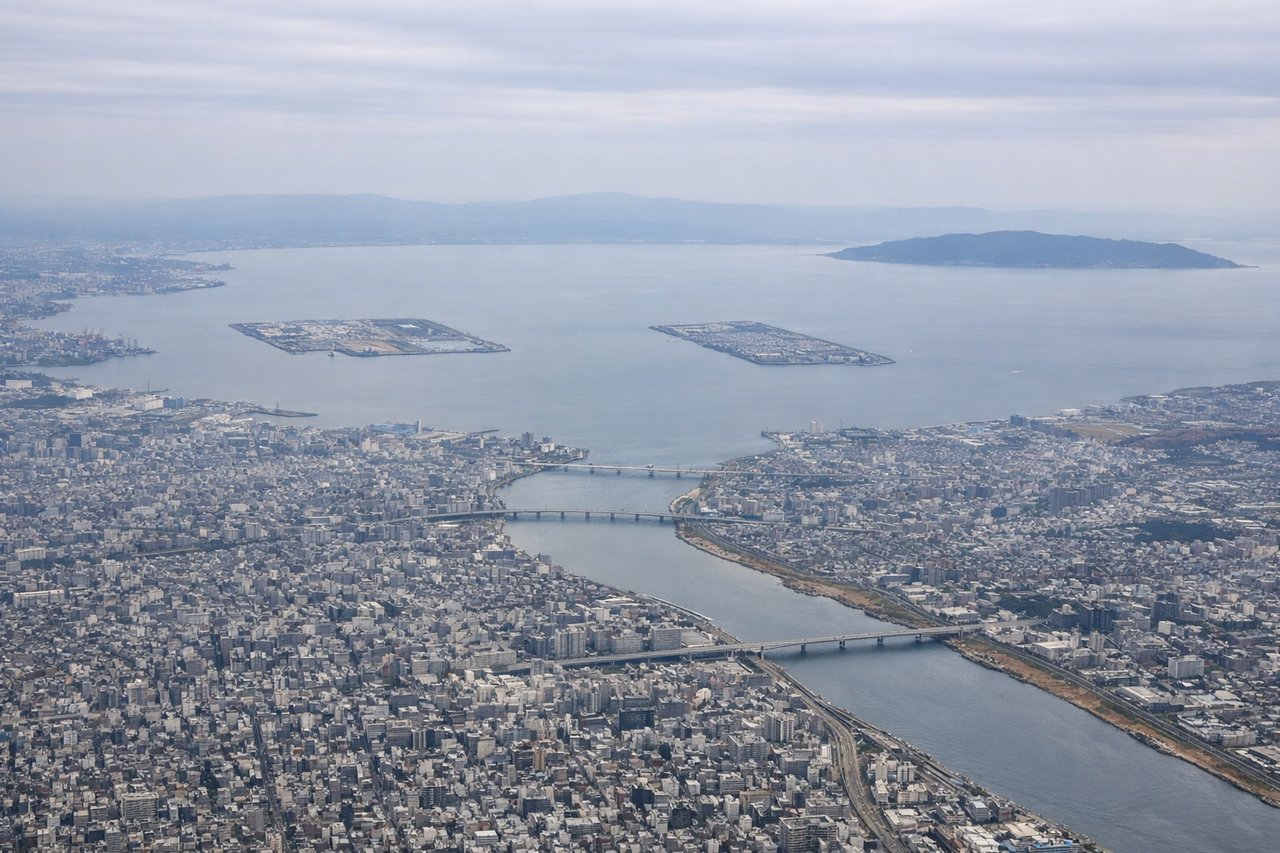
RIGHTRight-side seats offer views of Osaka Bay and the Kobe-Osaka urban corridor as you climb southwestward. The bay's distinctive shape and coastal development are immediately visible during the initial climb.
Landing at KOJ
LEFTLeft-side seats provide excellent views during descent into Kagoshima, including Kinko Bay's distinctive shape and the Satsuma Peninsula. You'll see the volcanic landscape and coastal geography that defines the approach corridor.
Will your flight be in sunlight?
Pick a date and time in the Sun Map to watch the sun move across your whole flight.
About This Route
Which side of the plane should I sit on flying from Osaka International (ITM) to Kagoshima (KOJ)?
Sit on the Right side of the plane for the best views on flights from Osaka to Kagoshima. Right seats capture the most dramatic scenery on both legs: Osaka Bay and the Kobe waterfront during takeoff, then views of the Seto Inland Sea's islands and Kyushu's western coastline during the cruise and descent phases.
What can I see during takeoff from Osaka International in Osaka?
During takeoff from Osaka International (ITM), sit on the Right side for the best views. Right-side seats offer views of Osaka Bay and the Kobe-Osaka urban corridor as you climb southwestward. The bay's distinctive shape and coastal development are immediately visible during the initial climb. Notable sights include: Osaka Bay, Kobe city waterfront, Akashi Strait, Awaji Island.
What can I see when landing at Kagoshima in Kagoshima?
When landing at Kagoshima (KOJ), sit on the Left side for the best views. Left-side seats provide excellent views during descent into Kagoshima, including Kinko Bay's distinctive shape and the Satsuma Peninsula. You'll see the volcanic landscape and coastal geography that defines the approach corridor. Notable sights include: Kinko Bay, Satsuma Peninsula, Sakurajima volcano, Kyushu's southern coastline.
How long is the flight from Osaka to Kagoshima?
The flight from Osaka International (ITM) to Kagoshima (KOJ) takes about 55 minutes. The shortest flight path between them is 342 miles (550 km); winds and air traffic control usually add a few percent.
What does the Osaka to Kagoshima flight path pass over?
During cruise, the flight passes over the Seto Inland Sea, one of Japan's most geographically distinctive features. You'll see hundreds of small islands, the narrow straits connecting them, and the mountainous terrain of the Chugoku region to the north and Shikoku to the south. The Seto Inland Sea's intricate island geography is visible from altitude and creates a striking patchwork of blue water and green landmasses. As you progress southwestward toward Kagoshima, the landscape becomes more rural with fewer islands, and the volcanic geology of Kyushu becomes increasingly apparent in the terrain.