While takeoff favors the right for Kuala Lumpur's highlands, the landing view of Sydney Harbour, the Blue Mountains, and the city approach is significantly more dramatic and memorable. The landing experience outweighs the takeoff advantage.
Flight Path
The flight path crosses the South China Sea, passing over or near the Sunda Strait (between Sumatra and Java), then continues southeast over the Indian Ocean. Around the midpoint, you'll be over open ocean with no major landmarks visible. As you approach Australia, the Timor Sea is crossed, followed by the approach to the Australian continent. The Great Dividing Range becomes visible inland from Sydney during the descent phase.
Great circle distance and headings ›


.jpg?width=600)
Phase by phase
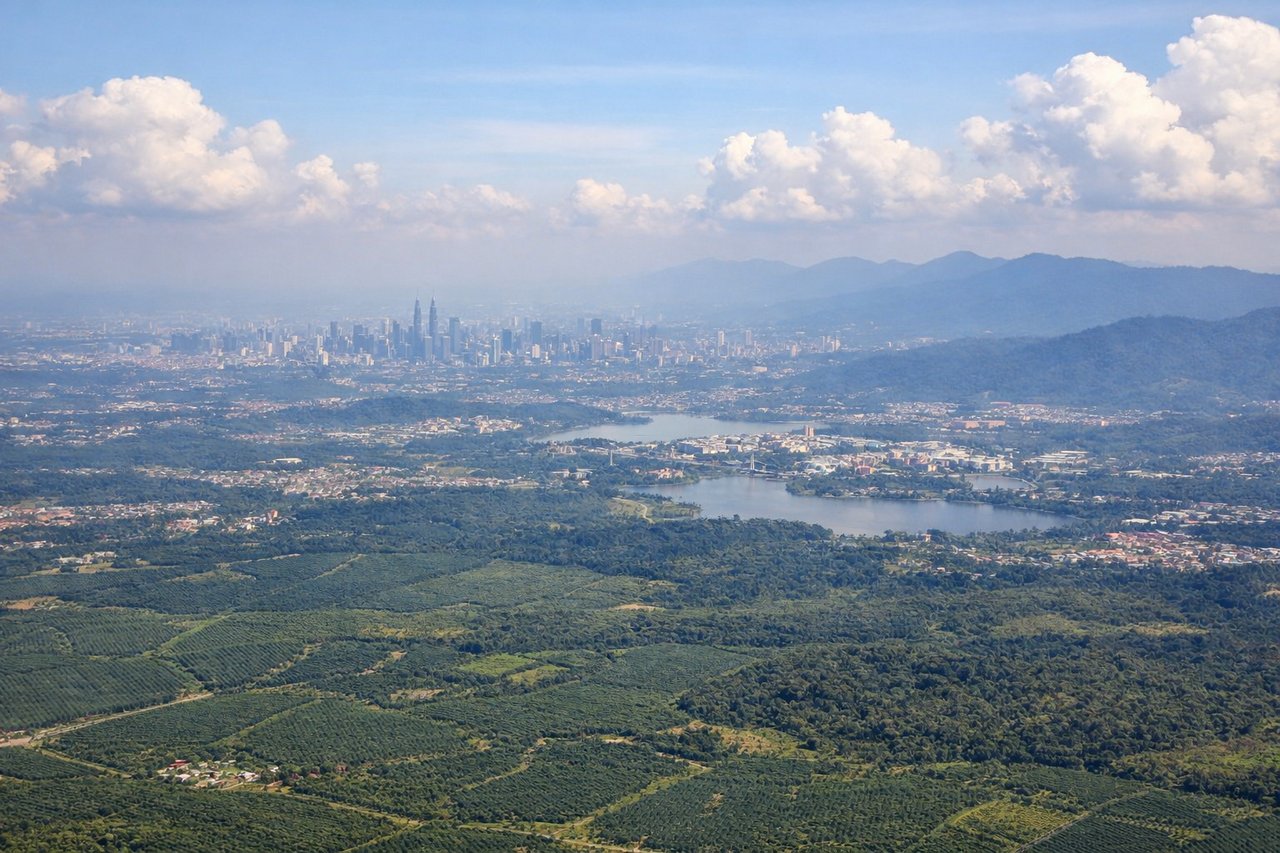
Takeoff from KUL
RIGHTKUL typically departs eastbound (Runways 14L/14R or 15L/15R). Right-side seats face toward the Klang Valley and Selangor highlands as you climb. Left side shows the Strait of Malacca and open water with less distinctive terrain.
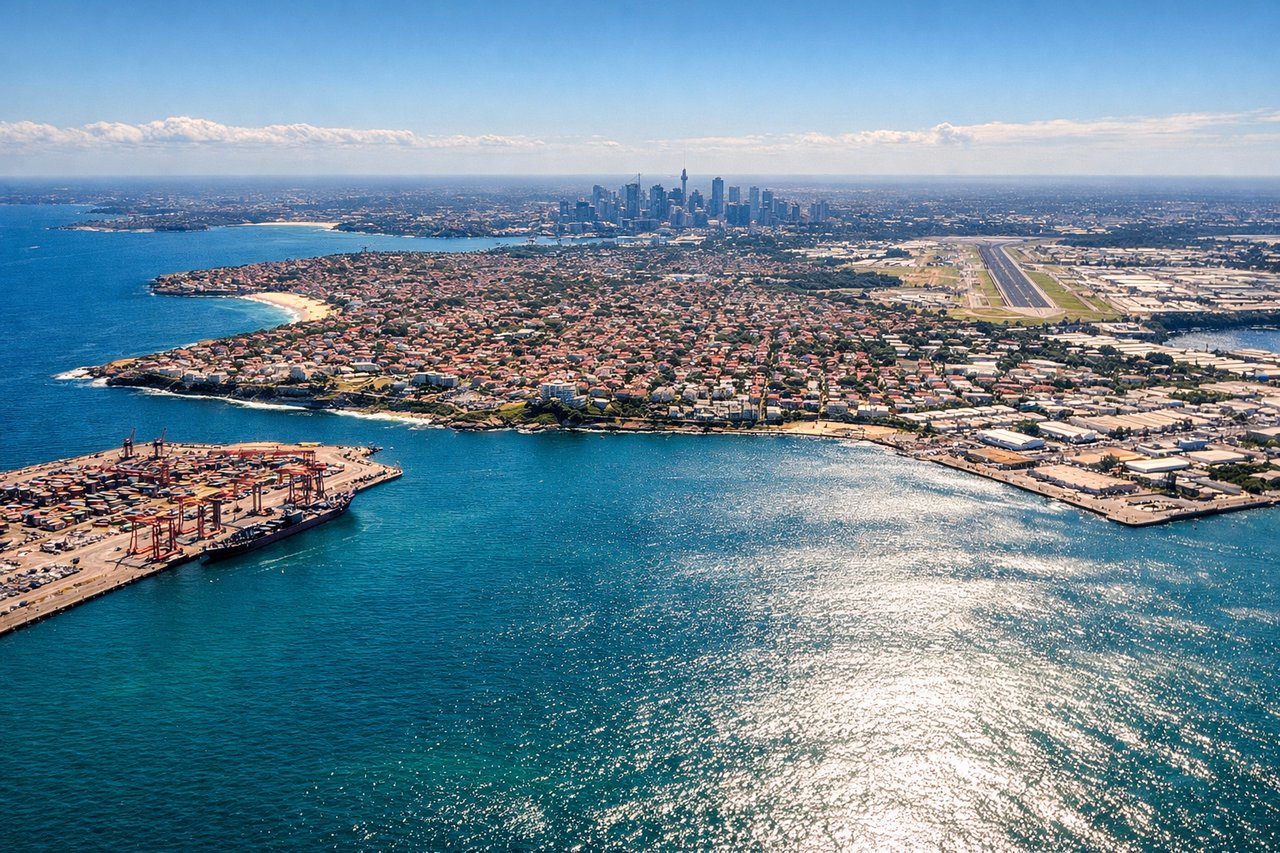
Landing at SYD
LEFTSydney typically lands on Runways 07L/07R (eastbound) or 16L/16R (southbound). For the common eastbound approach, left-side seats face north toward the Blue Mountains and inland terrain. Right side shows the Tasman Sea with less geographic interest. For southbound approaches, left seats show the city and harbor approach.
Landmarks on this routeAll landmarks →
Will your flight be in sunlight?
See exactly which side of the plane gets sun and shade at your departure time.
About This Route
Which side of the plane should I sit on flying from Kuala Lumpur International (KUL) to Kingsford Smith International Airport (SYD)?
Sit on the Left side of the plane for the best views on flights from Kuala Lumpur to Sydney. While takeoff favors the right for Kuala Lumpur's highlands, the landing view of Sydney Harbour, the Blue Mountains, and the city approach is significantly more dramatic and memorable. The landing experience outweighs the takeoff advantage.
What can I see during takeoff from Kuala Lumpur International in Kuala Lumpur?
During takeoff from Kuala Lumpur International (KUL), sit on the Right side for the best views. KUL typically departs eastbound (Runways 14L/14R or 15L/15R). Right-side seats face toward the Klang Valley and Selangor highlands as you climb. Left side shows the Strait of Malacca and open water with less distinctive terrain. Notable sights include: Klang Valley urban sprawl, Selangor highlands to the east, Petronas Twin Towers area (visible as urban cluster in early climb), Strait of Malacca to the west.
What can I see when landing at Kingsford Smith International Airport in Sydney?
When landing at Kingsford Smith International Airport (SYD), sit on the Left side for the best views. Sydney typically lands on Runways 07L/07R (eastbound) or 16L/16R (southbound). For the common eastbound approach, left-side seats face north toward the Blue Mountains and inland terrain. Right side shows the Tasman Sea with less geographic interest. For southbound approaches, left seats show the city and harbor approach. Notable sights include: Blue Mountains (inland to the west), Sydney Harbour with the Opera House and Harbour Bridge, Parramatta River, Botany Bay.
How long is the flight from Kuala Lumpur to Sydney?
The flight from Kuala Lumpur International (KUL) to Kingsford Smith International Airport (SYD) takes Approximately 7 hours 15 minutes.
What does the Kuala Lumpur to Sydney flight path pass over?
The flight path crosses the South China Sea, passing over or near the Sunda Strait (between Sumatra and Java), then continues southeast over the Indian Ocean. Around the midpoint, you'll be over open ocean with no major landmarks visible. As you approach Australia, the Timor Sea is crossed, followed by the approach to the Australian continent. The Great Dividing Range becomes visible inland from Sydney during the descent phase.