The left side delivers the best views at both ends of the flight — Kuwait Bay and city on departure, and the full Dubai coastal panorama including Palm Jumeirah and the Burj Khalifa corridor on approach. During the cruise over the Arabian Peninsula, the left side also faces south toward the Saudi interior and the Gulf coastline.
Flown KWI to DXB? Did we get it right?
Flight Path
Kuwait to Dubai is 531 miles (855 km), a flight of about 1 hour 55 minutes.
The flight crosses the northeastern tip of Saudi Arabia and then tracks over the UAE's Al Ain region and the Hajar Mountains foothills. The Arabian Gulf coastline of Qatar and the UAE is visible to the south on clear days. The terrain transitions from flat Kuwaiti desert to the slightly more varied gravel plains of the UAE interior before the coastal urban sprawl of Dubai appears.
Great circle distance and headings ›


Phase by phase
Takeoff from KWI
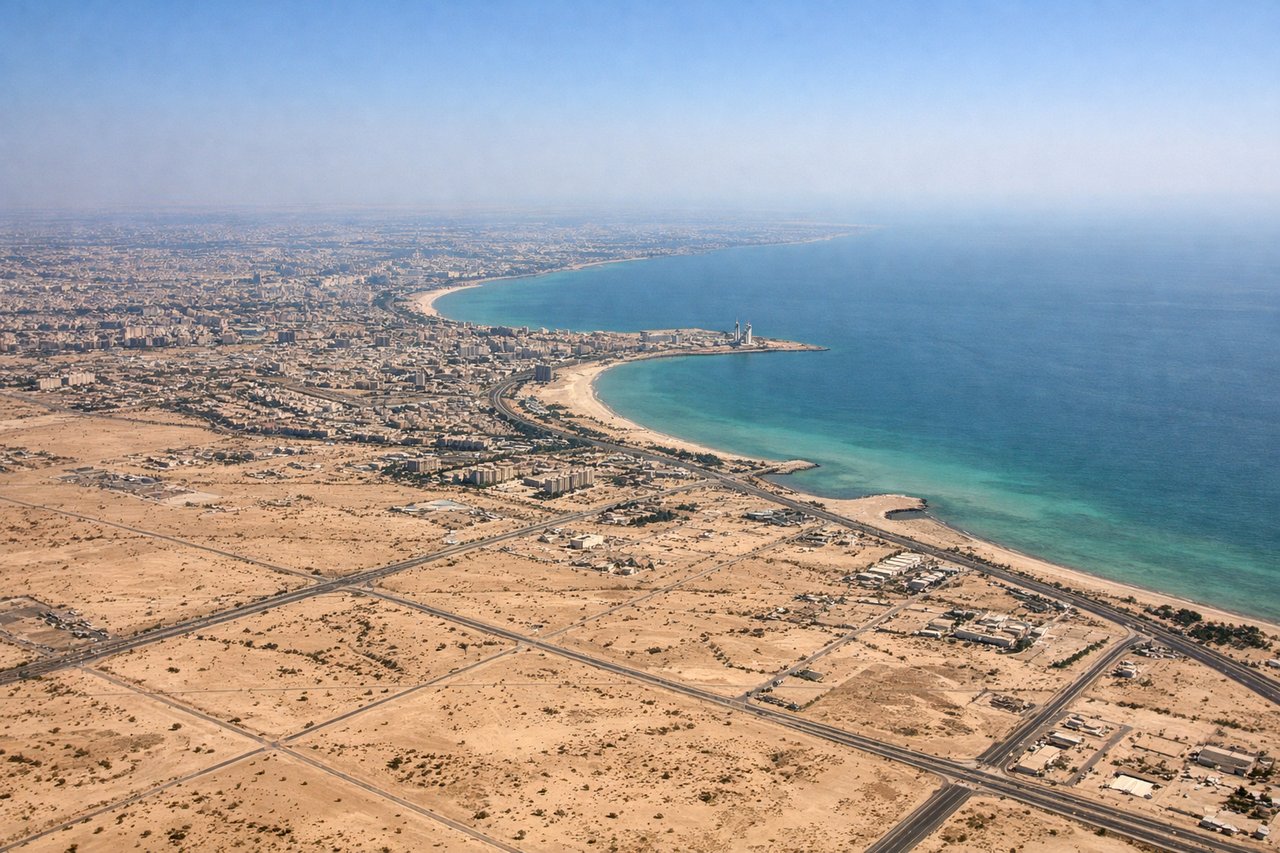
LEFTKuwait International typically departs southeastward on runway 33L/15R or uses runway headings that put Kuwait City and Kuwait Bay on the left side during initial climb. The left side gives you a clear view over Kuwait Bay, the city skyline, and the Arabian Gulf as you bank southeast toward the UAE.
Landing at DXB
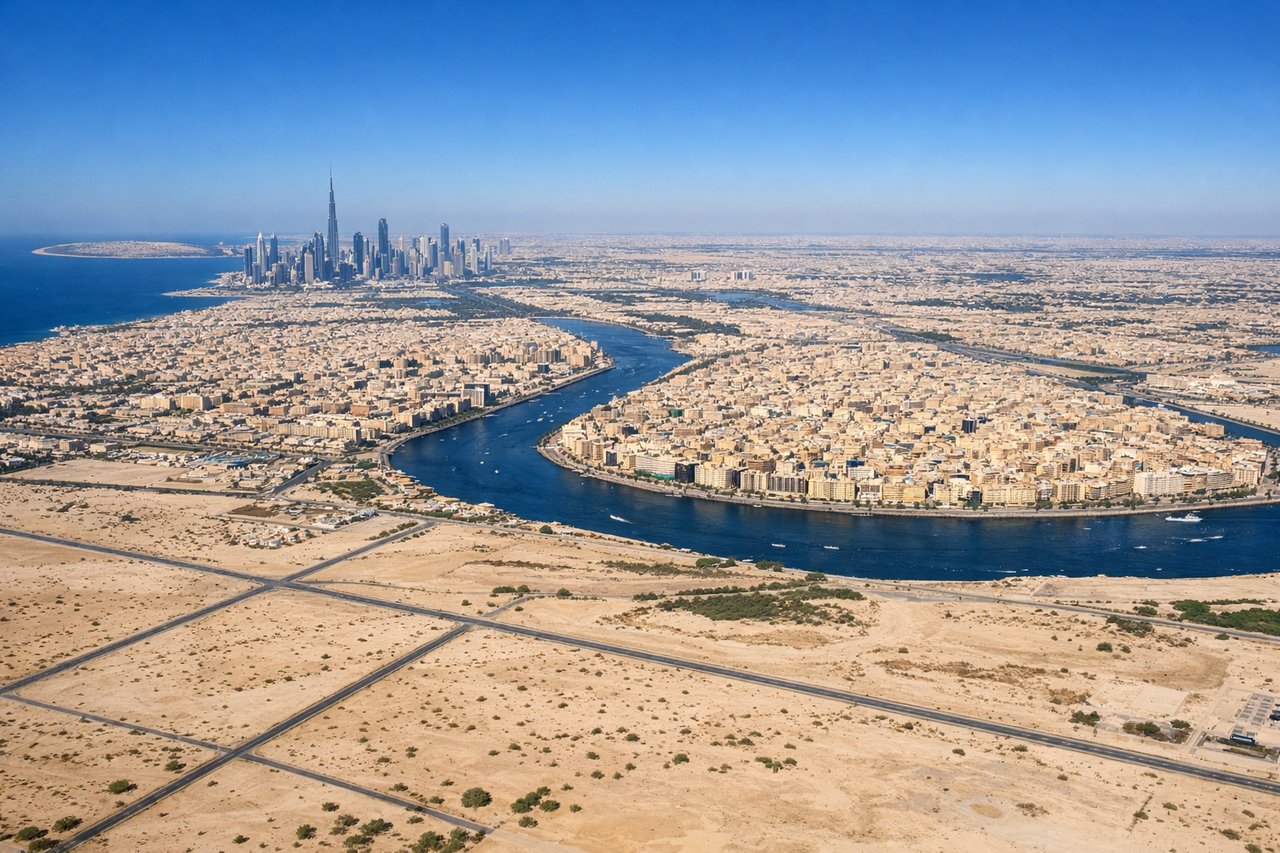
LEFTFlights from Kuwait typically approach Dubai from the north or northwest, with aircraft lining up on runway 30L/30R or 12L/12R. On a northwesterly approach to Dubai, the left side faces southwest over the Palm Jumeirah, Dubai Marina, and the Sheikh Zayed Road skyline before touchdown, giving the most dramatic urban views.
Will your flight be in sunlight?
Pick a date and time in the Sun Map to watch the sun move across your whole flight.
About This Route
Which side of the plane should I sit on flying from Kuwait International Airport (KWI) to Dubai International (DXB)?
Sit on the Left side of the plane for the best views on flights from Kuwait to Dubai. The left side delivers the best views at both ends of the flight — Kuwait Bay and city on departure, and the full Dubai coastal panorama including Palm Jumeirah and the Burj Khalifa corridor on approach. During the cruise over the Arabian Peninsula, the left side also faces south toward the Saudi interior and the Gulf coastline.
What can I see during takeoff from Kuwait International Airport in Kuwait?
During takeoff from Kuwait International Airport (KWI), sit on the Left side for the best views. Kuwait International typically departs southeastward on runway 33L/15R or uses runway headings that put Kuwait City and Kuwait Bay on the left side during initial climb. The left side gives you a clear view over Kuwait Bay, the city skyline, and the Arabian Gulf as you bank southeast toward the UAE. Notable sights include: Kuwait Bay and its distinctive curved coastline, Kuwait City downtown and Liberation Tower, the Arabian Gulf open water, Failaka Island visible to the northeast.
What can I see when landing at Dubai International in Dubai?
When landing at Dubai International (DXB), sit on the Left side for the best views. Flights from Kuwait typically approach Dubai from the north or northwest, with aircraft lining up on runway 30L/30R or 12L/12R. On a northwesterly approach to Dubai, the left side faces southwest over the Palm Jumeirah, Dubai Marina, and the Sheikh Zayed Road skyline before touchdown, giving the most dramatic urban views. Notable sights include: Palm Jumeirah and its distinctive frond pattern, Dubai Marina high-rise cluster, Sheikh Zayed Road skyscraper corridor including Burj Khalifa visible to the east, The World archipelago offshore.
How long is the flight from Kuwait to Dubai?
The flight from Kuwait International Airport (KWI) to Dubai International (DXB) takes about 1 hour 55 minutes. The shortest flight path between them is 531 miles (855 km); winds and air traffic control usually add a few percent.
What does the Kuwait to Dubai flight path pass over?
The flight crosses the northeastern tip of Saudi Arabia and then tracks over the UAE's Al Ain region and the Hajar Mountains foothills. The Arabian Gulf coastline of Qatar and the UAE is visible to the south on clear days. The terrain transitions from flat Kuwaiti desert to the slightly more varied gravel plains of the UAE interior before the coastal urban sprawl of Dubai appears.