Right-side seats dominate both takeoff and landing phases, offering the Spring Mountains and Red Rock Canyon on departure, then the Missouri River and Omaha skyline on arrival. Left side has minimal scenic value for this route.
Flown LAS to OMA? Did we get it right?
Flight Path
Las Vegas to Omaha is 1,097 miles (1,765 km), a flight of about 3 hours 15 minutes.
The flight path crosses the Colorado Plateau and Great Plains. Notable features include the Wasatch Range (Utah, visible from northern route), the Green River valley, the Book Cliffs, and the transition into the flat agricultural landscape of Colorado, Kansas, and Nebraska. The flight typically passes south of Denver and crosses the South Platte River valley before reaching the Missouri River drainage system near Omaha.
Great circle distance and headings ›


Phase by phase
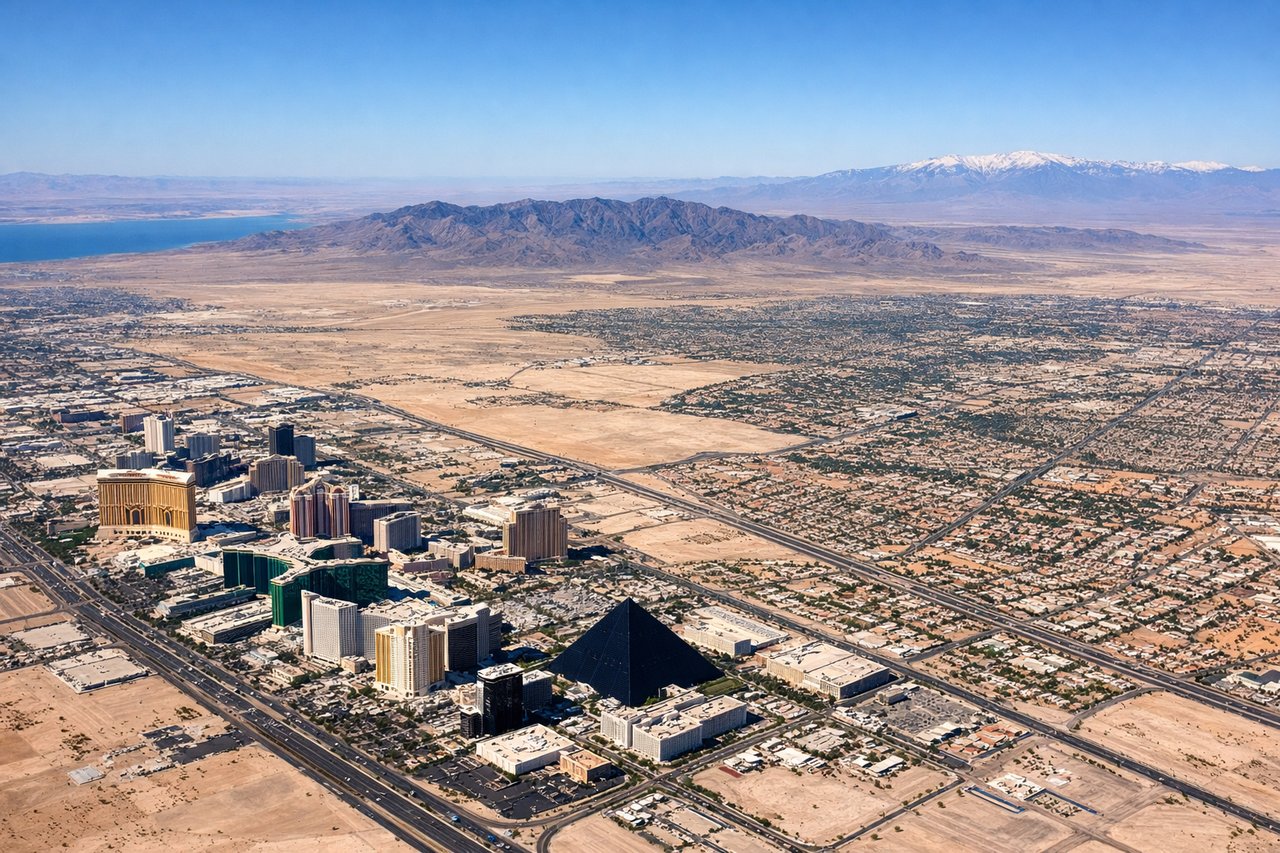
Takeoff from LAS
RIGHTRight-side seats offer views of the Spring Mountains and Red Rock Canyon immediately west of Las Vegas during climb-out. The left side faces the flat desert and urban sprawl of the Las Vegas Valley with less dramatic terrain.
Landing at OMA
RIGHTRight-side seats provide views of the Missouri River and Omaha's downtown skyline during final approach from the west. The left side faces open farmland and lacks distinctive landmarks during descent.
Will your flight be in sunlight?
Pick a date and time in the Sun Map to watch the sun move across your whole flight.
About This Route
Which side of the plane should I sit on flying from Mc Carran International (LAS) to Eppley Afld (OMA)?
Sit on the Right side of the plane for the best views on flights from Las Vegas to Omaha. Right-side seats dominate both takeoff and landing phases, offering the Spring Mountains and Red Rock Canyon on departure, then the Missouri River and Omaha skyline on arrival. Left side has minimal scenic value for this route.
What can I see during takeoff from Mc Carran International in Las Vegas?
During takeoff from Mc Carran International (LAS), sit on the Right side for the best views. Right-side seats offer views of the Spring Mountains and Red Rock Canyon immediately west of Las Vegas during climb-out. The left side faces the flat desert and urban sprawl of the Las Vegas Valley with less dramatic terrain. Notable sights include: Spring Mountains (directly west), Red Rock Canyon escarpment, Las Vegas Valley urban grid, Mojave Desert floor.
What can I see when landing at Eppley Afld in Omaha?
When landing at Eppley Afld (OMA), sit on the Right side for the best views. Right-side seats provide views of the Missouri River and Omaha's downtown skyline during final approach from the west. The left side faces open farmland and lacks distinctive landmarks during descent. Notable sights include: Missouri River (flowing north-south), Omaha downtown skyline and riverfront, Eppley Airfield runways, surrounding agricultural grid.
How long is the flight from Las Vegas to Omaha?
The flight from Mc Carran International (LAS) to Eppley Afld (OMA) takes about 3 hours 15 minutes. The shortest flight path between them is 1,097 miles (1,765 km); winds and air traffic control usually add a few percent.
What does the Las Vegas to Omaha flight path pass over?
The flight path crosses the Colorado Plateau and Great Plains. Notable features include the Wasatch Range (Utah, visible from northern route), the Green River valley, the Book Cliffs, and the transition into the flat agricultural landscape of Colorado, Kansas, and Nebraska. The flight typically passes south of Denver and crosses the South Platte River valley before reaching the Missouri River drainage system near Omaha.