The left side wins overall because the cruise phase along the great-circle route from LA northeastward passes near the Mojave Desert and the southern Rockies/Grand Canyon region before the long Atlantic crossing, giving it more varied terrain than the right side, which stays over flatter plains and then open ocean for most of the flight.
Flight Path
Mojave Desert and southern Colorado Plateau near the Grand Canyon early in the route, followed by the Texas/Oklahoma plains, then a long Atlantic crossing before reaching the Portuguese coastline near Lisbon.
Great circle distance and headings ›.jpg?width=600)


.jpg?width=600)


.jpg?width=600)
Phase by phase

Takeoff from LAX
LEFTIn LAX's typical west-flow departure, the aircraft climbs out over Santa Monica Bay before banking north-northeast toward the Atlantic route. Left-side passengers get a sweeping view of the Santa Monica Mountains, the San Fernando Valley, and the Malibu coastline as the plane turns, while the right side mostly shows the flatter South Bay and open ocean toward Catalina.
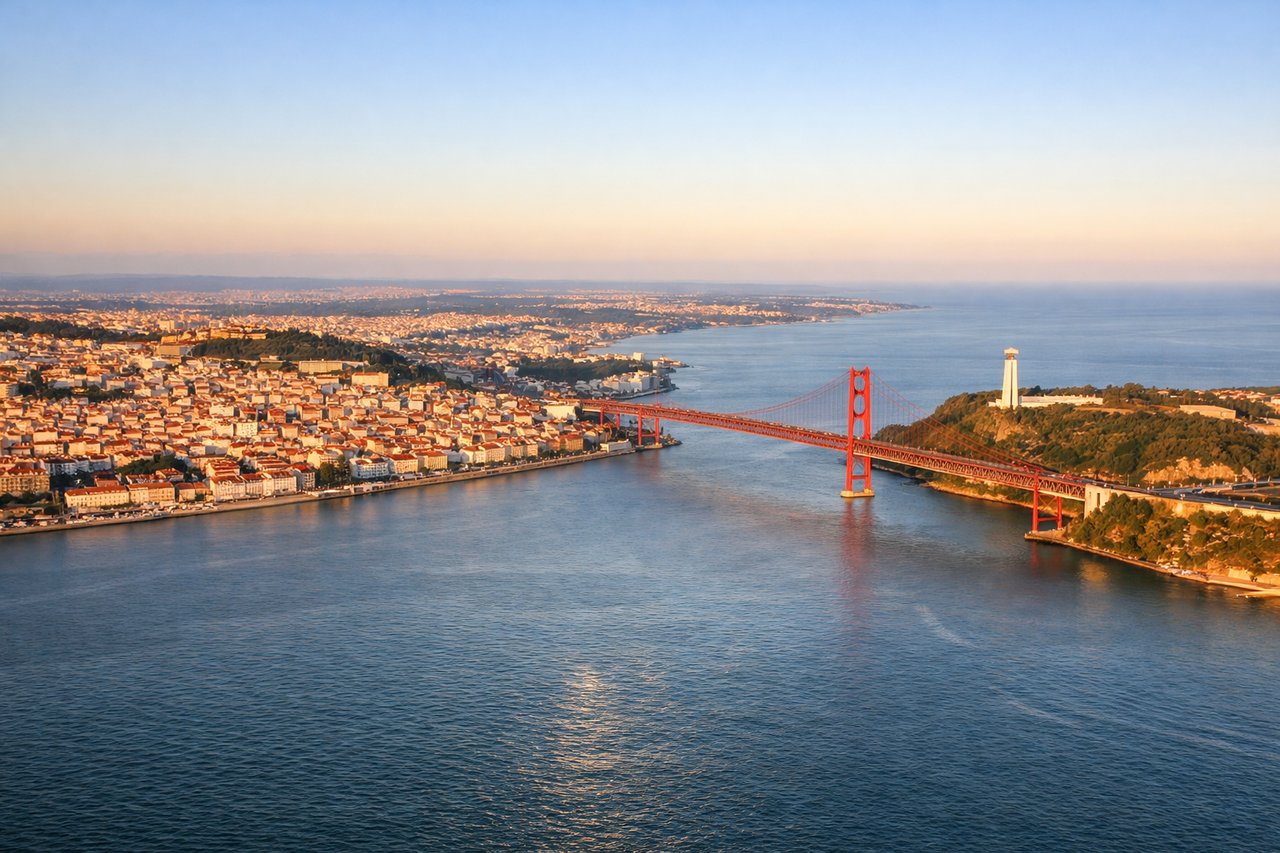
Landing at LIS
RIGHTOn the typical Nortada approach into runway 20, aircraft cross over Lisbon from the north and bank to align with the runway, putting the Tagus estuary and historic waterfront on the right side. Passengers there see the Ponte 25 de Abril bridge, the Cristo Rei statue across the river, and Belém along the water, while the left side mostly shows inland suburbs.
Landmarks on this routeAll landmarks →
Will your flight be in sunlight?
See exactly which side of the plane gets sun and shade at your departure time.
About This Route
Which side of the plane should I sit on flying from Los Angeles International (LAX) to Lisboa (LIS)?
Sit on the Left side of the plane for the best views on flights from Los Angeles to Lisbon. The left side wins overall because the cruise phase along the great-circle route from LA northeastward passes near the Mojave Desert and the southern Rockies/Grand Canyon region before the long Atlantic crossing, giving it more varied terrain than the right side, which stays over flatter plains and then open ocean for most of the flight.
What can I see during takeoff from Los Angeles International in Los Angeles?
During takeoff from Los Angeles International (LAX), sit on the Left side for the best views. In LAX's typical west-flow departure, the aircraft climbs out over Santa Monica Bay before banking north-northeast toward the Atlantic route. Left-side passengers get a sweeping view of the Santa Monica Mountains, the San Fernando Valley, and the Malibu coastline as the plane turns, while the right side mostly shows the flatter South Bay and open ocean toward Catalina. Notable sights include: Santa Monica Mountains, Malibu coastline, San Fernando Valley, Downtown LA skyline (distant).
What can I see when landing at Lisboa in Lisbon?
When landing at Lisboa (LIS), sit on the Right side for the best views. On the typical Nortada approach into runway 20, aircraft cross over Lisbon from the north and bank to align with the runway, putting the Tagus estuary and historic waterfront on the right side. Passengers there see the Ponte 25 de Abril bridge, the Cristo Rei statue across the river, and Belém along the water, while the left side mostly shows inland suburbs. Notable sights include: Tagus River estuary, Ponte 25 de Abril bridge, Cristo Rei statue, Belém waterfront.
How long is the flight from Los Angeles to Lisbon?
The flight from Los Angeles International (LAX) to Lisboa (LIS) takes 10h 45m.
What does the Los Angeles to Lisbon flight path pass over?
Mojave Desert and southern Colorado Plateau near the Grand Canyon early in the route, followed by the Texas/Oklahoma plains, then a long Atlantic crossing before reaching the Portuguese coastline near Lisbon.