The left side wins both bookends of this ultra-long-haul flight — the Los Angeles coastline during the departure turn and the Melbourne skyline plus Port Phillip Bay on final approach — while the right side sees mostly open Pacific Ocean for nearly the entire 15-plus-hour crossing.
Flight Path
The great-circle path crosses the equator over the open central Pacific well south of Hawaii, passing near Fiji and New Caledonia before making landfall on Australia's east coast and continuing south over inland Victoria toward Melbourne.
Great circle distance and headings ›.jpg?width=600)

Phase by phase
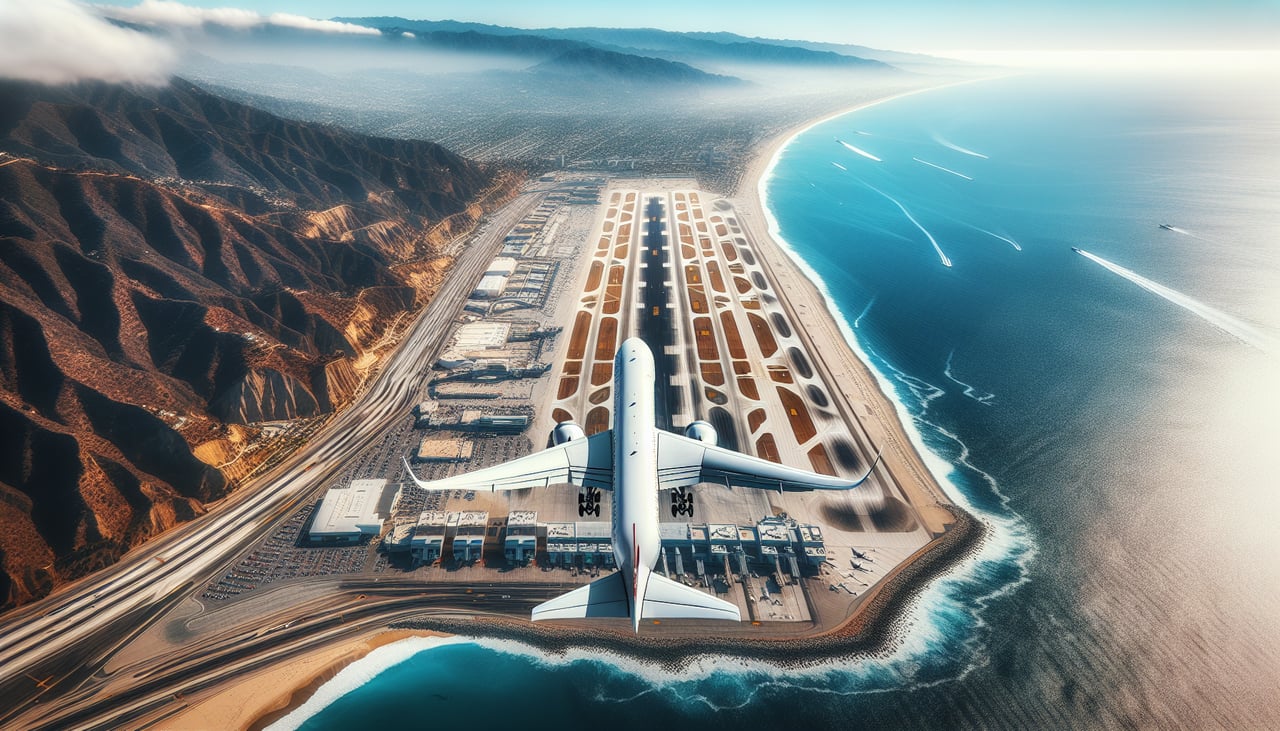
Takeoff from LAX
LEFTIn LAX's normal west-flow departure, the aircraft climbs out over Santa Monica Bay and then banks left (south) to set course for the Pacific crossing. That left turn puts the Palos Verdes Peninsula, Long Beach Harbor, and Catalina Island directly below the left side, while the right side sees mostly open sky and hazy inland basin.
Landing at MEB
LEFTEssendon's most-used runway, 26, means final approach comes in from the east on a heading toward the northwest, which puts Melbourne's CBD and Port Phillip Bay just south of the flight path — visible on the left side. Passengers get a good look at the city skyline and the Yarra River corridor in the last minutes before touchdown, something the right side (facing outer suburbs and farmland) doesn't offer.
Landmarks on this routeAll landmarks →
Will your flight be in sunlight?
See exactly which side of the plane gets sun and shade at your departure time.
About This Route
Which side of the plane should I sit on flying from Los Angeles International (LAX) to Melbourne Essendon (MEB)?
Sit on the Left side of the plane for the best views on flights from Los Angeles to Melbourne. The left side wins both bookends of this ultra-long-haul flight — the Los Angeles coastline during the departure turn and the Melbourne skyline plus Port Phillip Bay on final approach — while the right side sees mostly open Pacific Ocean for nearly the entire 15-plus-hour crossing.
What can I see during takeoff from Los Angeles International in Los Angeles?
During takeoff from Los Angeles International (LAX), sit on the Left side for the best views. In LAX's normal west-flow departure, the aircraft climbs out over Santa Monica Bay and then banks left (south) to set course for the Pacific crossing. That left turn puts the Palos Verdes Peninsula, Long Beach Harbor, and Catalina Island directly below the left side, while the right side sees mostly open sky and hazy inland basin. Notable sights include: Palos Verdes Peninsula, Catalina Island, Long Beach/San Pedro Harbor, Santa Monica Bay coastline.
What can I see when landing at Melbourne Essendon in Melbourne?
When landing at Melbourne Essendon (MEB), sit on the Left side for the best views. Essendon's most-used runway, 26, means final approach comes in from the east on a heading toward the northwest, which puts Melbourne's CBD and Port Phillip Bay just south of the flight path — visible on the left side. Passengers get a good look at the city skyline and the Yarra River corridor in the last minutes before touchdown, something the right side (facing outer suburbs and farmland) doesn't offer. Notable sights include: Melbourne CBD skyline (Eureka Tower, Docklands), Yarra River, Port Phillip Bay, Maribyrnong River near the airport.
How long is the flight from Los Angeles to Melbourne?
The flight from Los Angeles International (LAX) to Melbourne Essendon (MEB) takes 15h 35m.
What does the Los Angeles to Melbourne flight path pass over?
The great-circle path crosses the equator over the open central Pacific well south of Hawaii, passing near Fiji and New Caledonia before making landfall on Australia's east coast and continuing south over inland Victoria toward Melbourne.