Both the Melbourne departure and the LAX arrival favor the right side, offering city skyline and coastal or mountain views, while the roughly 13-hour trans-Pacific cruise leaves nothing but open ocean for either side, capping both scores.
Flight Path
Open Pacific Ocean, crossing near Fiji and the International Date Line, no land visible for most of the cruise
Great circle distance and headings ›
.jpg?width=600)
Phase by phase
Takeoff from MEB
RIGHTAs the aircraft lifts off from Essendon and banks toward the northeast to begin the Pacific crossing, the right-side windows catch Melbourne's CBD skyline and the edge of Port Phillip Bay before the city gives way to farmland. The left side mostly shows flat suburban sprawl with no defining features.
Landing at LAX
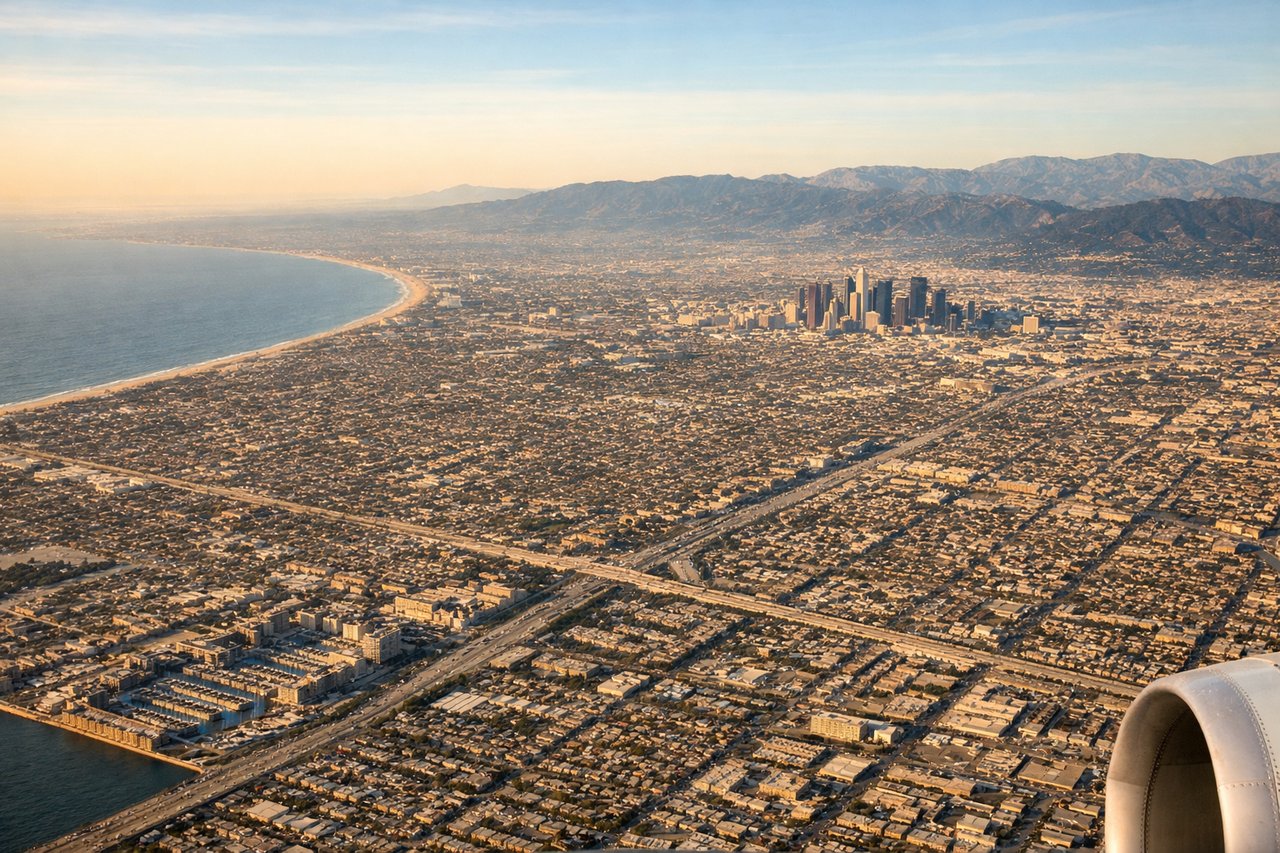
RIGHTOn the typical west-flow arrival into LAX, the aircraft descends over the Los Angeles basin before turning out toward the coast for final approach. The right-side windows get a clear view of the San Gabriel Mountains rising behind the city and a wide sweep of the downtown LA skyline before the turn toward the ocean.
Landmarks on this routeAll landmarks →
Will your flight be in sunlight?
See exactly which side of the plane gets sun and shade at your departure time.
About This Route
Which side of the plane should I sit on flying from Melbourne Essendon (MEB) to Los Angeles International (LAX)?
Sit on the Right side of the plane for the best views on flights from Melbourne to Los Angeles. Both the Melbourne departure and the LAX arrival favor the right side, offering city skyline and coastal or mountain views, while the roughly 13-hour trans-Pacific cruise leaves nothing but open ocean for either side, capping both scores.
What can I see during takeoff from Melbourne Essendon in Melbourne?
During takeoff from Melbourne Essendon (MEB), sit on the Right side for the best views. As the aircraft lifts off from Essendon and banks toward the northeast to begin the Pacific crossing, the right-side windows catch Melbourne's CBD skyline and the edge of Port Phillip Bay before the city gives way to farmland. The left side mostly shows flat suburban sprawl with no defining features. Notable sights include: Melbourne CBD skyline, Port Phillip Bay, Yarra River mouth.
What can I see when landing at Los Angeles International in Los Angeles?
When landing at Los Angeles International (LAX), sit on the Right side for the best views. On the typical west-flow arrival into LAX, the aircraft descends over the Los Angeles basin before turning out toward the coast for final approach. The right-side windows get a clear view of the San Gabriel Mountains rising behind the city and a wide sweep of the downtown LA skyline before the turn toward the ocean. Notable sights include: San Gabriel Mountains, Downtown Los Angeles skyline, Griffith Observatory ridge, San Fernando Valley.
How long is the flight from Melbourne to Los Angeles?
The flight from Melbourne Essendon (MEB) to Los Angeles International (LAX) takes 14h 55m.
What does the Melbourne to Los Angeles flight path pass over?
Open Pacific Ocean, crossing near Fiji and the International Date Line, no land visible for most of the cruise