While left offers better takeoff scenery, right seats provide superior views during the longer descent phase into Doha, where the Persian Gulf and modern waterfront development create more dramatic and sustained visual interest than the brief Melbourne departure.
Flight Path
The flight path crosses the Indian Ocean for roughly 8 hours, passing over open water with no significant landmarks visible. Upon approaching the Arabian Peninsula, the Oman coastline becomes visible—the Musandam Peninsula's rocky terrain and the entrance to the Persian Gulf. The flight then follows the Gulf coast northwestward, with the Hajar Mountains visible inland (left side) as a dark ridge running parallel to the coast. The final approach crosses the shallow waters of the Persian Gulf toward Qatar.
Great circle distance and headings ›Phase by phase
Takeoff from MEB
LEFTLeft seats offer views of Port Phillip Bay and the Dandenong Ranges as the aircraft climbs northwest out of Melbourne. The bay's distinctive shape and the forested ridgeline provide clear visual reference during the initial climb.
Landing at DOH
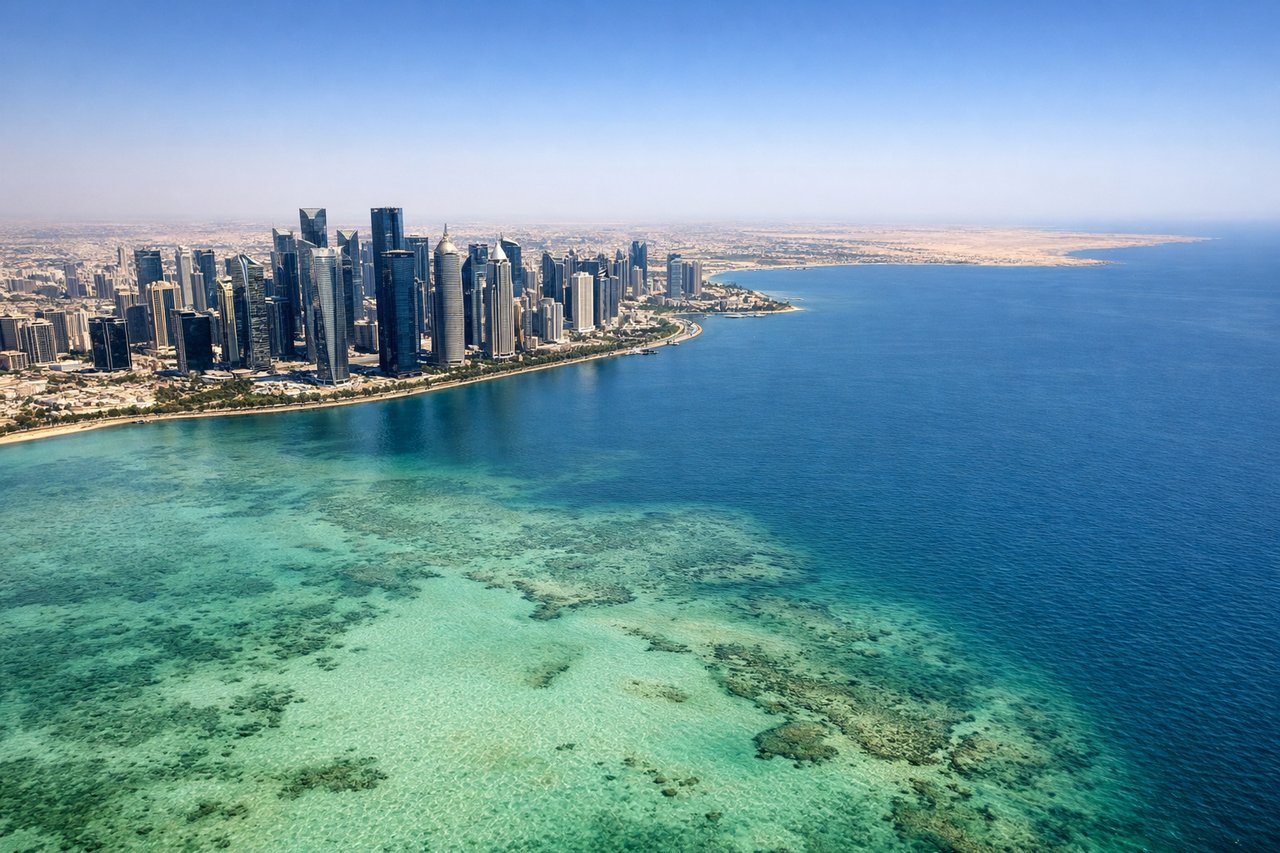
RIGHTRight seats provide views of the Persian Gulf coastline and Doha's waterfront development during descent into Hamad International. The contrast between desert and the bay's turquoise waters is striking, and the city's modern skyline becomes increasingly visible on approach.
Landmarks on this routeAll landmarks →
Will your flight be in sunlight?
See exactly which side of the plane gets sun and shade at your departure time.
About This Route
Which side of the plane should I sit on flying from Melbourne Essendon (MEB) to Hamad International Airport (DOH)?
Sit on the Right side of the plane for the best views on flights from Melbourne to Doha. While left offers better takeoff scenery, right seats provide superior views during the longer descent phase into Doha, where the Persian Gulf and modern waterfront development create more dramatic and sustained visual interest than the brief Melbourne departure.
What can I see during takeoff from Melbourne Essendon in Melbourne?
During takeoff from Melbourne Essendon (MEB), sit on the Left side for the best views. Left seats offer views of Port Phillip Bay and the Dandenong Ranges as the aircraft climbs northwest out of Melbourne. The bay's distinctive shape and the forested ridgeline provide clear visual reference during the initial climb. Notable sights include: Port Phillip Bay, Dandenong Ranges, Melbourne CBD skyline, Yarra River.
What can I see when landing at Hamad International Airport in Doha?
When landing at Hamad International Airport (DOH), sit on the Right side for the best views. Right seats provide views of the Persian Gulf coastline and Doha's waterfront development during descent into Hamad International. The contrast between desert and the bay's turquoise waters is striking, and the city's modern skyline becomes increasingly visible on approach. Notable sights include: Persian Gulf, Doha Bay, Doha skyline and West Bay district, Qatari desert.
How long is the flight from Melbourne to Doha?
The flight from Melbourne Essendon (MEB) to Hamad International Airport (DOH) takes Approximately 14-15 hours.
What does the Melbourne to Doha flight path pass over?
The flight path crosses the Indian Ocean for roughly 8 hours, passing over open water with no significant landmarks visible. Upon approaching the Arabian Peninsula, the Oman coastline becomes visible—the Musandam Peninsula's rocky terrain and the entrance to the Persian Gulf. The flight then follows the Gulf coast northwestward, with the Hajar Mountains visible inland (left side) as a dark ridge running parallel to the coast. The final approach crosses the shallow waters of the Persian Gulf toward Qatar.