The right side delivers the more dramatic takeoff view with Port Phillip Bay and Melbourne's skyline, and during the long overwater and desert transit the views are broadly similar on both sides. The takeoff experience tips the balance to the right.
Flight Path
After departing Melbourne, the route tracks northwest across central Australia's red desert interior including the Simpson Desert and Lake Eyre basin (Kati Thanda). It then crosses the Timor Sea and the Indonesian archipelago including Java and Sumatra. The route continues over the Bay of Bengal, crosses southern India and Sri Lanka, then transits the Arabian Sea before reaching the Persian Gulf and Dubai. The Himalayas are not on this routing — they sit well to the north.
Great circle distance and headings ›


_and_the_Dubai_skyline_(25781049892).jpg?width=600)
.jpg?width=600)
Phase by phase
Takeoff from MEB
RIGHTEssendon typically departs on runway 26 (heading west) or 17 (heading south). On a northbound routing to Dubai, aircraft generally turn left after departure, putting Port Phillip Bay and the Melbourne CBD skyline on the right side. The bay's distinctive shape and the city grid are clearly visible during the climb-out.
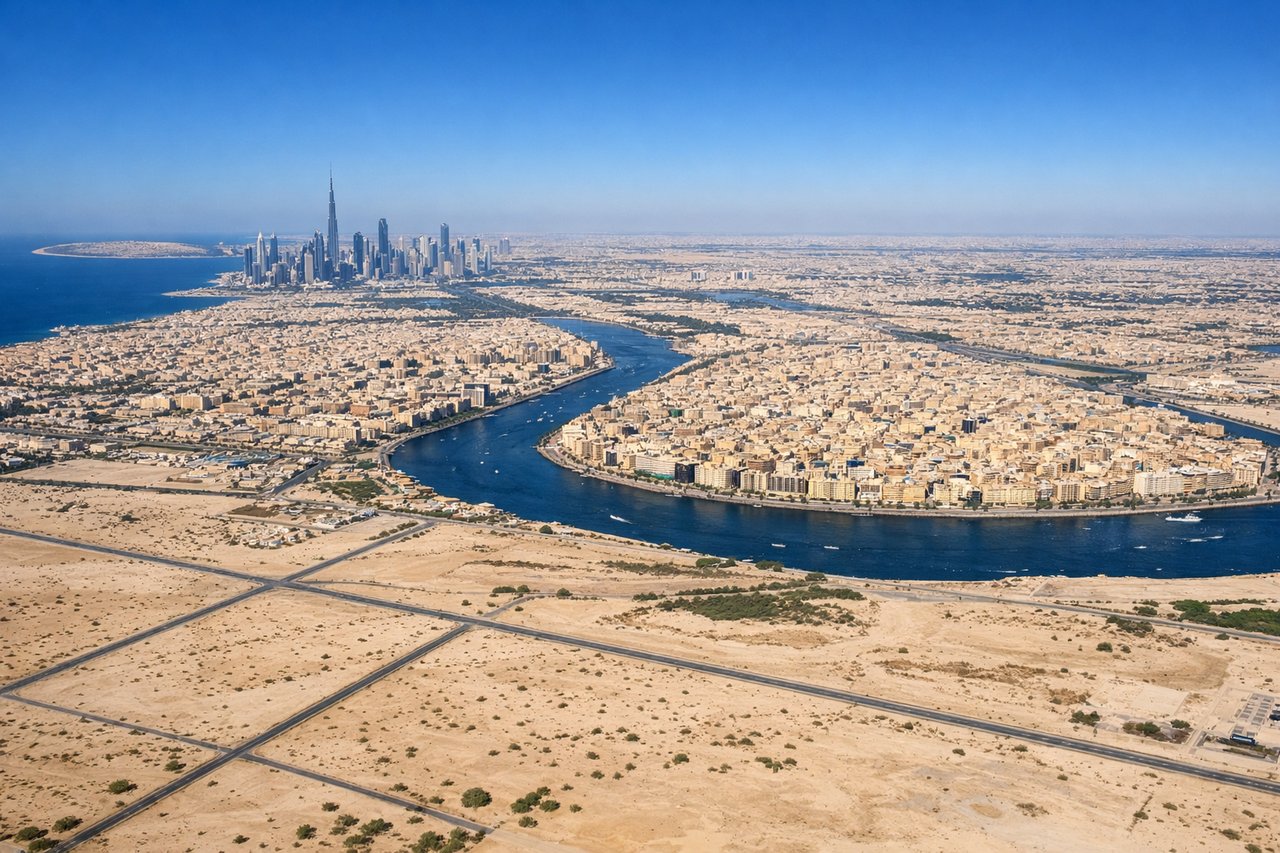
Landing at DXB
LEFTDubai International's primary arrival runway is 30L/30R (landing heading roughly northwest) or 12L/12R (heading southeast). On arrivals from the south/southeast as this routing approaches, aircraft typically land on runway 12, meaning the left side faces northeast toward Dubai Creek, Deira, and the older city districts. The right side faces the desert hinterland.
Landmarks on this routeAll landmarks →
Will your flight be in sunlight?
See exactly which side of the plane gets sun and shade at your departure time.
About This Route
Which side of the plane should I sit on flying from Melbourne Essendon (MEB) to Dubai International (DXB)?
Sit on the Right side of the plane for the best views on flights from Melbourne to Dubai. The right side delivers the more dramatic takeoff view with Port Phillip Bay and Melbourne's skyline, and during the long overwater and desert transit the views are broadly similar on both sides. The takeoff experience tips the balance to the right.
What can I see during takeoff from Melbourne Essendon in Melbourne?
During takeoff from Melbourne Essendon (MEB), sit on the Right side for the best views. Essendon typically departs on runway 26 (heading west) or 17 (heading south). On a northbound routing to Dubai, aircraft generally turn left after departure, putting Port Phillip Bay and the Melbourne CBD skyline on the right side. The bay's distinctive shape and the city grid are clearly visible during the climb-out. Notable sights include: Port Phillip Bay, Melbourne CBD skyline, Yarra River corridor, Dandenong Ranges to the east.
What can I see when landing at Dubai International in Dubai?
When landing at Dubai International (DXB), sit on the Left side for the best views. Dubai International's primary arrival runway is 30L/30R (landing heading roughly northwest) or 12L/12R (heading southeast). On arrivals from the south/southeast as this routing approaches, aircraft typically land on runway 12, meaning the left side faces northeast toward Dubai Creek, Deira, and the older city districts. The right side faces the desert hinterland. Notable sights include: Dubai Creek and Deira district, Dubai city grid and downtown towers, Persian Gulf coastline, Palm Jumeirah visible to the southwest.
How long is the flight from Melbourne to Dubai?
The flight from Melbourne Essendon (MEB) to Dubai International (DXB) takes Approximately 14 to 15 hours.
What does the Melbourne to Dubai flight path pass over?
After departing Melbourne, the route tracks northwest across central Australia's red desert interior including the Simpson Desert and Lake Eyre basin (Kati Thanda). It then crosses the Timor Sea and the Indonesian archipelago including Java and Sumatra. The route continues over the Bay of Bengal, crosses southern India and Sri Lanka, then transits the Arabian Sea before reaching the Persian Gulf and Dubai. The Himalayas are not on this routing — they sit well to the north.