Los Angeles to Rapid City is 1,079 miles (1,737 km), a flight of about 2 hours 55 minutes.
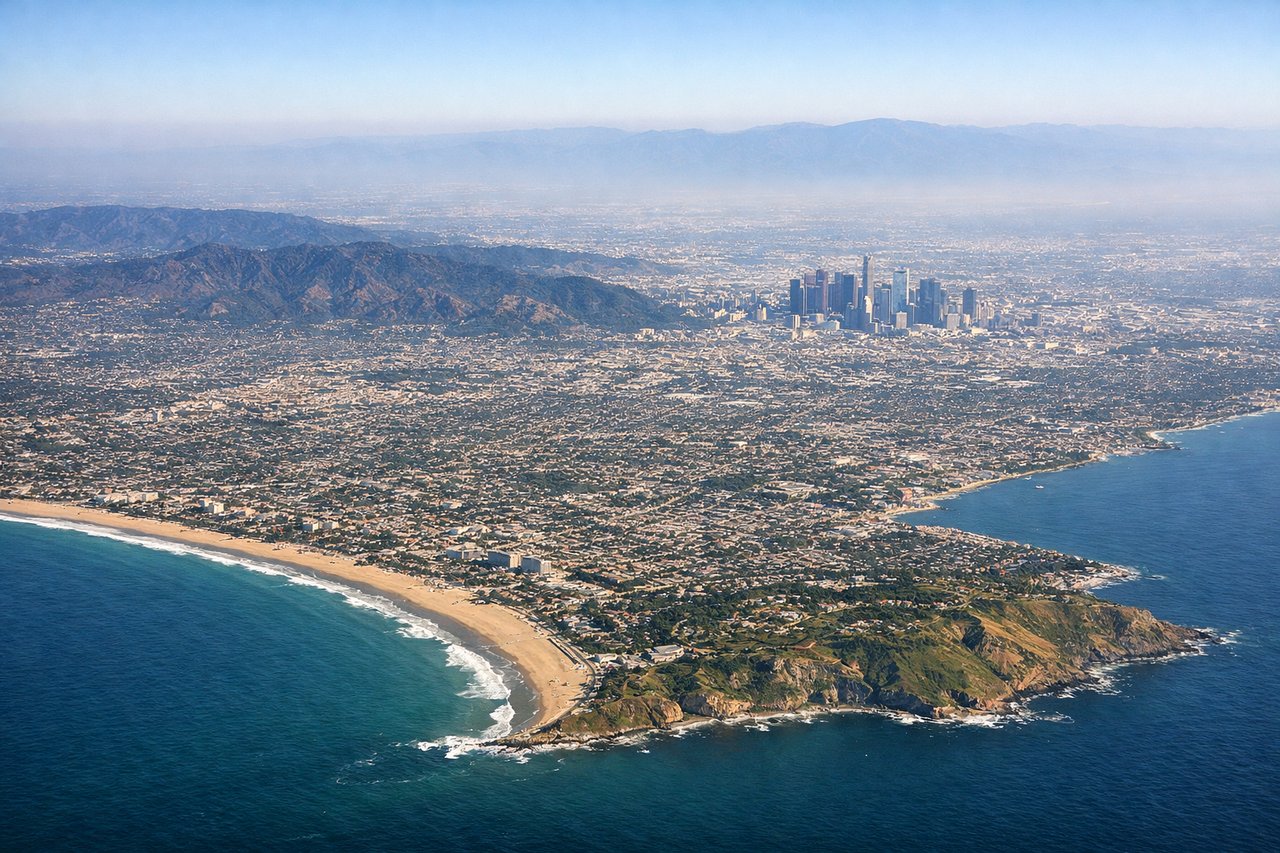
The right side delivers the spectacular Santa Monica Bay and LA coastal panorama on departure, and during the cruise phase over the Great Basin and Wyoming high plains, the right (south) side offers views of the Colorado Rockies on the distant horizon. The left side wins at landing for the Black Hills, but the departure views on the right are more dramatic overall.
Flight Path
The flight tracks northeast over the Mojave Desert, crossing the Colorado River near Needles, then over the Arizona Strip and the southern Utah plateau country. Over Colorado and Wyoming the route crosses the high plains east of the Rockies, passing over the Laramie Range and the Platte River valley before descending into the Black Hills region of western South Dakota.
Great circle distance and headings ›.jpg?width=600)


.jpg?width=600)
Phase by phase
Takeoff from LAX
RIGHTLAX departures heading northeast use runways 24L/24R westward then turn, but most eastbound departures use runways 06L/06R heading east, putting the Santa Monica Bay and Pacific coastline on the right (south) side during initial climb. You get a clear look back at the LA basin, Santa Monica Bay, and the Palos Verdes Peninsula.
Landing at RCA
LEFTApproaches into Ellsworth AFB (RCA) typically come from the south or west, with final approach often on runway 13 or 31. On a westbound approach from the east, the left side faces north and gives a clear view of the Black Hills rising dramatically from the plains, with Rapid City visible in the valley below.
Landmarks on this routeAll landmarks →
Will your flight be in sunlight?
Pick a date and time in the Sun Map to watch the sun move across your whole flight.
About This Route
Which side of the plane should I sit on flying from Los Angeles International (LAX) to Ellsworth Afb (RCA)?
Sit on the Right side of the plane for the best views on flights from Los Angeles to Rapid City. The right side delivers the spectacular Santa Monica Bay and LA coastal panorama on departure, and during the cruise phase over the Great Basin and Wyoming high plains, the right (south) side offers views of the Colorado Rockies on the distant horizon. The left side wins at landing for the Black Hills, but the departure views on the right are more dramatic overall.
What can I see during takeoff from Los Angeles International in Los Angeles?
During takeoff from Los Angeles International (LAX), sit on the Right side for the best views. LAX departures heading northeast use runways 24L/24R westward then turn, but most eastbound departures use runways 06L/06R heading east, putting the Santa Monica Bay and Pacific coastline on the right (south) side during initial climb. You get a clear look back at the LA basin, Santa Monica Bay, and the Palos Verdes Peninsula. Notable sights include: Santa Monica Bay, Palos Verdes Peninsula, downtown Los Angeles skyline, San Gabriel Mountains.
What can I see when landing at Ellsworth Afb in Rapid City?
When landing at Ellsworth Afb (RCA), sit on the Left side for the best views. Approaches into Ellsworth AFB (RCA) typically come from the south or west, with final approach often on runway 13 or 31. On a westbound approach from the east, the left side faces north and gives a clear view of the Black Hills rising dramatically from the plains, with Rapid City visible in the valley below. Notable sights include: Black Hills, Rapid City urban area, Cheyenne River valley, Belle Fourche River valley.
How long is the flight from Los Angeles to Rapid City?
The flight from Los Angeles International (LAX) to Ellsworth Afb (RCA) takes about 2 hours 55 minutes. The shortest flight path between them is 1,079 miles (1,737 km); winds and air traffic control usually add a few percent.
What does the Los Angeles to Rapid City flight path pass over?
The flight tracks northeast over the Mojave Desert, crossing the Colorado River near Needles, then over the Arizona Strip and the southern Utah plateau country. Over Colorado and Wyoming the route crosses the high plains east of the Rockies, passing over the Laramie Range and the Platte River valley before descending into the Black Hills region of western South Dakota.