While landing views favor the left, the takeoff scenery from the right side—featuring the dramatic transition from city to mangrove coast to open ocean—is more visually distinctive and memorable than the landing approach over farmland. Right-side seats capture the more dramatic geographical contrast.
Flown LBV to CDG? Did we get it right?
Flight Path
Libreville to Paris is 3,379 miles (5,438 km), a flight of about 6 hours.
The flight path crosses the Atlantic Ocean for roughly 4 hours, passing over open water with no visible landmarks. As the aircraft approaches European airspace, it crosses the Bay of Biscay (visible as open ocean), then the Iberian Peninsula's western coast becomes visible around the 5-hour mark. The flight then passes over central France, where the Loire River valley and Massif Central plateau are visible before descent into the Île-de-France region. The most notable midpoint feature is the transition from open Atlantic to the European coastline near Portugal/Spain, though this occurs at high altitude (30,000+ feet) and landmarks appear small.
Great circle distance and headings ›


Phase by phase
Takeoff from LBV
RIGHTRight-side seats offer views of the Gabon coastline and the Atlantic Ocean immediately after departure. The aircraft climbs northwestward, and right-side windows capture the transition from Libreville's urban area to the mangrove-lined coast and open ocean.
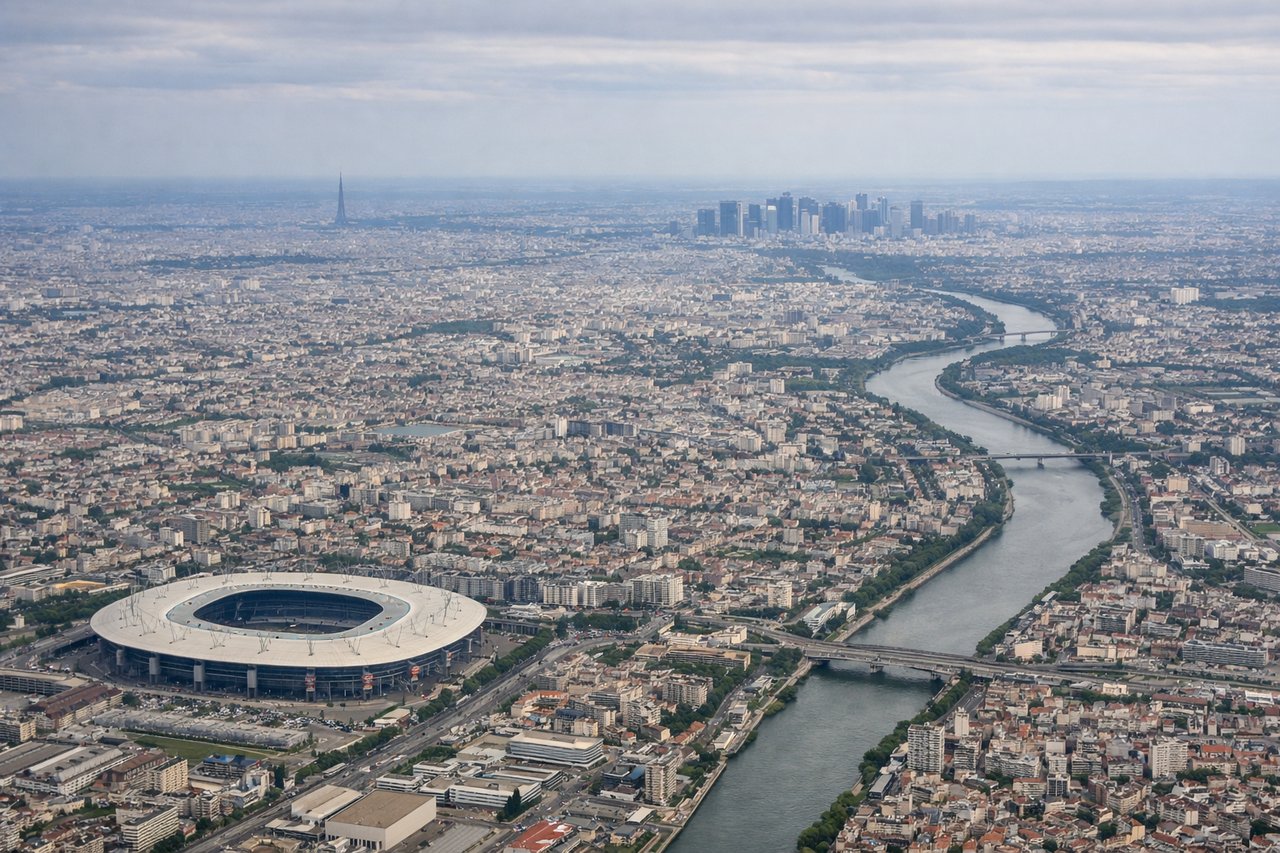
Landing at CDG
LEFTLeft-side seats provide excellent views during the descent into Paris. The aircraft approaches from the southeast, and left windows capture the Seine River's distinctive meanders, the Île-de-France agricultural plains, and the sprawl of the Paris metropolitan area before touchdown.
Will your flight be in sunlight?
Pick a date and time in the Sun Map to watch the sun move across your whole flight.
About This Route
Which side of the plane should I sit on flying from Libreville Leon M Ba (LBV) to Charles De Gaulle (CDG)?
Sit on the Right side of the plane for the best views on flights from Libreville to Paris. While landing views favor the left, the takeoff scenery from the right side—featuring the dramatic transition from city to mangrove coast to open ocean—is more visually distinctive and memorable than the landing approach over farmland. Right-side seats capture the more dramatic geographical contrast.
What can I see during takeoff from Libreville Leon M Ba in Libreville?
During takeoff from Libreville Leon M Ba (LBV), sit on the Right side for the best views. Right-side seats offer views of the Gabon coastline and the Atlantic Ocean immediately after departure. The aircraft climbs northwestward, and right-side windows capture the transition from Libreville's urban area to the mangrove-lined coast and open ocean. Notable sights include: Libreville city grid, Gabon estuary and mangrove forests, Atlantic Ocean, Corisco Bay to the north.
What can I see when landing at Charles De Gaulle in Paris?
When landing at Charles De Gaulle (CDG), sit on the Left side for the best views. Left-side seats provide excellent views during the descent into Paris. The aircraft approaches from the southeast, and left windows capture the Seine River's distinctive meanders, the Île-de-France agricultural plains, and the sprawl of the Paris metropolitan area before touchdown. Notable sights include: Seine River with its characteristic loops, Île-de-France farmland and forests, Paris metropolitan area and urban sprawl, Orly and Charles de Gaulle airport complexes.
How long is the flight from Libreville to Paris?
The flight from Libreville Leon M Ba (LBV) to Charles De Gaulle (CDG) takes about 6 hours. The shortest flight path between them is 3,379 miles (5,438 km); winds and air traffic control usually add a few percent.
What does the Libreville to Paris flight path pass over?
The flight path crosses the Atlantic Ocean for roughly 4 hours, passing over open water with no visible landmarks. As the aircraft approaches European airspace, it crosses the Bay of Biscay (visible as open ocean), then the Iberian Peninsula's western coast becomes visible around the 5-hour mark. The flight then passes over central France, where the Loire River valley and Massif Central plateau are visible before descent into the Île-de-France region. The most notable midpoint feature is the transition from open Atlantic to the European coastline near Portugal/Spain, though this occurs at high altitude (30,000+ feet) and landmarks appear small.