London to La Coruna is 689 miles (1,110 km), a flight of about 2 hours 15 minutes.
While left seats offer excellent London views during departure, right seats provide superior views of the entire approach to A Coruna, including the dramatic ría inlet and Atlantic coastline—the most visually distinctive feature of this route. The landing experience outweighs the takeoff advantage.
Flight Path
The flight crosses the Bay of Biscay at cruise altitude (around 25,000-30,000 feet). Notable features include the Cornish coast (visible during initial westbound climb), the Celtic Sea, and the Brittany coast of France (visible to the south during mid-flight). The Pyrenees are too far south to be visible. The flight path generally follows a southwest trajectory across open water with minimal landmark visibility at cruise altitude, making the departure and arrival phases the primary viewing opportunities.
Great circle distance and headings ›.jpeg?width=600)

Phase by phase
Takeoff from LCY
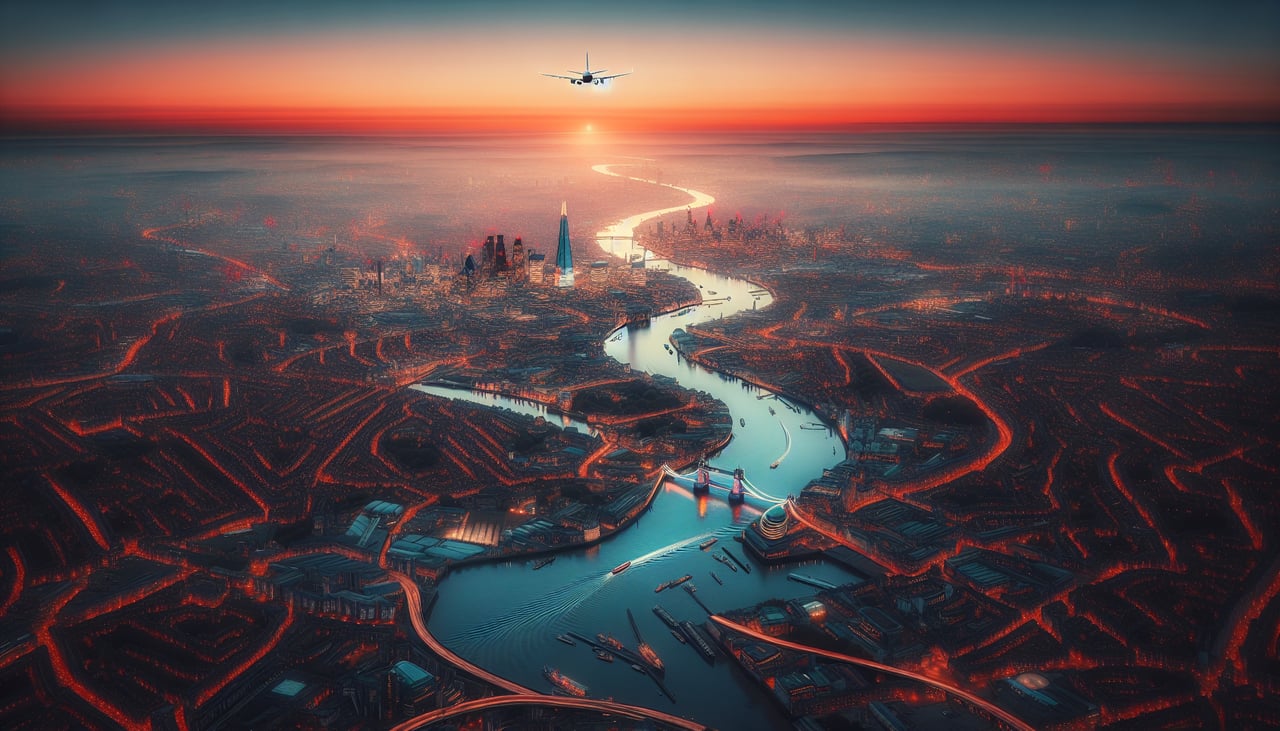
LEFTLCY typically departs eastbound (runway 27) or westbound (runway 09). Westbound departures favor left seats for views of central London and the Thames. Eastbound departures favor left seats for views across East London toward Essex. Left side captures the city's urban sprawl and river bends more comprehensively during climb-out.
Landing at LCG
RIGHTApproach to LCG typically uses runway 32 (northwest) or runway 14 (southeast). Right-side seats on either approach capture the Galician coastline, Ría de A Coruna (the deep inlet), and the city's position on the peninsula. The Atlantic coast and surrounding hills are more prominent from the right during descent.
Landmarks on this routeAll landmarks →
Will your flight be in sunlight?
Pick a date and time in the Sun Map to watch the sun move across your whole flight.
About This Route
Which side of the plane should I sit on flying from City (LCY) to A Coruna (LCG)?
Sit on the Right side of the plane for the best views on flights from London to La Coruna. While left seats offer excellent London views during departure, right seats provide superior views of the entire approach to A Coruna, including the dramatic ría inlet and Atlantic coastline—the most visually distinctive feature of this route. The landing experience outweighs the takeoff advantage.
What can I see during takeoff from City in London?
During takeoff from City (LCY), sit on the Left side for the best views. LCY typically departs eastbound (runway 27) or westbound (runway 09). Westbound departures favor left seats for views of central London and the Thames. Eastbound departures favor left seats for views across East London toward Essex. Left side captures the city's urban sprawl and river bends more comprehensively during climb-out. Notable sights include: River Thames (winding through London), Canary Wharf and Isle of Dogs (distinctive cluster east of departure point), Greenwich Peninsula, North Downs escarpment (visible as distant ridge to the south).
What can I see when landing at A Coruna in La Coruna?
When landing at A Coruna (LCG), sit on the Right side for the best views. Approach to LCG typically uses runway 32 (northwest) or runway 14 (southeast). Right-side seats on either approach capture the Galician coastline, Ría de A Coruna (the deep inlet), and the city's position on the peninsula. The Atlantic coast and surrounding hills are more prominent from the right during descent. Notable sights include: Ría de A Coruna (deep natural harbor and inlet), Atlantic coastline with rocky headlands, Galician hills and low mountains inland, A Coruna city center on the peninsula.
How long is the flight from London to La Coruna?
The flight from City (LCY) to A Coruna (LCG) takes about 2 hours 15 minutes. The shortest flight path between them is 689 miles (1,110 km); winds and air traffic control usually add a few percent.
What does the London to La Coruna flight path pass over?
The flight crosses the Bay of Biscay at cruise altitude (around 25,000-30,000 feet). Notable features include the Cornish coast (visible during initial westbound climb), the Celtic Sea, and the Brittany coast of France (visible to the south during mid-flight). The Pyrenees are too far south to be visible. The flight path generally follows a southwest trajectory across open water with minimal landmark visibility at cruise altitude, making the departure and arrival phases the primary viewing opportunities.