Lome to New York is 5,158 miles (8,300 km), a flight of about 10 hours 10 minutes.
The right side wins overall because the Lomé departure offers genuinely dramatic coastal scenery over the Gulf of Guinea, which is more visually striking than the JFK approach views. The left side landing view of Manhattan is compelling but partially obscured by haze and distance on most days.
Flight Path
The flight path crosses the Sahara Desert over Mali and Algeria with vast sand seas including the Erg Chech and Ahaggar Mountains visible as dark rocky massifs rising from the sand, then the Atlas Mountains of Morocco or Algeria depending on routing, followed by the North Atlantic Ocean for roughly 5 to 6 hours with occasional glimpses of the Azores if routing passes nearby, then the Canadian Maritime provinces including Nova Scotia and the Bay of Fundy before descending over New England and Long Island
Great circle distance and headings ›
.jpg?width=600)
Phase by phase
Takeoff from LFW
RIGHTLomé's main runway 04/22 means departures heading northeast give the right side a view over the Gulf of Guinea coastline and the city of Lomé itself, including the lagoon system just inland. The left side faces inland toward scrubby savanna with little of interest.
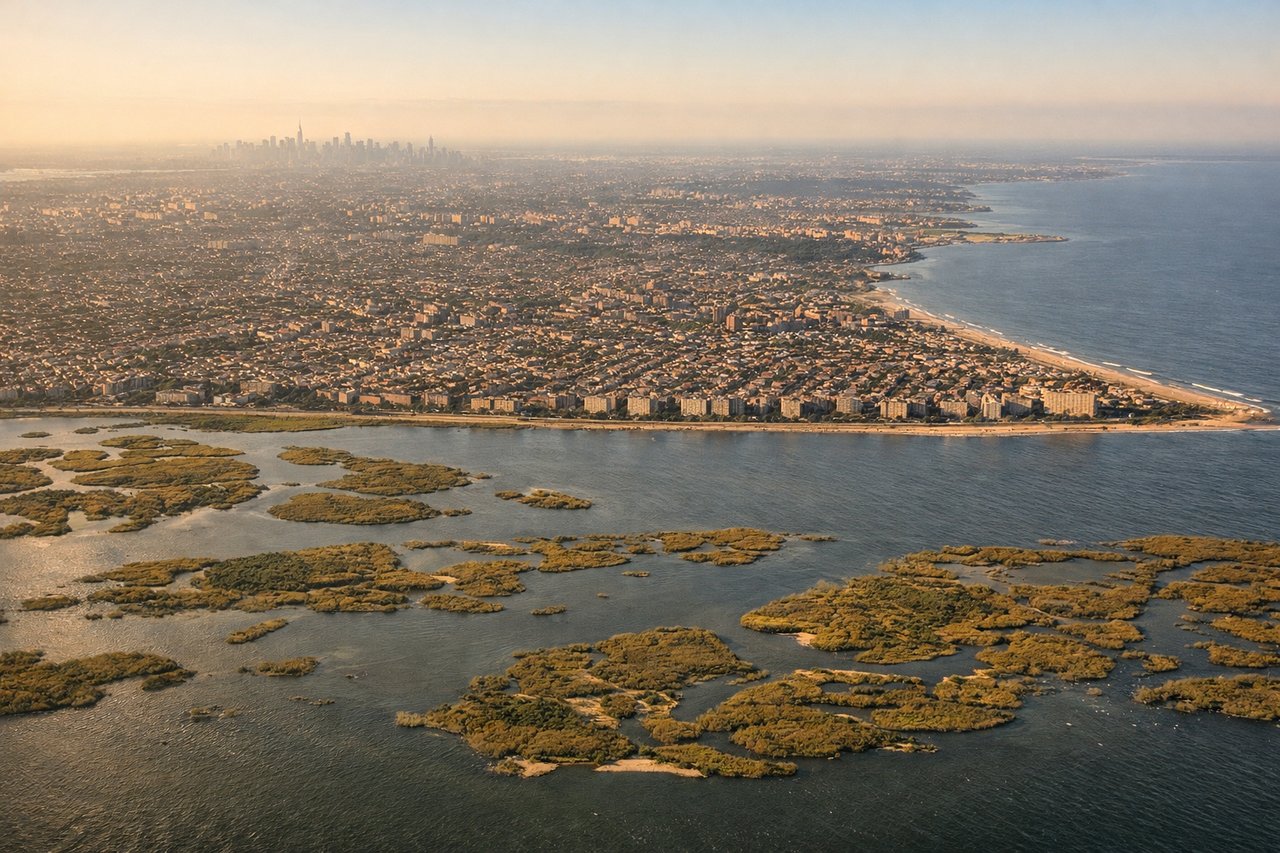
Landing at JFK
LEFTJFK's most common arrival paths from the east or northeast bring aircraft over Long Island before turning final over Jamaica Bay. The left side gets the best view of Manhattan's skyline in the distance, the Verrazano-Narrows Bridge, and Jamaica Bay itself on approach. Right side faces south toward the open Atlantic.
Landmarks on this routeAll landmarks →
Will your flight be in sunlight?
Pick a date and time in the Sun Map to watch the sun move across your whole flight.
About This Route
Which side of the plane should I sit on flying from Lome Tokoin (LFW) to John F Kennedy International (JFK)?
Sit on the Right side of the plane for the best views on flights from Lome to New York. The right side wins overall because the Lomé departure offers genuinely dramatic coastal scenery over the Gulf of Guinea, which is more visually striking than the JFK approach views. The left side landing view of Manhattan is compelling but partially obscured by haze and distance on most days.
What can I see during takeoff from Lome Tokoin in Lome?
During takeoff from Lome Tokoin (LFW), sit on the Right side for the best views. Lomé's main runway 04/22 means departures heading northeast give the right side a view over the Gulf of Guinea coastline and the city of Lomé itself, including the lagoon system just inland. The left side faces inland toward scrubby savanna with little of interest. Notable sights include: Gulf of Guinea coastline, Lomé city center and port, Lake Togo lagoon system, Bight of Benin open water.
What can I see when landing at John F Kennedy International in New York?
When landing at John F Kennedy International (JFK), sit on the Left side for the best views. JFK's most common arrival paths from the east or northeast bring aircraft over Long Island before turning final over Jamaica Bay. The left side gets the best view of Manhattan's skyline in the distance, the Verrazano-Narrows Bridge, and Jamaica Bay itself on approach. Right side faces south toward the open Atlantic. Notable sights include: Manhattan skyline on the horizon, Jamaica Bay and its wildlife refuge, Long Island suburban sprawl, Verrazano-Narrows Bridge.
How long is the flight from Lome to New York?
The flight from Lome Tokoin (LFW) to John F Kennedy International (JFK) takes about 10 hours 10 minutes. The shortest flight path between them is 5,158 miles (8,300 km); winds and air traffic control usually add a few percent.
What does the Lome to New York flight path pass over?
The flight path crosses the Sahara Desert over Mali and Algeria with vast sand seas including the Erg Chech and Ahaggar Mountains visible as dark rocky massifs rising from the sand, then the Atlas Mountains of Morocco or Algeria depending on routing, followed by the North Atlantic Ocean for roughly 5 to 6 hours with occasional glimpses of the Azores if routing passes nearby, then the Canadian Maritime provinces including Nova Scotia and the Bay of Fundy before descending over New England and Long Island