The right side wins overall for the spectacular London departure views over the Thames and city. The flight path heading southeast over Europe and the Middle East also gives the right side better views of the Alps, the Persian Gulf coastline, and the Indian subcontinent on the long cruise. The left side advantage at Jakarta landing is real but brief.
Flight Path
The route typically tracks southeast over France and the Alps, then across the eastern Mediterranean and Turkey, over the Persian Gulf states with the Arabian Peninsula to the south, across the Arabian Sea, over the Indian subcontinent passing near Mumbai and across central India, then over the Bay of Bengal, the Malay Peninsula or Sumatra depending on routing, and finally across the Java Sea to Jakarta. The Alps, the Persian Gulf coastline at night with oil platform lights, and the Strait of Malacca are the most visually distinctive en-route features.
Great circle distance and headings ›.jpeg?width=600)


.jpeg?width=600)
Phase by phase
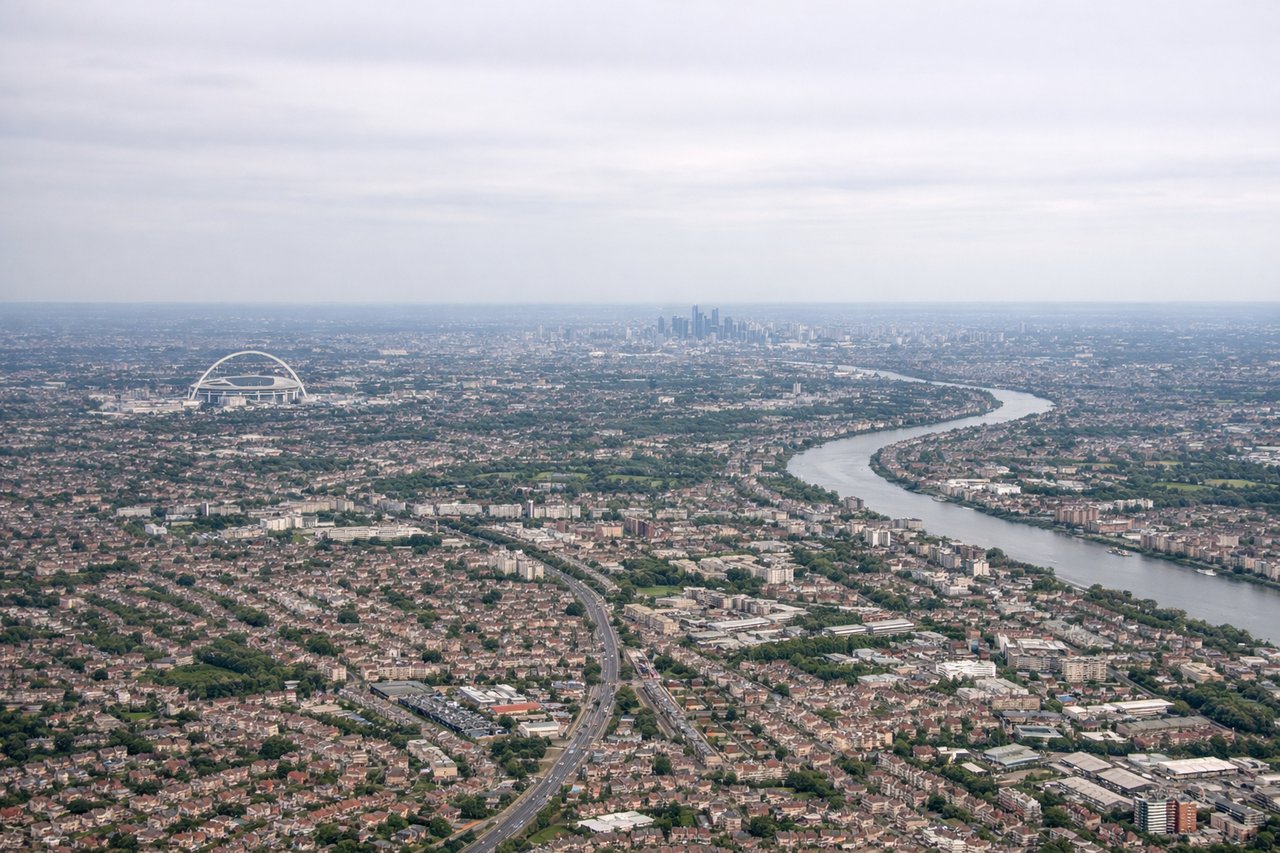
Takeoff from LHR
RIGHTHeathrow typically departs eastward on runways 09L/09R, so the right side (south) gives you views over central London as the aircraft climbs and turns. You'll see the Thames snaking through the city, the dense urban grid of west London, and on clear days the City of London skyline in the distance.
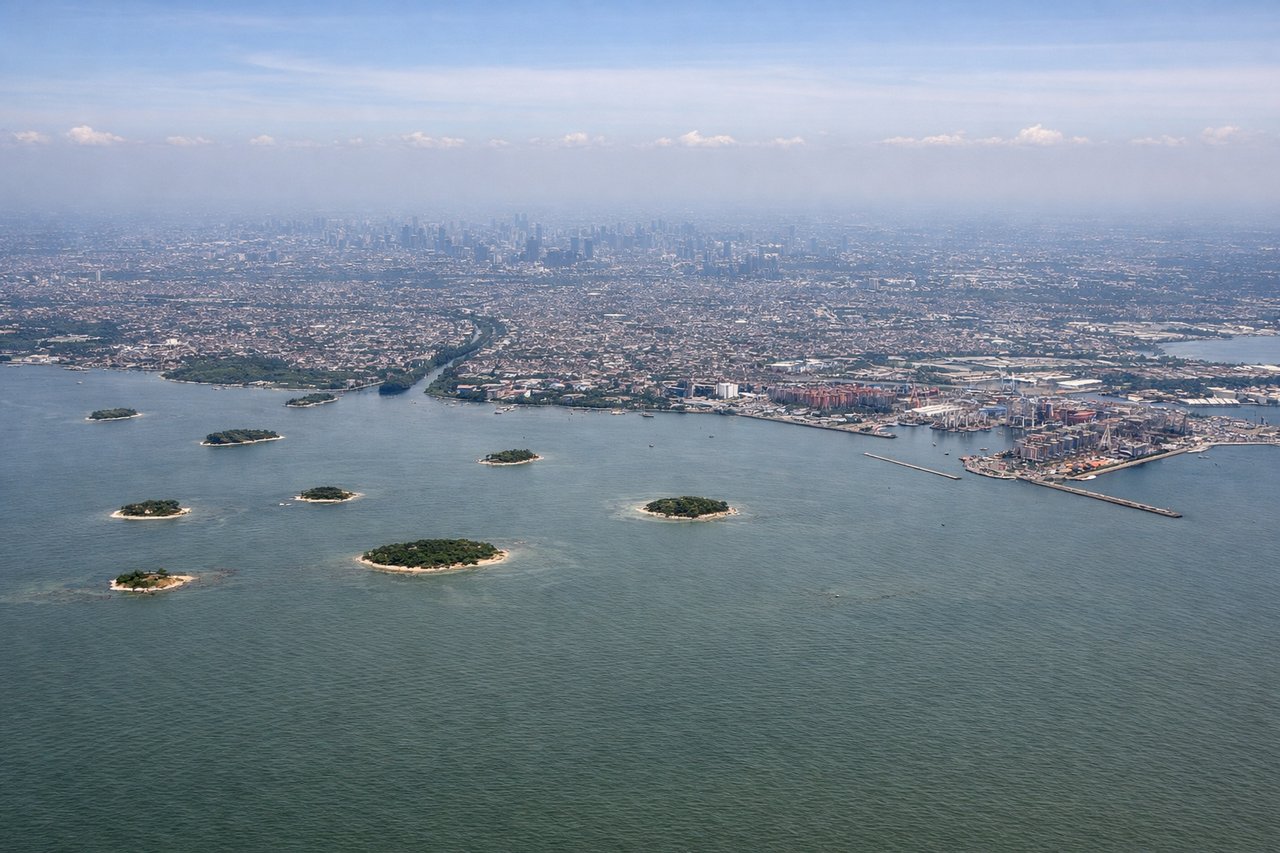
Landing at CGK
LEFTSoekarno-Hatta's main runways (07L/07R) have aircraft approaching from the west over the Java Sea, so the left side (south) looks toward Jakarta's urban sprawl and the distinctive cone of Mount Salak and the Puncak highlands beyond. The right side faces north over open sea.
Landmarks on this routeAll landmarks →
Will your flight be in sunlight?
See exactly which side of the plane gets sun and shade at your departure time.
About This Route
Which side of the plane should I sit on flying from Heathrow (LHR) to Soekarno Hatta International (CGK)?
Sit on the Right side of the plane for the best views on flights from London to Jakarta. The right side wins overall for the spectacular London departure views over the Thames and city. The flight path heading southeast over Europe and the Middle East also gives the right side better views of the Alps, the Persian Gulf coastline, and the Indian subcontinent on the long cruise. The left side advantage at Jakarta landing is real but brief.
What can I see during takeoff from Heathrow in London?
During takeoff from Heathrow (LHR), sit on the Right side for the best views. Heathrow typically departs eastward on runways 09L/09R, so the right side (south) gives you views over central London as the aircraft climbs and turns. You'll see the Thames snaking through the city, the dense urban grid of west London, and on clear days the City of London skyline in the distance. Notable sights include: River Thames through central London, Windsor Castle and Great Park to the southwest, Wembley Stadium arch, Canary Wharf towers on the eastern horizon.
What can I see when landing at Soekarno Hatta International in Jakarta?
When landing at Soekarno Hatta International (CGK), sit on the Left side for the best views. Soekarno-Hatta's main runways (07L/07R) have aircraft approaching from the west over the Java Sea, so the left side (south) looks toward Jakarta's urban sprawl and the distinctive cone of Mount Salak and the Puncak highlands beyond. The right side faces north over open sea. Notable sights include: Jakarta Bay and its small islands, the dense urban grid of North Jakarta, Mount Salak volcano to the southeast, the Puncak highland ridge on the southern horizon.
How long is the flight from London to Jakarta?
The flight from Heathrow (LHR) to Soekarno Hatta International (CGK) takes Approximately 13 to 14 hours nonstop.
What does the London to Jakarta flight path pass over?
The route typically tracks southeast over France and the Alps, then across the eastern Mediterranean and Turkey, over the Persian Gulf states with the Arabian Peninsula to the south, across the Arabian Sea, over the Indian subcontinent passing near Mumbai and across central India, then over the Bay of Bengal, the Malay Peninsula or Sumatra depending on routing, and finally across the Java Sea to Jakarta. The Alps, the Persian Gulf coastline at night with oil platform lights, and the Strait of Malacca are the most visually distinctive en-route features.