The right side wins at Heathrow departure but the left side delivers the more dramatic and memorable view on approach into Charleston with the harbor, Fort Sumter, and the bridge all visible simultaneously. Over the Atlantic crossing itself neither side has a meaningful advantage, so the Charleston arrival tips the balance to the left.
Flight Path
The route tracks a great circle arc northwest over Ireland, then across the North Atlantic passing south of Greenland and Iceland's vicinity, crossing into Canadian airspace over Newfoundland or Nova Scotia, then descending the US East Coast. Key features include the Irish coastline, the vast open North Atlantic with possible iceberg fields near the Labrador Sea, the Canadian Maritime coastline, and the Eastern Seaboard of the US from the Carolinas northward visible in the descent phase.
Great circle distance and headings ›Phase by phase

Takeoff from LHR
RIGHTHeathrow typically departs eastward on runways 09L/09R, then aircraft turn northwest over London. The right side gives views over central London including the Thames bends, the City, and Canary Wharf as the aircraft climbs and banks. Left side faces north toward suburban Middlesex with little of interest.
Landing at CHS
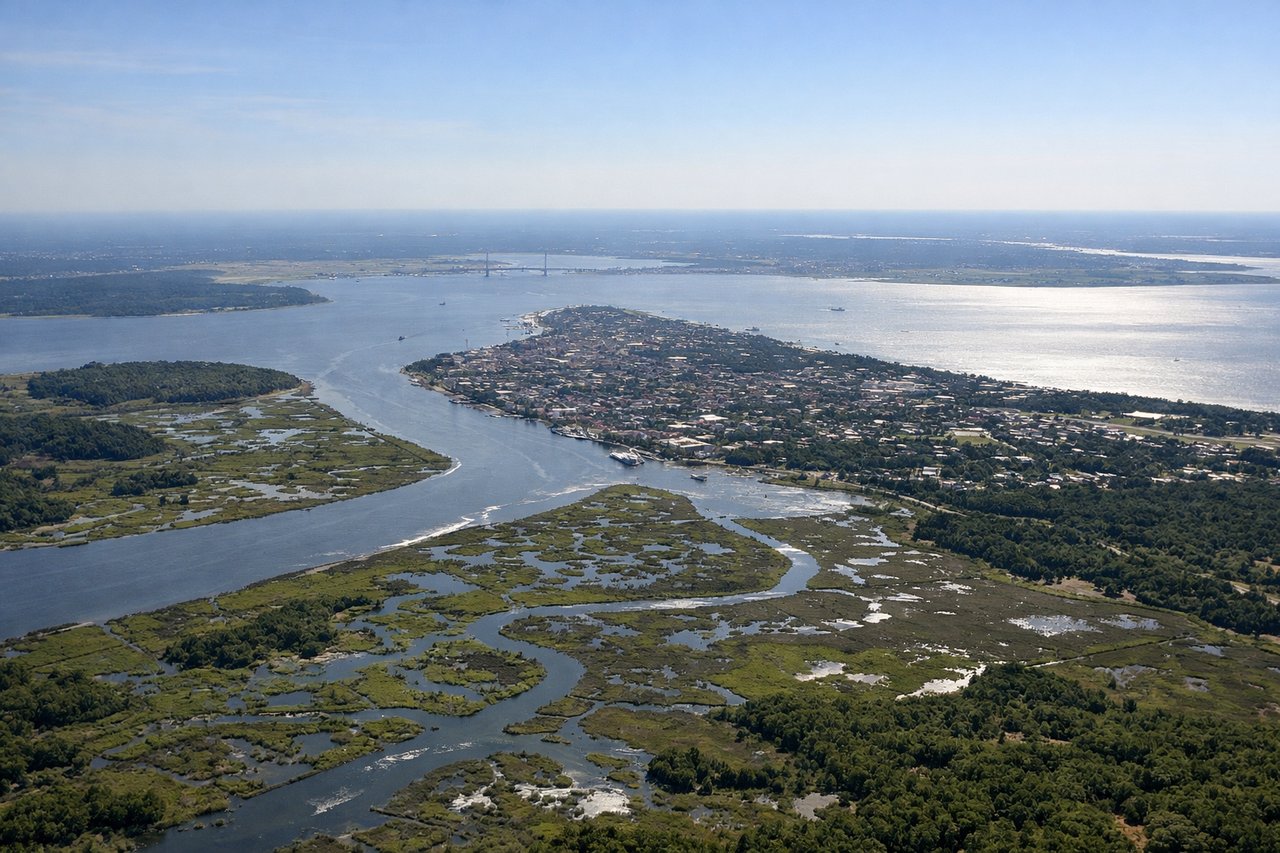
LEFTCharleston approaches typically use runway 03 from the south or runway 15 from the north. On the common southward approach over the coast, the left side looks east over the Charleston Harbor, the historic peninsula, Fort Sumter, and the barrier islands. Right side faces inland toward flat South Carolina pine forest with little visual interest.
Landmarks on this routeAll landmarks →
Will your flight be in sunlight?
See exactly which side of the plane gets sun and shade at your departure time.
About This Route
Which side of the plane should I sit on flying from Heathrow (LHR) to Charleston Afb International (CHS)?
Sit on the Left side of the plane for the best views on flights from London to Charleston. The right side wins at Heathrow departure but the left side delivers the more dramatic and memorable view on approach into Charleston with the harbor, Fort Sumter, and the bridge all visible simultaneously. Over the Atlantic crossing itself neither side has a meaningful advantage, so the Charleston arrival tips the balance to the left.
What can I see during takeoff from Heathrow in London?
During takeoff from Heathrow (LHR), sit on the Right side for the best views. Heathrow typically departs eastward on runways 09L/09R, then aircraft turn northwest over London. The right side gives views over central London including the Thames bends, the City, and Canary Wharf as the aircraft climbs and banks. Left side faces north toward suburban Middlesex with little of interest. Notable sights include: Thames river bends through central London, Canary Wharf tower cluster, The City of London skyline, Windsor Castle and Great Park (visible as aircraft turns westbound).
What can I see when landing at Charleston Afb International in Charleston?
When landing at Charleston Afb International (CHS), sit on the Left side for the best views. Charleston approaches typically use runway 03 from the south or runway 15 from the north. On the common southward approach over the coast, the left side looks east over the Charleston Harbor, the historic peninsula, Fort Sumter, and the barrier islands. Right side faces inland toward flat South Carolina pine forest with little visual interest. Notable sights include: Charleston Harbor and historic downtown peninsula, Fort Sumter island in the harbor mouth, James Island and Folly Beach barrier island, the Arthur Ravenel Jr. Bridge over the Cooper River.
How long is the flight from London to Charleston?
The flight from Heathrow (LHR) to Charleston Afb International (CHS) takes Approximately 9 to 10 hours.
What does the London to Charleston flight path pass over?
The route tracks a great circle arc northwest over Ireland, then across the North Atlantic passing south of Greenland and Iceland's vicinity, crossing into Canadian airspace over Newfoundland or Nova Scotia, then descending the US East Coast. Key features include the Irish coastline, the vast open North Atlantic with possible iceberg fields near the Labrador Sea, the Canadian Maritime coastline, and the Eastern Seaboard of the US from the Carolinas northward visible in the descent phase.