The right side offers more consistent land and coastline views across the full flight — Windsor Castle and the Welsh coast at departure, then Ireland's rugged west coast and the fjord-like shoreline of Labrador during the long ocean crossing — while the left side is dominated by open Atlantic water for most of the journey, its strong Toronto skyline finale not enough to offset the empty cruise phase.
Flight Path
The flight's midpoint lies over the North Atlantic Ocean, with the great-circle track curving far enough north that the Labrador Sea and, on clear days, the southern tip of Greenland's ice-covered coastline may be visible in the distance to the north before the route descends toward the Labrador coast and northern Quebec.
Great circle distance and headings ›.jpeg?width=600)

Phase by phase
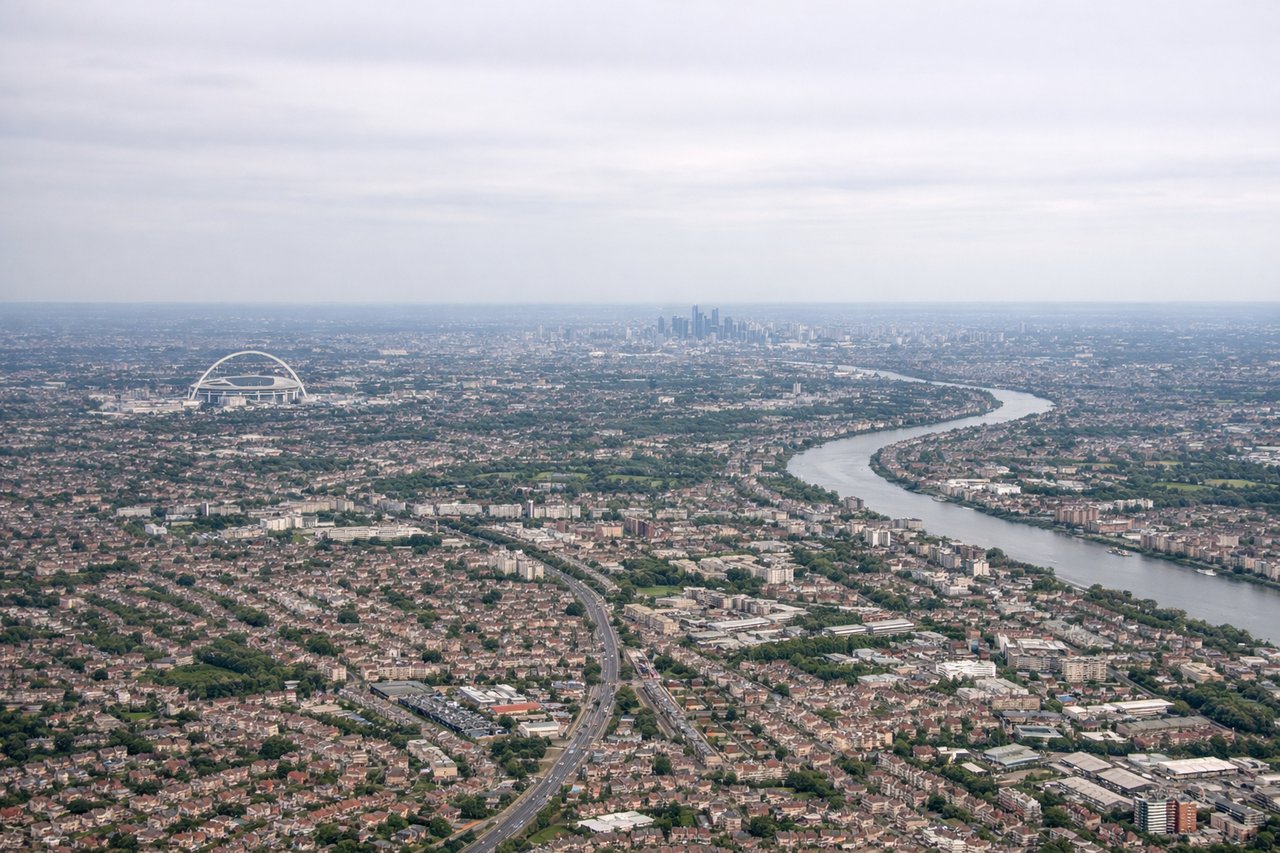
Takeoff from LHR
RIGHTDeparting on Heathrow's westerly runways (the 70% norm), the climb-out passes very close to Windsor Castle and the Thames Valley before the aircraft banks northwest onto its oceanic track, putting these landmarks on the right side. The turn also brings the Cotswold edge and the Bristol Channel into view as the plane heads toward Wales.
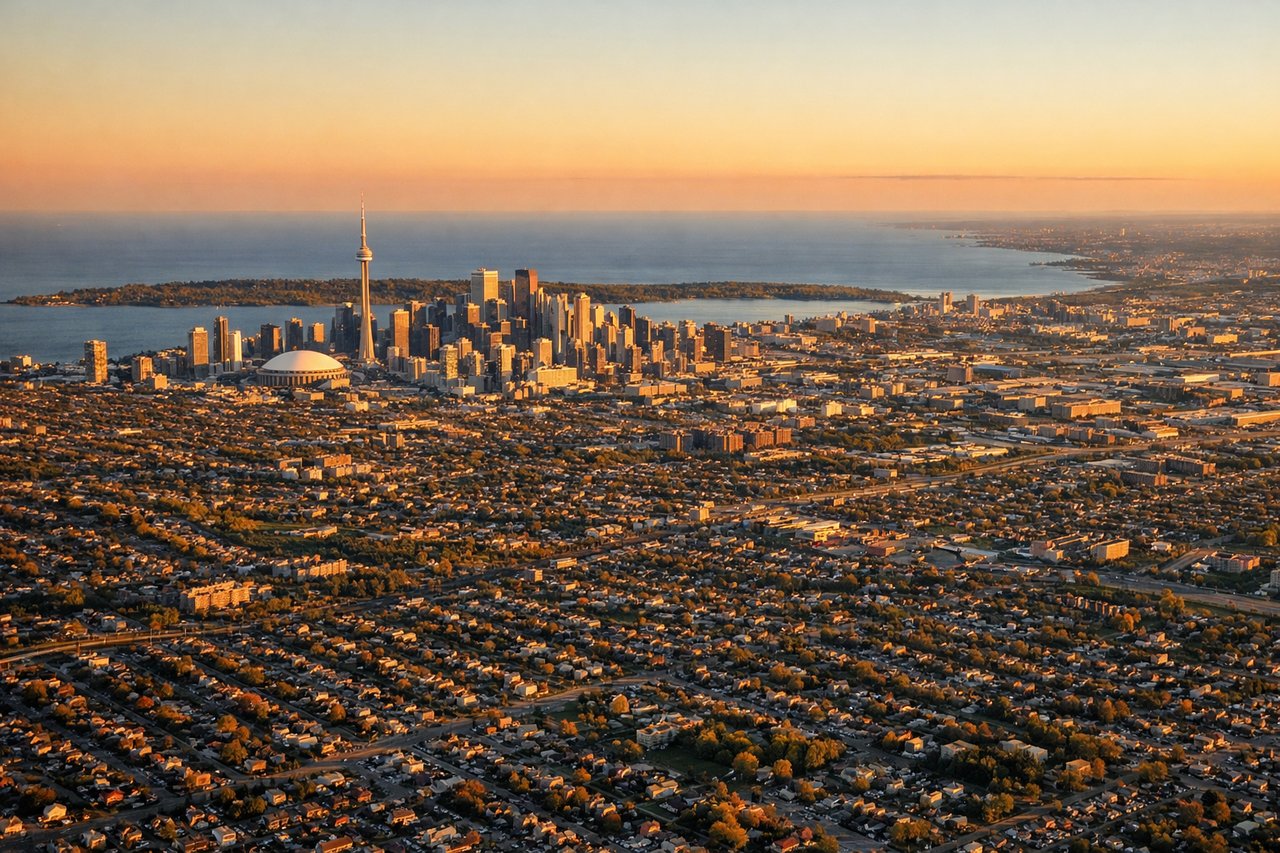
Landing at YYZ
LEFTToronto arrivals commonly land on runway 24L/24R into prevailing southwest winds, approaching from the northeast over the city's suburbs before turning onto final. This puts downtown Toronto and the Lake Ontario shoreline on the left side of the aircraft during the descent.
Landmarks on this routeAll landmarks →
Will your flight be in sunlight?
See exactly which side of the plane gets sun and shade at your departure time.
About This Route
Which side of the plane should I sit on flying from Heathrow (LHR) to Lester B Pearson International (YYZ)?
Sit on the Right side of the plane for the best views on flights from London to Toronto. The right side offers more consistent land and coastline views across the full flight — Windsor Castle and the Welsh coast at departure, then Ireland's rugged west coast and the fjord-like shoreline of Labrador during the long ocean crossing — while the left side is dominated by open Atlantic water for most of the journey, its strong Toronto skyline finale not enough to offset the empty cruise phase.
What can I see during takeoff from Heathrow in London?
During takeoff from Heathrow (LHR), sit on the Right side for the best views. Departing on Heathrow's westerly runways (the 70% norm), the climb-out passes very close to Windsor Castle and the Thames Valley before the aircraft banks northwest onto its oceanic track, putting these landmarks on the right side. The turn also brings the Cotswold edge and the Bristol Channel into view as the plane heads toward Wales. Notable sights include: Windsor Castle, River Thames/Thames Valley, Cotswold Hills, Bristol Channel and South Wales coastline.
What can I see when landing at Lester B Pearson International in Toronto?
When landing at Lester B Pearson International (YYZ), sit on the Left side for the best views. Toronto arrivals commonly land on runway 24L/24R into prevailing southwest winds, approaching from the northeast over the city's suburbs before turning onto final. This puts downtown Toronto and the Lake Ontario shoreline on the left side of the aircraft during the descent. Notable sights include: CN Tower and downtown Toronto skyline, Lake Ontario shoreline, Toronto Islands, Humber Bay.
How long is the flight from London to Toronto?
The flight from Heathrow (LHR) to Lester B Pearson International (YYZ) takes 8h 15m.
What does the London to Toronto flight path pass over?
The flight's midpoint lies over the North Atlantic Ocean, with the great-circle track curving far enough north that the Labrador Sea and, on clear days, the southern tip of Greenland's ice-covered coastline may be visible in the distance to the north before the route descends toward the Labrador coast and northern Quebec.