Lisbon to Florianopolis is 5,249 miles (8,447 km), a flight of about 10 hours.
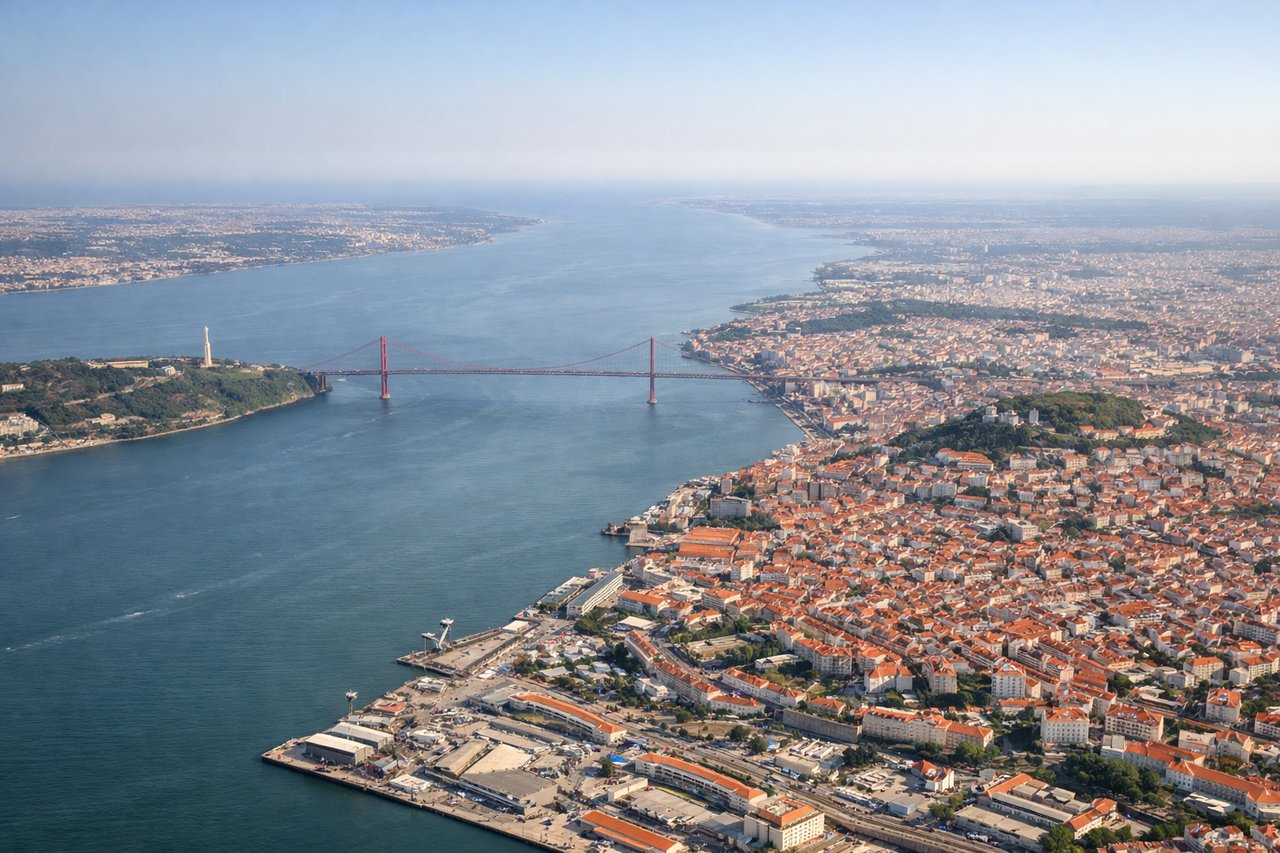
While landing favors the right, the departure view of the Tagus estuary and Atlantic approach is more visually distinctive and geographically dramatic than the landing approach. The left side captures Lisbon's iconic water geography at a critical moment in the flight.
Flight Path
This transatlantic route crosses the entire Atlantic Ocean. Notable waypoints include the Azores archipelago (roughly 900 miles west of Lisbon, typically passed to the north), the Mid-Atlantic Ridge (invisible but structurally significant), and the approach to South America via the Brazilian coast. The flight path generally follows a great-circle route over open ocean with no significant visible landmarks between departure and the approach to Florianópolis. Passengers may see scattered cumulus clouds and occasional weather systems, but the vast majority of the flight crosses featureless ocean.
Great circle distance and headings ›.jpg?width=600)


Phase by phase
Takeoff from LIS
LEFTLisbon typically departs runway 03 (northeast) or 21 (southwest). Left seats face northwest on either departure, giving views of the Tagus River estuary, the Atlantic coastline, and the Serra da Arrábida mountain range south of the river. Right seats would see inland terrain toward the Portuguese interior.
Landing at FLN
RIGHTFlorianópolis approaches typically use runway 10 (northeast) or 28 (southwest). Right seats on approach to either runway capture views of the Atlantic coastline, Baía Norte (North Bay), and the distinctive shape of Santa Catarina Island with its beaches and lagoons. Left seats would see inland forested terrain.
Landmarks on this routeAll landmarks →
Will your flight be in sunlight?
Pick a date and time in the Sun Map to watch the sun move across your whole flight.
About This Route
Which side of the plane should I sit on flying from Lisboa (LIS) to Hercilio Luz (FLN)?
Sit on the Left side of the plane for the best views on flights from Lisbon to Florianopolis. While landing favors the right, the departure view of the Tagus estuary and Atlantic approach is more visually distinctive and geographically dramatic than the landing approach. The left side captures Lisbon's iconic water geography at a critical moment in the flight.
What can I see during takeoff from Lisboa in Lisbon?
During takeoff from Lisboa (LIS), sit on the Left side for the best views. Lisbon typically departs runway 03 (northeast) or 21 (southwest). Left seats face northwest on either departure, giving views of the Tagus River estuary, the Atlantic coastline, and the Serra da Arrábida mountain range south of the river. Right seats would see inland terrain toward the Portuguese interior. Notable sights include: Tagus River estuary, Atlantic Ocean, Serra da Arrábida (limestone ridge), Cascais coastline.
What can I see when landing at Hercilio Luz in Florianopolis?
When landing at Hercilio Luz (FLN), sit on the Right side for the best views. Florianópolis approaches typically use runway 10 (northeast) or 28 (southwest). Right seats on approach to either runway capture views of the Atlantic coastline, Baía Norte (North Bay), and the distinctive shape of Santa Catarina Island with its beaches and lagoons. Left seats would see inland forested terrain. Notable sights include: Santa Catarina Island coastline, Baía Norte (North Bay), Atlantic Ocean, Lagoa da Conceição.
How long is the flight from Lisbon to Florianopolis?
The flight from Lisboa (LIS) to Hercilio Luz (FLN) takes about 10 hours. The shortest flight path between them is 5,249 miles (8,447 km); winds and air traffic control usually add a few percent.
What does the Lisbon to Florianopolis flight path pass over?
This transatlantic route crosses the entire Atlantic Ocean. Notable waypoints include the Azores archipelago (roughly 900 miles west of Lisbon, typically passed to the north), the Mid-Atlantic Ridge (invisible but structurally significant), and the approach to South America via the Brazilian coast. The flight path generally follows a great-circle route over open ocean with no significant visible landmarks between departure and the approach to Florianópolis. Passengers may see scattered cumulus clouds and occasional weather systems, but the vast majority of the flight crosses featureless ocean.