The outbound right-side view of Lisbon's estuary and Atlantic departure is more visually distinctive and geographically dramatic than the landing approach. While Recife's rivers are interesting, the Tagus estuary is a more iconic and clearly defined geographic feature visible from the window.
Flight Path
The flight crosses the Atlantic at a northerly latitude, passing over open ocean with no significant visible landmarks for roughly 6-7 hours. The route typically follows a great-circle path that passes south of the Azores (not visible at cruise altitude unless the aircraft deviates significantly). Approaching Brazil, the Amazon River delta and northeastern Brazilian coastline become visible during descent, though these are typically seen during the final 1-2 hours of flight. The Equator is crossed during the descent phase, though it is not visually marked from the air.
Great circle distance and headings ›.jpg?width=600)


Phase by phase
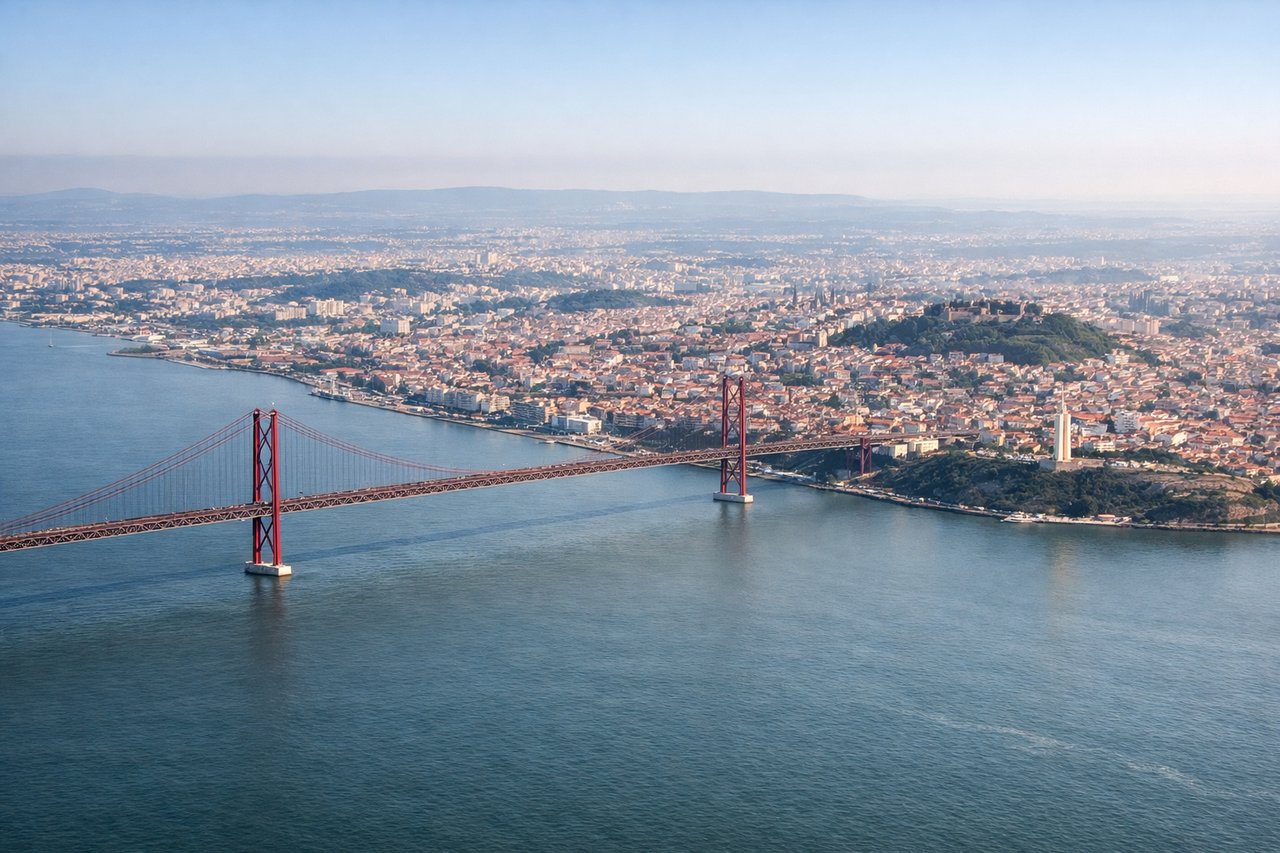
Takeoff from LIS
RIGHTRight-side seats offer views of the Tagus River estuary and Lisbon's waterfront as the aircraft climbs out over the Atlantic. The river's distinctive wide mouth and the city's layout along both banks are clearly visible during the initial climb.
Landing at REC
LEFTLeft-side seats provide excellent views of Recife's distinctive geography during approach: the city's three rivers (Capibaribe, Beberibe, and Pina), the urban waterfront, and the Atlantic coastline. The approach typically descends over the ocean and swings inland, making the left side ideal for viewing the city's intricate waterway system.
Landmarks on this routeAll landmarks →
Will your flight be in sunlight?
See exactly which side of the plane gets sun and shade at your departure time.
About This Route
Which side of the plane should I sit on flying from Lisboa (LIS) to Guararapes (REC)?
Sit on the Right side of the plane for the best views on flights from Lisbon to Recife. The outbound right-side view of Lisbon's estuary and Atlantic departure is more visually distinctive and geographically dramatic than the landing approach. While Recife's rivers are interesting, the Tagus estuary is a more iconic and clearly defined geographic feature visible from the window.
What can I see during takeoff from Lisboa in Lisbon?
During takeoff from Lisboa (LIS), sit on the Right side for the best views. Right-side seats offer views of the Tagus River estuary and Lisbon's waterfront as the aircraft climbs out over the Atlantic. The river's distinctive wide mouth and the city's layout along both banks are clearly visible during the initial climb. Notable sights include: Tagus River estuary, Lisbon city center and waterfront districts, Atlantic coastline north and south of the mouth, Cristo Rei monument area on the south bank.
What can I see when landing at Guararapes in Recife?
When landing at Guararapes (REC), sit on the Left side for the best views. Left-side seats provide excellent views of Recife's distinctive geography during approach: the city's three rivers (Capibaribe, Beberibe, and Pina), the urban waterfront, and the Atlantic coastline. The approach typically descends over the ocean and swings inland, making the left side ideal for viewing the city's intricate waterway system. Notable sights include: Capibaribe River and its urban course through central Recife, Beberibe River confluence, Pina River estuary, Atlantic coastline and reef formations (Recife means 'reef' in Portuguese).
How long is the flight from Lisbon to Recife?
The flight from Lisboa (LIS) to Guararapes (REC) takes Approximately 8.5 to 9.5 hours.
What does the Lisbon to Recife flight path pass over?
The flight crosses the Atlantic at a northerly latitude, passing over open ocean with no significant visible landmarks for roughly 6-7 hours. The route typically follows a great-circle path that passes south of the Azores (not visible at cruise altitude unless the aircraft deviates significantly). Approaching Brazil, the Amazon River delta and northeastern Brazilian coastline become visible during descent, though these are typically seen during the final 1-2 hours of flight. The Equator is crossed during the descent phase, though it is not visually marked from the air.