Left side scores higher due to the dramatic volcanic departure from Gran Canaria (3.5 vs 2.5 for right). While the right side offers better landing scenery with the Danube and Vienna's approach, the takeoff experience from a scenic island airport with visible peaks and coastline outweighs the relatively flat approach into Vienna. The full flight experience favors the left side's superior initial visual drama.
Flown LPA to VIE? Did we get it right?
Flight Path
Gran Canaria to Vienna is 2,202 miles (3,544 km), a flight of about 5 hours 35 minutes.
The flight path crosses the Mediterranean Sea, passing south of the Balearic Islands (Mallorca and Ibiza visible if conditions permit during the first 2 hours), then continues over southern France with the Pyrenees visible on the left side during cruise, the Rhône Valley and Alps appearing as the aircraft approaches Central Europe, and finally the Danube corridor becoming prominent during descent into Vienna.
Great circle distance and headings ›Phase by phase
Takeoff from LPA
LEFTLeft side captures Gran Canaria's dramatic volcanic terrain and the island's northern coastline during initial climb. The island's central peaks and coastal settlements provide immediate visual interest absent on the right side, which faces open Atlantic.
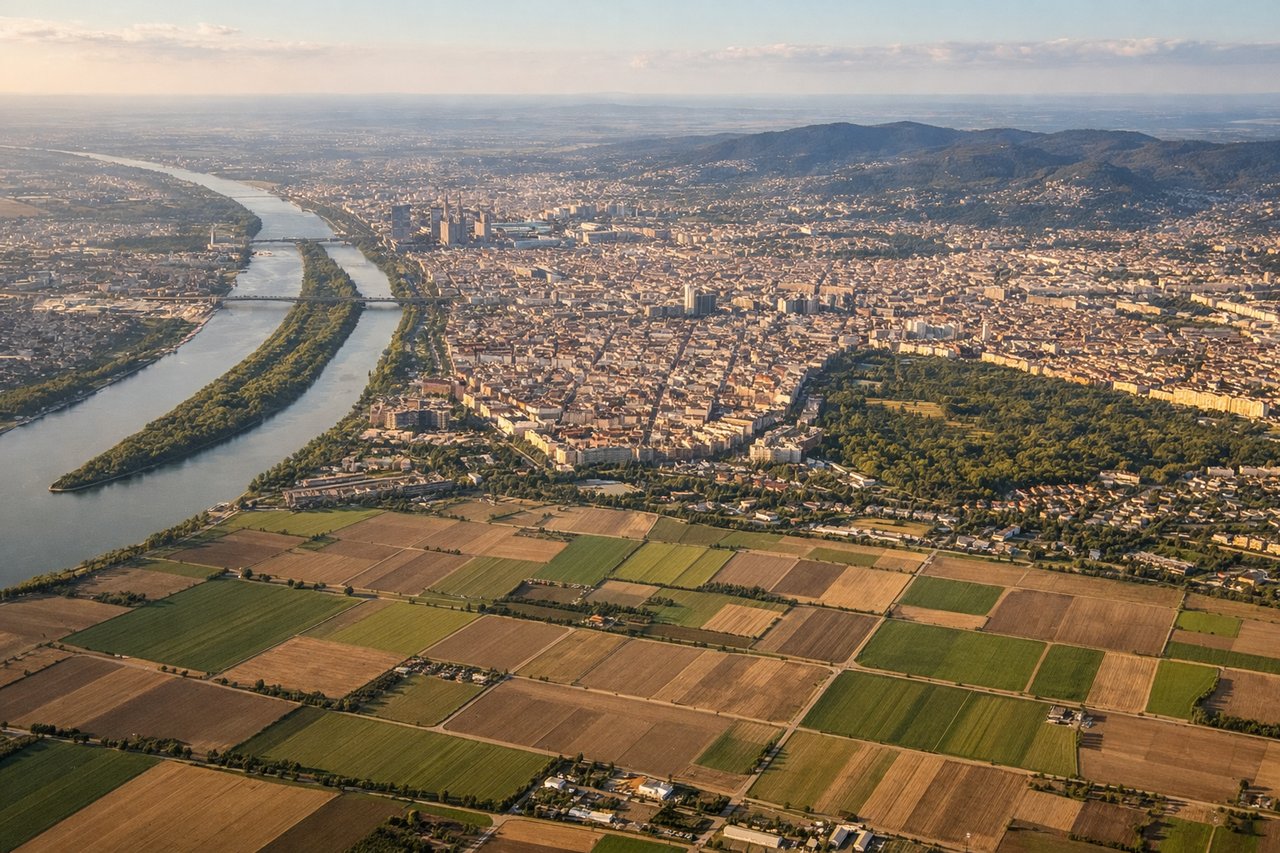
Landing at VIE
RIGHTRight side offers superior approach scenery as the aircraft descends toward Vienna. The Danube River becomes increasingly prominent, and the flat Pannonian Plain with its patchwork of agricultural fields provides visual structure. The approach also reveals Vienna's urban sprawl and the Danube's distinctive meanders.
Will your flight be in sunlight?
Pick a date and time in the Sun Map to watch the sun move across your whole flight.
About This Route
Which side of the plane should I sit on flying from Gran Canaria (LPA) to Schwechat (VIE)?
Sit on the Left side of the plane for the best views on flights from Gran Canaria to Vienna. Left side scores higher due to the dramatic volcanic departure from Gran Canaria (3.5 vs 2.5 for right). While the right side offers better landing scenery with the Danube and Vienna's approach, the takeoff experience from a scenic island airport with visible peaks and coastline outweighs the relatively flat approach into Vienna. The full flight experience favors the left side's superior initial visual drama.
What can I see during takeoff from Gran Canaria in Gran Canaria?
During takeoff from Gran Canaria (LPA), sit on the Left side for the best views. Left side captures Gran Canaria's dramatic volcanic terrain and the island's northern coastline during initial climb. The island's central peaks and coastal settlements provide immediate visual interest absent on the right side, which faces open Atlantic. Notable sights include: Gran Canaria's central volcanic peaks (Pico de las Nieves visible at ~6,400 ft), Las Palmas harbor and city on the northern coast, the narrow coastal plain between mountains and sea.
What can I see when landing at Schwechat in Vienna?
When landing at Schwechat (VIE), sit on the Right side for the best views. Right side offers superior approach scenery as the aircraft descends toward Vienna. The Danube River becomes increasingly prominent, and the flat Pannonian Plain with its patchwork of agricultural fields provides visual structure. The approach also reveals Vienna's urban sprawl and the Danube's distinctive meanders. Notable sights include: The Danube River with its characteristic oxbow bends near Vienna, the flat agricultural landscape of the Pannonian Plain, Vienna's urban districts spreading across the plain, the Carpathian foothills visible distantly to the north.
How long is the flight from Gran Canaria to Vienna?
The flight from Gran Canaria (LPA) to Schwechat (VIE) takes about 5 hours 35 minutes. The shortest flight path between them is 2,202 miles (3,544 km); winds and air traffic control usually add a few percent.
What does the Gran Canaria to Vienna flight path pass over?
The flight path crosses the Mediterranean Sea, passing south of the Balearic Islands (Mallorca and Ibiza visible if conditions permit during the first 2 hours), then continues over southern France with the Pyrenees visible on the left side during cruise, the Rhône Valley and Alps appearing as the aircraft approaches Central Europe, and finally the Danube corridor becoming prominent during descent into Vienna.