Right side scores higher due to superior scenic variety across the full flight. Takeoff offers the dramatic Nile Valley contrast and Luxor's archaeological sites; cruise provides views of North African coastline and Mediterranean approaches; landing delivers the Guadarrama Mountains and Madrid's urban sprawl. Left side is dominated by open Mediterranean Sea and North African desert with minimal landmark density.
Flown LXR to MAD? Did we get it right?
Flight Path
Luxor to Madrid is 2,315 miles (3,725 km), a flight of about 5 hours 15 minutes.
Mediterranean coastline near Libya/Tunisia border, North African Sahara Desert, Atlas Mountains foothills in Morocco/Algeria region, Strait of Gibraltar approaches, Iberian Peninsula interior plains, Tagus River valley near Madrid
Great circle distance and headings ›Phase by phase
Takeoff from LXR
RIGHTRight side captures the Nile Valley and Luxor's urban sprawl immediately after departure. The river's distinctive green ribbon contrasts sharply with surrounding desert, and the Temple of Karnak complex is visible from altitude during initial climb-out northward.
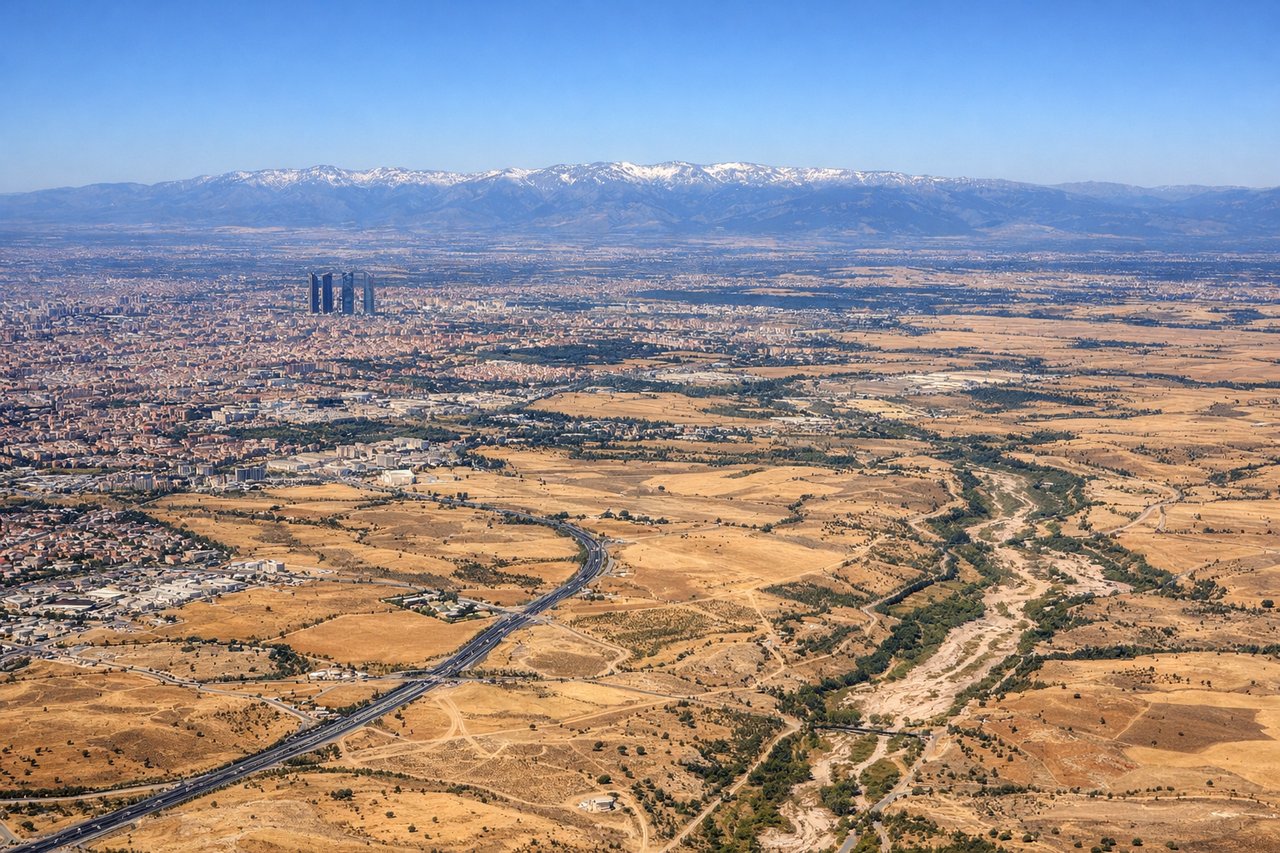
Landing at MAD
RIGHTRight side offers the most dramatic approach into Madrid. Descending from the southeast, passengers see the Guadarrama Mountains rising prominently, followed by the sprawling urban expanse of Madrid itself, with the Manzanares River visible threading through the city center during final approach.
Will your flight be in sunlight?
Pick a date and time in the Sun Map to watch the sun move across your whole flight.
About This Route
Which side of the plane should I sit on flying from Luxor International (LXR) to Barajas (MAD)?
Sit on the Right side of the plane for the best views on flights from Luxor to Madrid. Right side scores higher due to superior scenic variety across the full flight. Takeoff offers the dramatic Nile Valley contrast and Luxor's archaeological sites; cruise provides views of North African coastline and Mediterranean approaches; landing delivers the Guadarrama Mountains and Madrid's urban sprawl. Left side is dominated by open Mediterranean Sea and North African desert with minimal landmark density.
What can I see during takeoff from Luxor International in Luxor?
During takeoff from Luxor International (LXR), sit on the Right side for the best views. Right side captures the Nile Valley and Luxor's urban sprawl immediately after departure. The river's distinctive green ribbon contrasts sharply with surrounding desert, and the Temple of Karnak complex is visible from altitude during initial climb-out northward. Notable sights include: Nile River valley (bright green agricultural strip), Temple of Karnak and Luxor Temple complexes, West Bank necropolis area, surrounding Sahara Desert.
What can I see when landing at Barajas in Madrid?
When landing at Barajas (MAD), sit on the Right side for the best views. Right side offers the most dramatic approach into Madrid. Descending from the southeast, passengers see the Guadarrama Mountains rising prominently, followed by the sprawling urban expanse of Madrid itself, with the Manzanares River visible threading through the city center during final approach. Notable sights include: Guadarrama Mountains (snow-capped peaks visible on clear days), Madrid city skyline and urban grid, Manzanares River, Barajas Airport complex.
How long is the flight from Luxor to Madrid?
The flight from Luxor International (LXR) to Barajas (MAD) takes about 5 hours 15 minutes. The shortest flight path between them is 2,315 miles (3,725 km); winds and air traffic control usually add a few percent.
What does the Luxor to Madrid flight path pass over?
Mediterranean coastline near Libya/Tunisia border, North African Sahara Desert, Atlas Mountains foothills in Morocco/Algeria region, Strait of Gibraltar approaches, Iberian Peninsula interior plains, Tagus River valley near Madrid