While Madrid's departure offers modest urban and mountain views, Düsseldorf's arrival over the Rhine River and city skyline provides more dramatic and distinctive scenery. The Rhine's meanders and the industrial-urban contrast create greater visual interest than the relatively flat Spanish departure. The right side captures the most scenic portion of the flight—the final descent—which outweighs the left side's modest takeoff advantage.
Flown MAD to DUS? Did we get it right?
Flight Path
Madrid to Duesseldorf is 895 miles (1,440 km), a flight of about 2 hours 15 minutes.
The flight crosses the Pyrenees foothills (visible from altitude as low ridges), the Aquitaine Basin, the Loire Valley, and enters the Rhine-Meuse lowlands. The Massif Central remains to the south. Most of the route follows relatively flat terrain with scattered river valleys; no dramatic alpine or coastal features dominate the cruise phase.
Great circle distance and headings ›Phase by phase
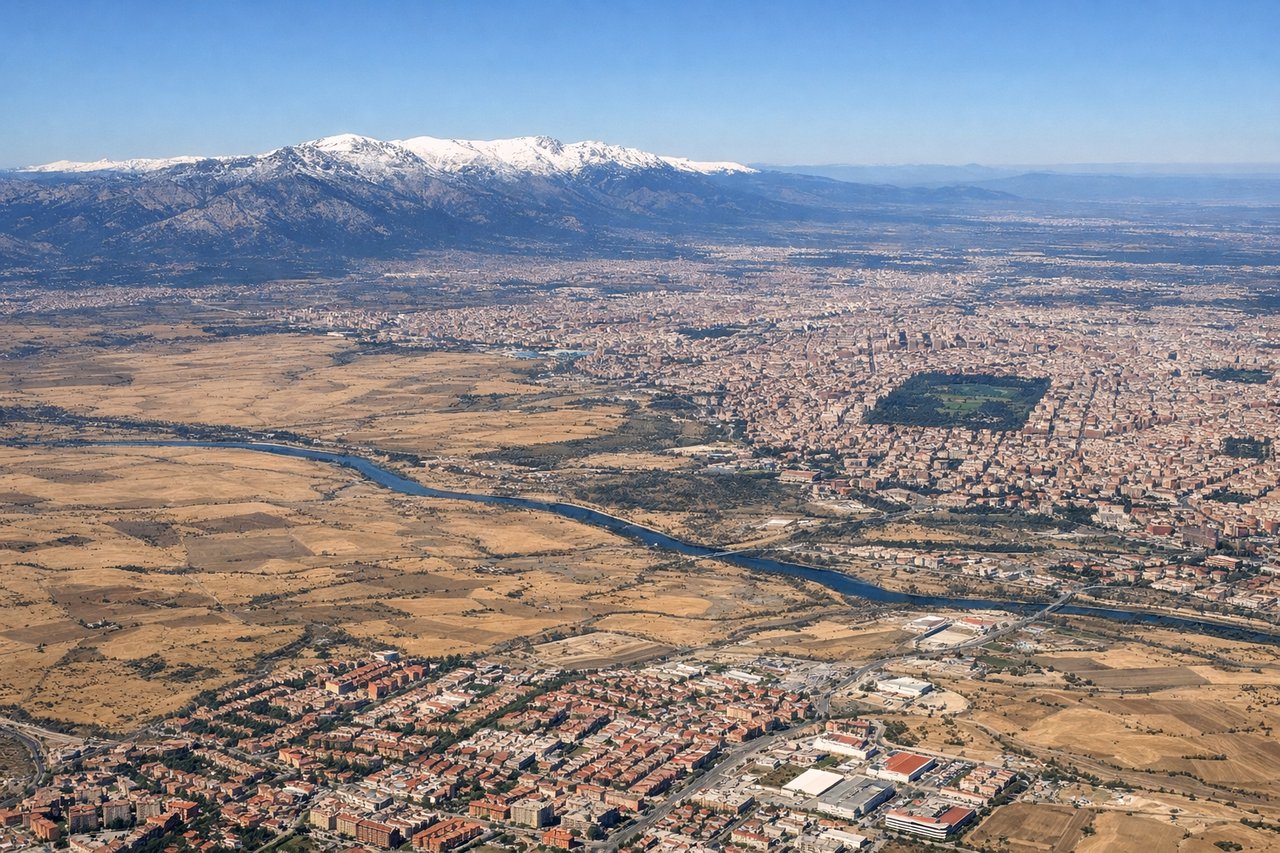
Takeoff from MAD
LEFTMadrid's north configuration departure (typical with prevailing winds) rotates aircraft northwest, offering views of the city's urban sprawl and the Guadarrama Mountains to the northwest. Right side sees only flat central Spanish plains.
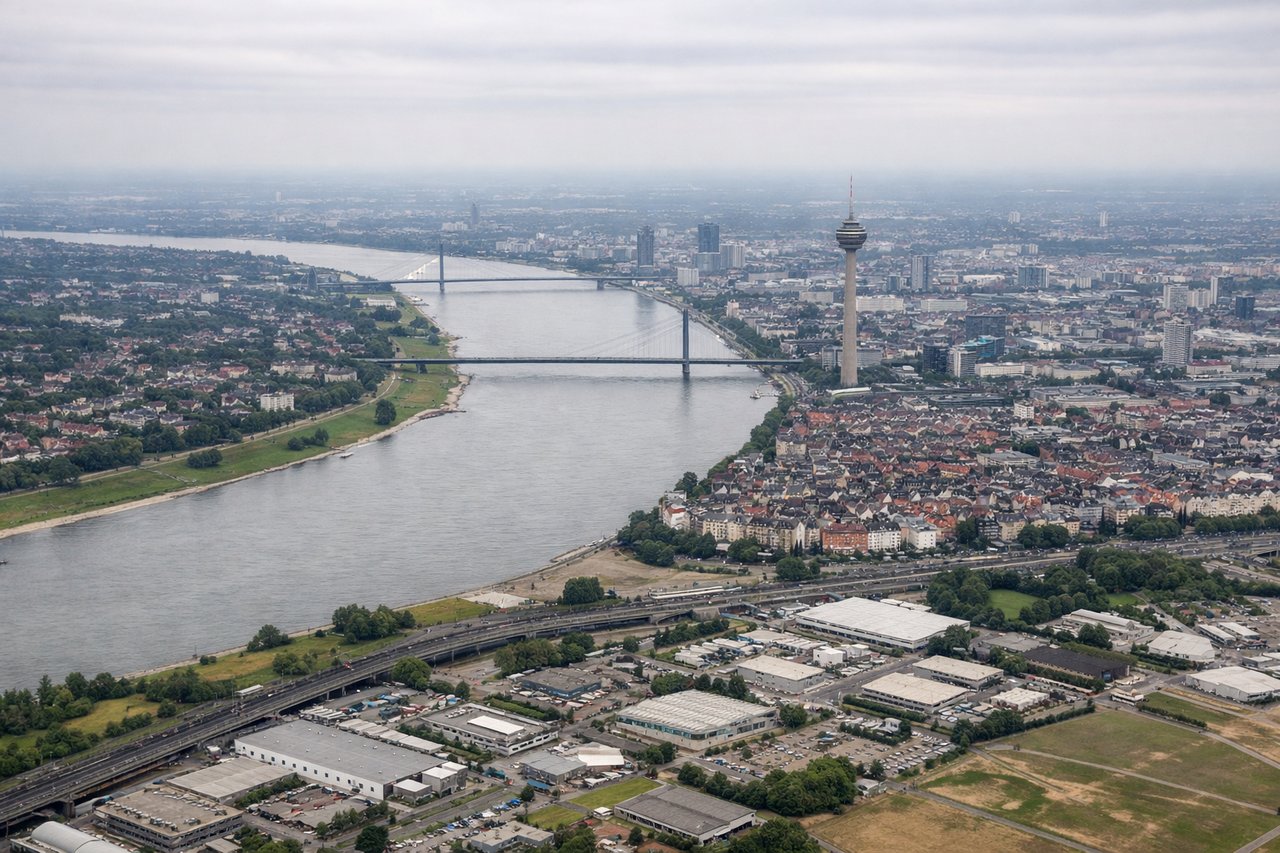
Landing at DUS
RIGHTDüsseldorf's standard 23L/23R arrival approach from the northeast brings aircraft over the Rhine River valley and the city's distinctive riverfront. Right-side passengers see the Rhine's dramatic meanders, industrial zones, and the city skyline as the aircraft descends toward the southwest-facing runways.
Will your flight be in sunlight?
Pick a date and time in the Sun Map to watch the sun move across your whole flight.
About This Route
Which side of the plane should I sit on flying from Barajas (MAD) to Dusseldorf (DUS)?
Sit on the Right side of the plane for the best views on flights from Madrid to Duesseldorf. While Madrid's departure offers modest urban and mountain views, Düsseldorf's arrival over the Rhine River and city skyline provides more dramatic and distinctive scenery. The Rhine's meanders and the industrial-urban contrast create greater visual interest than the relatively flat Spanish departure. The right side captures the most scenic portion of the flight—the final descent—which outweighs the left side's modest takeoff advantage.
What can I see during takeoff from Barajas in Madrid?
During takeoff from Barajas (MAD), sit on the Left side for the best views. Madrid's north configuration departure (typical with prevailing winds) rotates aircraft northwest, offering views of the city's urban sprawl and the Guadarrama Mountains to the northwest. Right side sees only flat central Spanish plains. Notable sights include: Madrid city center and suburbs, Guadarrama Mountains (distant northwest), Manzanares River valley.
What can I see when landing at Dusseldorf in Duesseldorf?
When landing at Dusseldorf (DUS), sit on the Right side for the best views. Düsseldorf's standard 23L/23R arrival approach from the northeast brings aircraft over the Rhine River valley and the city's distinctive riverfront. Right-side passengers see the Rhine's dramatic meanders, industrial zones, and the city skyline as the aircraft descends toward the southwest-facing runways. Notable sights include: Rhine River with multiple meanders, Düsseldorf city skyline and harbor, industrial Ruhr Valley to the south, Lower Rhine plains.
How long is the flight from Madrid to Duesseldorf?
The flight from Barajas (MAD) to Dusseldorf (DUS) takes about 2 hours 15 minutes. The shortest flight path between them is 895 miles (1,440 km); winds and air traffic control usually add a few percent.
What does the Madrid to Duesseldorf flight path pass over?
The flight crosses the Pyrenees foothills (visible from altitude as low ridges), the Aquitaine Basin, the Loire Valley, and enters the Rhine-Meuse lowlands. The Massif Central remains to the south. Most of the route follows relatively flat terrain with scattered river valleys; no dramatic alpine or coastal features dominate the cruise phase.