While takeoff favors the right for mountain views, the landing approach over Fuerteventura's volcanic landscape and the Bocayna Channel strait provides more sustained visual interest. Left-side seats capture the dramatic transition from ocean to island and the unique geology of the Canary Islands.
Flight Path
The flight path crosses the Spanish plateau (Meseta Central) heading southwest, passing over Extremadura's rolling terrain and the Tagus River basin. As you progress south, the landscape becomes increasingly arid. The flight crosses the Atlantic Ocean for roughly 400 nautical miles with no major landmarks visible except open water. The approach to Fuerteventura begins with sightings of the eastern Canary Islands chain—Lanzarote becomes visible first on the left, followed by Fuerteventura's volcanic peaks rising from the ocean.
Great circle distance and headings ›Phase by phase
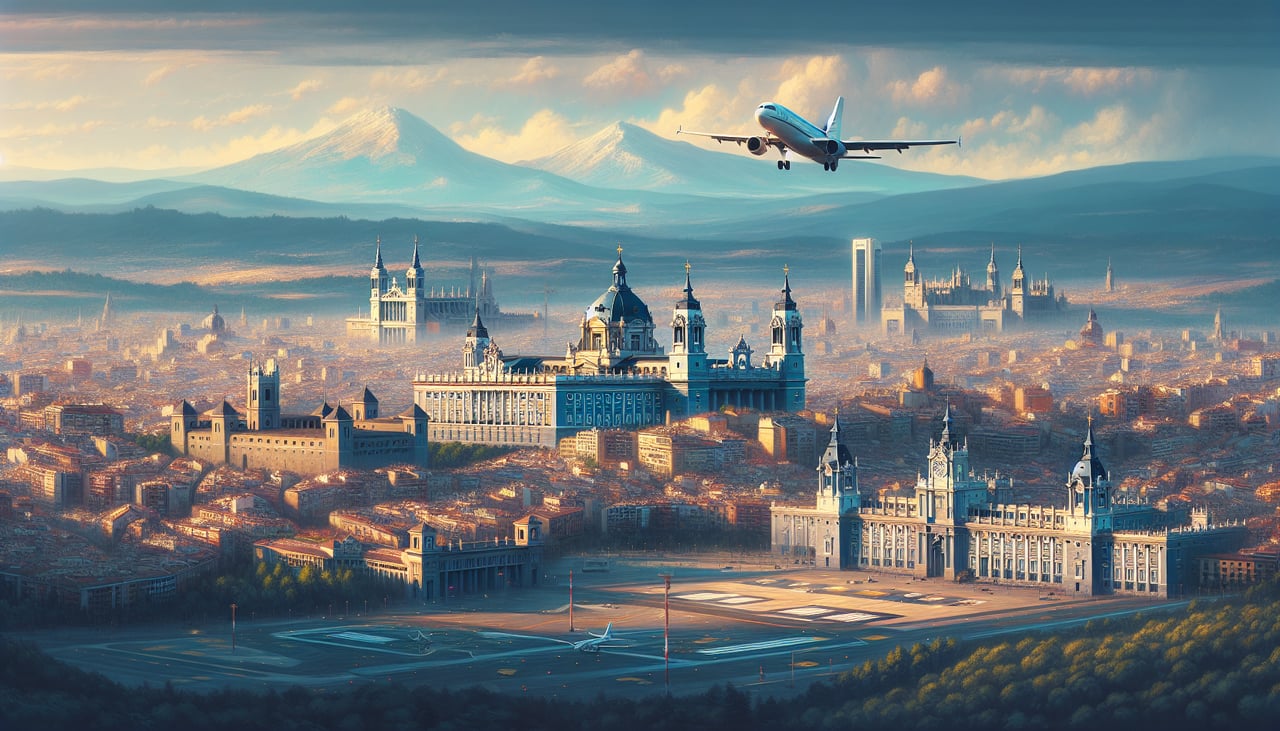
Takeoff from MAD
RIGHTRight-side seats capture the climb-out over the Guadarrama Mountains to the northwest, a dramatic granite range that dominates the initial ascent. Madrid's urban sprawl spreads across the left, but the mountainous terrain on the right provides more visual interest during the critical first 10-15 minutes of flight.
Landing at FUE
LEFTLeft-side seats offer the best views during descent into Fuerteventura. The approach typically uses runways aligned north-south, and the left side captures the volcanic landscape, the narrow strait between Fuerteventura and Lanzarote, and the Atlantic coastline as you descend toward the island.
Landmarks on this routeAll landmarks →
Will your flight be in sunlight?
See exactly which side of the plane gets sun and shade at your departure time.
About This Route
Which side of the plane should I sit on flying from Barajas (MAD) to Fuerteventura (FUE)?
Sit on the Left side of the plane for the best views on flights from Madrid to Fuerteventura. While takeoff favors the right for mountain views, the landing approach over Fuerteventura's volcanic landscape and the Bocayna Channel strait provides more sustained visual interest. Left-side seats capture the dramatic transition from ocean to island and the unique geology of the Canary Islands.
What can I see during takeoff from Barajas in Madrid?
During takeoff from Barajas (MAD), sit on the Right side for the best views. Right-side seats capture the climb-out over the Guadarrama Mountains to the northwest, a dramatic granite range that dominates the initial ascent. Madrid's urban sprawl spreads across the left, but the mountainous terrain on the right provides more visual interest during the critical first 10-15 minutes of flight. Notable sights include: Guadarrama Mountains (northwest, snow-capped in winter), Madrid city center and Retiro Park (left/south), Tagus River valley (winding through terrain below), Sierra de Somosierra ridge (distant north).
What can I see when landing at Fuerteventura in Fuerteventura?
When landing at Fuerteventura (FUE), sit on the Left side for the best views. Left-side seats offer the best views during descent into Fuerteventura. The approach typically uses runways aligned north-south, and the left side captures the volcanic landscape, the narrow strait between Fuerteventura and Lanzarote, and the Atlantic coastline as you descend toward the island. Notable sights include: Fuerteventura's volcanic peaks and calderas (Pico de la Zarza visible from distance), Bocayna Channel separating Fuerteventura from Lanzarote (narrow blue water), Lanzarote island (left/north across the channel), Atlantic Ocean and coastal cliffs.
How long is the flight from Madrid to Fuerteventura?
The flight from Barajas (MAD) to Fuerteventura (FUE) takes Approximately 2 hours 15 minutes.
What does the Madrid to Fuerteventura flight path pass over?
The flight path crosses the Spanish plateau (Meseta Central) heading southwest, passing over Extremadura's rolling terrain and the Tagus River basin. As you progress south, the landscape becomes increasingly arid. The flight crosses the Atlantic Ocean for roughly 400 nautical miles with no major landmarks visible except open water. The approach to Fuerteventura begins with sightings of the eastern Canary Islands chain—Lanzarote becomes visible first on the left, followed by Fuerteventura's volcanic peaks rising from the ocean.