While the takeoff from Madrid offers dramatic mountain scenery on the right, the landing approach into Manila on the left provides more sustained and visually distinctive views of water features (Laguna de Bay, Pasig delta, Manila Bay) that are geographically significant and clearly visible during descent. The landing sequence offers more engaging visual variety.
Flown MAD to MNL? Did we get it right?
Flight Path
Madrid to Manila is 7,240 miles (11,652 km), a flight of about 14 hours 30 minutes.
The flight path crosses the Mediterranean Sea (visible on left during westbound climb from Madrid), then traverses southern Europe and the Middle East. Notable features include the Suez Canal region (if routed through Egypt), the Arabian Peninsula with its distinctive desert terrain, the Persian Gulf, and the Indian Ocean. The aircraft then approaches Southeast Asia, passing over Thailand or Cambodia before descending into Manila. The Mekong River delta (if visible during approach to Southeast Asia) and the Andaman Sea are potential midpoint landmarks depending on exact routing.
Great circle distance and headings ›


Phase by phase

Takeoff from MAD
RIGHTRight-side seats offer views of the Sierra de Guadarrama mountain range as the aircraft climbs northeastward from Madrid-Barajas. The mountains form a dramatic backdrop immediately visible during the initial climb phase.
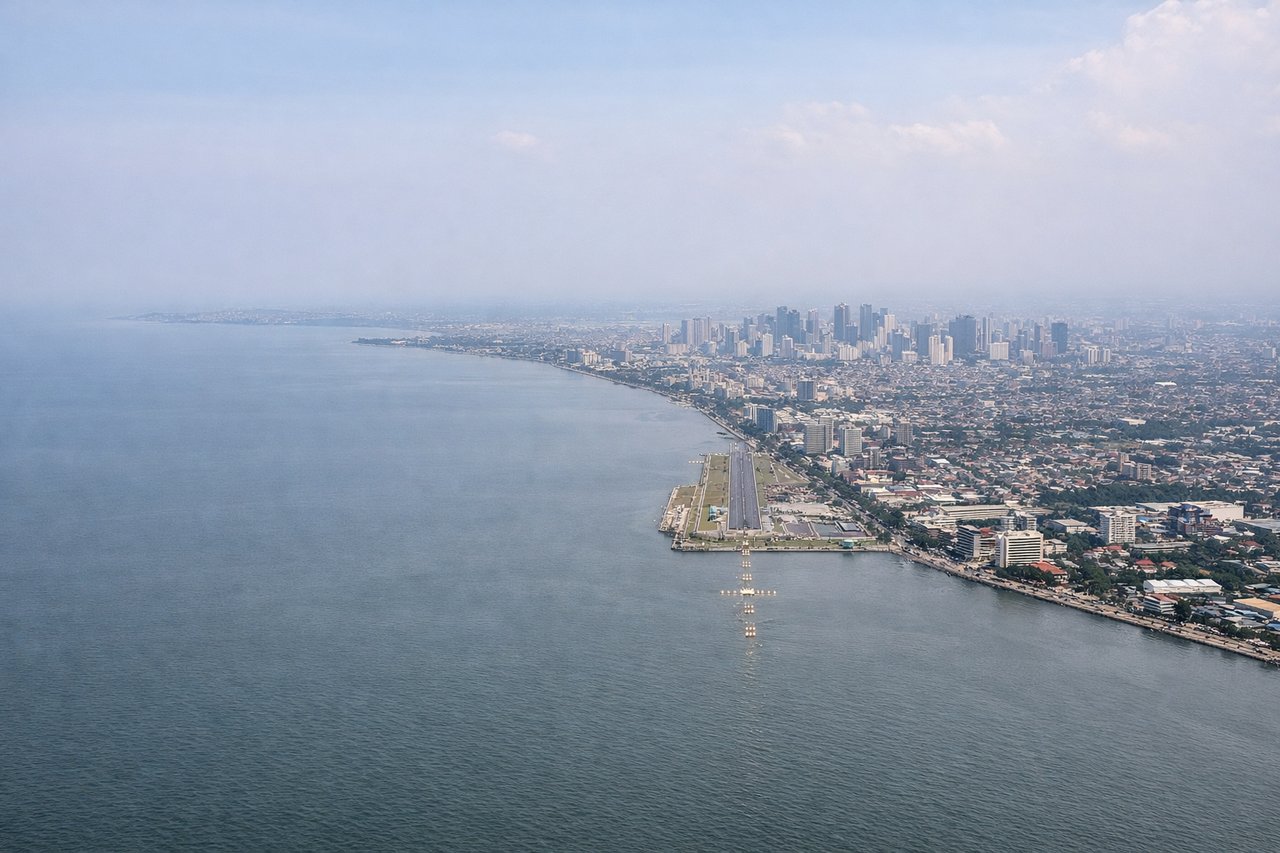
Landing at MNL
LEFTLeft-side seats provide views of Laguna de Bay and the Pasig River delta as the aircraft descends toward Manila from the northeast. These water features and the surrounding coastal lowlands are prominent during final approach.
Will your flight be in sunlight?
Pick a date and time in the Sun Map to watch the sun move across your whole flight.
About This Route
Which side of the plane should I sit on flying from Barajas (MAD) to Ninoy Aquino International (MNL)?
Sit on the Left side of the plane for the best views on flights from Madrid to Manila. While the takeoff from Madrid offers dramatic mountain scenery on the right, the landing approach into Manila on the left provides more sustained and visually distinctive views of water features (Laguna de Bay, Pasig delta, Manila Bay) that are geographically significant and clearly visible during descent. The landing sequence offers more engaging visual variety.
What can I see during takeoff from Barajas in Madrid?
During takeoff from Barajas (MAD), sit on the Right side for the best views. Right-side seats offer views of the Sierra de Guadarrama mountain range as the aircraft climbs northeastward from Madrid-Barajas. The mountains form a dramatic backdrop immediately visible during the initial climb phase. Notable sights include: Sierra de Guadarrama (northeast), Tagus River valley (south), Madrid city sprawl (directly below during climb), Alcalá de Henares urban area (east).
What can I see when landing at Ninoy Aquino International in Manila?
When landing at Ninoy Aquino International (MNL), sit on the Left side for the best views. Left-side seats provide views of Laguna de Bay and the Pasig River delta as the aircraft descends toward Manila from the northeast. These water features and the surrounding coastal lowlands are prominent during final approach. Notable sights include: Laguna de Bay (large freshwater lake), Pasig River delta and estuary, Manila Bay coastline, Corregidor Island (at bay entrance).
How long is the flight from Madrid to Manila?
The flight from Barajas (MAD) to Ninoy Aquino International (MNL) takes about 14 hours 30 minutes. The shortest flight path between them is 7,240 miles (11,652 km); winds and air traffic control usually add a few percent.
What does the Madrid to Manila flight path pass over?
The flight path crosses the Mediterranean Sea (visible on left during westbound climb from Madrid), then traverses southern Europe and the Middle East. Notable features include the Suez Canal region (if routed through Egypt), the Arabian Peninsula with its distinctive desert terrain, the Persian Gulf, and the Indian Ocean. The aircraft then approaches Southeast Asia, passing over Thailand or Cambodia before descending into Manila. The Mekong River delta (if visible during approach to Southeast Asia) and the Andaman Sea are potential midpoint landmarks depending on exact routing.