Madrid to Sevilla is 246 miles (396 km), a flight of about 1 hour 15 minutes.
Right-side seats win overall because the takeoff view of Madrid and the Guadarrama Mountains is more visually striking and geographically distinctive than the landing approach. The landing view is pleasant but dominated by flat agricultural plains; the takeoff captures a major city and significant mountain range.
Flight Path
The flight path crosses central Spain's Meseta plateau, passing over the provinces of Toledo and Ciudad Real. Notable features include the Tagus River valley (visible from altitude as a green corridor), the flat to gently rolling terrain of La Mancha region, and scattered towns like Manzanares and Valdepeñas. The landscape transitions from Madrid's urban influence to increasingly rural, agricultural terrain with sparse population. No major mountain ranges interrupt the midpoint; the terrain is predominantly open plateau at 1,500–2,000 feet elevation.
Great circle distance and headings ›Phase by phase
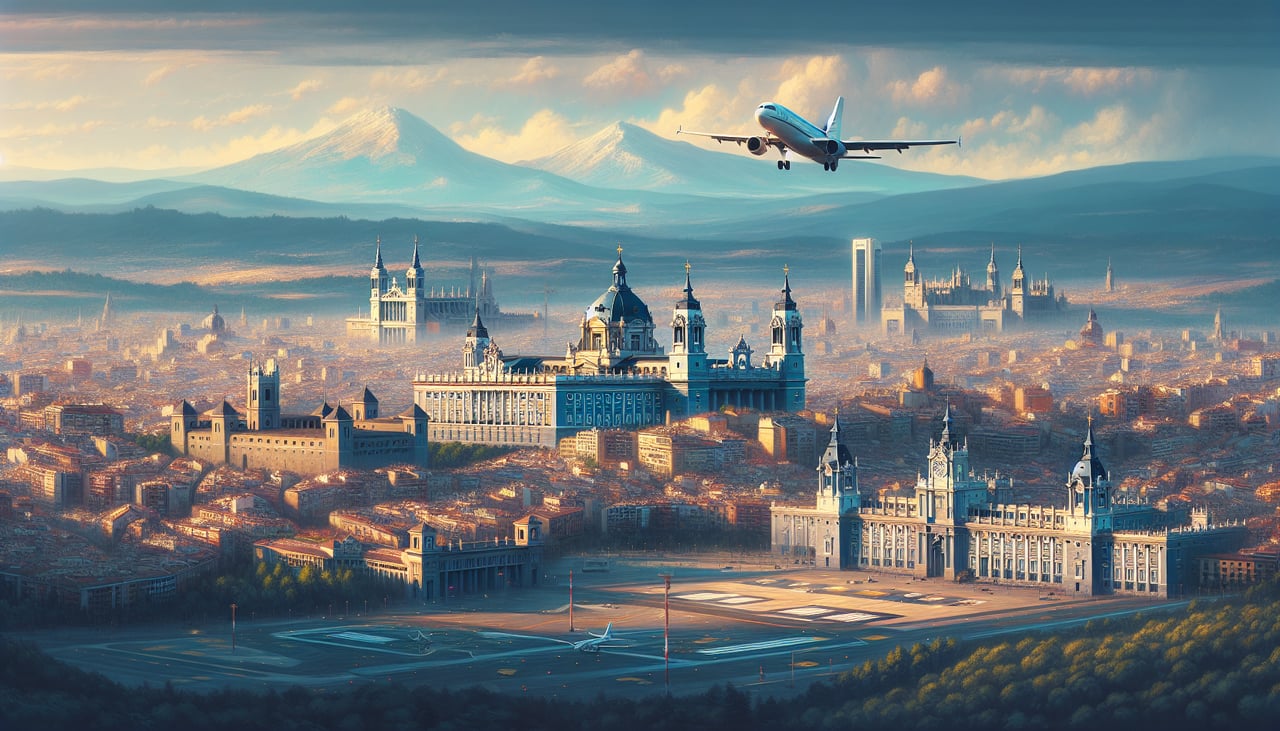
Takeoff from MAD
RIGHTRight-side seats capture the climb-out over central Madrid and the Guadarrama Mountains to the northwest. Madrid-Barajas typically departs runways 32L/32R (heading northwest), so right-side passengers get direct views of the city grid and the mountain range that defines Madrid's northern horizon.
Landing at SVQ
LEFTLeft-side seats offer the best views during descent into Sevilla. The approach typically uses runways 02L/02R (heading north), so left-side passengers see the Guadalquivir River meanders, the historic city center, and the surrounding olive and citrus agricultural plains as you descend from the south.
Will your flight be in sunlight?
Pick a date and time in the Sun Map to watch the sun move across your whole flight.
About This Route
Which side of the plane should I sit on flying from Barajas (MAD) to Sevilla (SVQ)?
Sit on the Right side of the plane for the best views on flights from Madrid to Sevilla. Right-side seats win overall because the takeoff view of Madrid and the Guadarrama Mountains is more visually striking and geographically distinctive than the landing approach. The landing view is pleasant but dominated by flat agricultural plains; the takeoff captures a major city and significant mountain range.
What can I see during takeoff from Barajas in Madrid?
During takeoff from Barajas (MAD), sit on the Right side for the best views. Right-side seats capture the climb-out over central Madrid and the Guadarrama Mountains to the northwest. Madrid-Barajas typically departs runways 32L/32R (heading northwest), so right-side passengers get direct views of the city grid and the mountain range that defines Madrid's northern horizon. Notable sights include: Central Madrid urban sprawl, Guadarrama Mountains (northwest), Manzanares River valley, Sierra de Guadarrama National Park ridgeline.
What can I see when landing at Sevilla in Sevilla?
When landing at Sevilla (SVQ), sit on the Left side for the best views. Left-side seats offer the best views during descent into Sevilla. The approach typically uses runways 02L/02R (heading north), so left-side passengers see the Guadalquivir River meanders, the historic city center, and the surrounding olive and citrus agricultural plains as you descend from the south. Notable sights include: Guadalquivir River with distinctive oxbow bends, Sevilla city center and cathedral spire, flat agricultural plains (olive and citrus groves), Sierra Morena foothills (distant, north).
How long is the flight from Madrid to Sevilla?
The flight from Barajas (MAD) to Sevilla (SVQ) takes about 1 hour 15 minutes. The shortest flight path between them is 246 miles (396 km); winds and air traffic control usually add a few percent.
What does the Madrid to Sevilla flight path pass over?
The flight path crosses central Spain's Meseta plateau, passing over the provinces of Toledo and Ciudad Real. Notable features include the Tagus River valley (visible from altitude as a green corridor), the flat to gently rolling terrain of La Mancha region, and scattered towns like Manzanares and Valdepeñas. The landscape transitions from Madrid's urban influence to increasingly rural, agricultural terrain with sparse population. No major mountain ranges interrupt the midpoint; the terrain is predominantly open plateau at 1,500–2,000 feet elevation.