Right-side seats capture the most dramatic scenery at both ends: the Sierra de Guadarrama during Madrid departure and the approach over the Blue Mountains during Sydney arrival. The takeoff views are particularly striking.
Flight Path
This ultra-long-haul route typically routes southeast over the Mediterranean, then across North Africa (Atlas Mountains visible on some routes), the Sahara Desert, and the Red Sea. The flight then crosses the Arabian Peninsula, the Indian Ocean, and approaches Australia from the west. Notable midpoint landmarks include the Suez Canal region, the Persian Gulf, and the vast Indian Ocean. However, most of this flight occurs over open water or sparsely populated desert with limited scenic landmarks visible from cruise altitude.
Great circle distance and headings ›

.jpg?width=600)


.jpg?width=600)
Phase by phase

Takeoff from MAD
RIGHTRight-side seats offer views of the Sierra de Guadarrama mountain range as the aircraft climbs northeast from Madrid-Barajas. The mountains form a dramatic backdrop to the city's northern edge and are clearly visible during the initial climb-out phase.
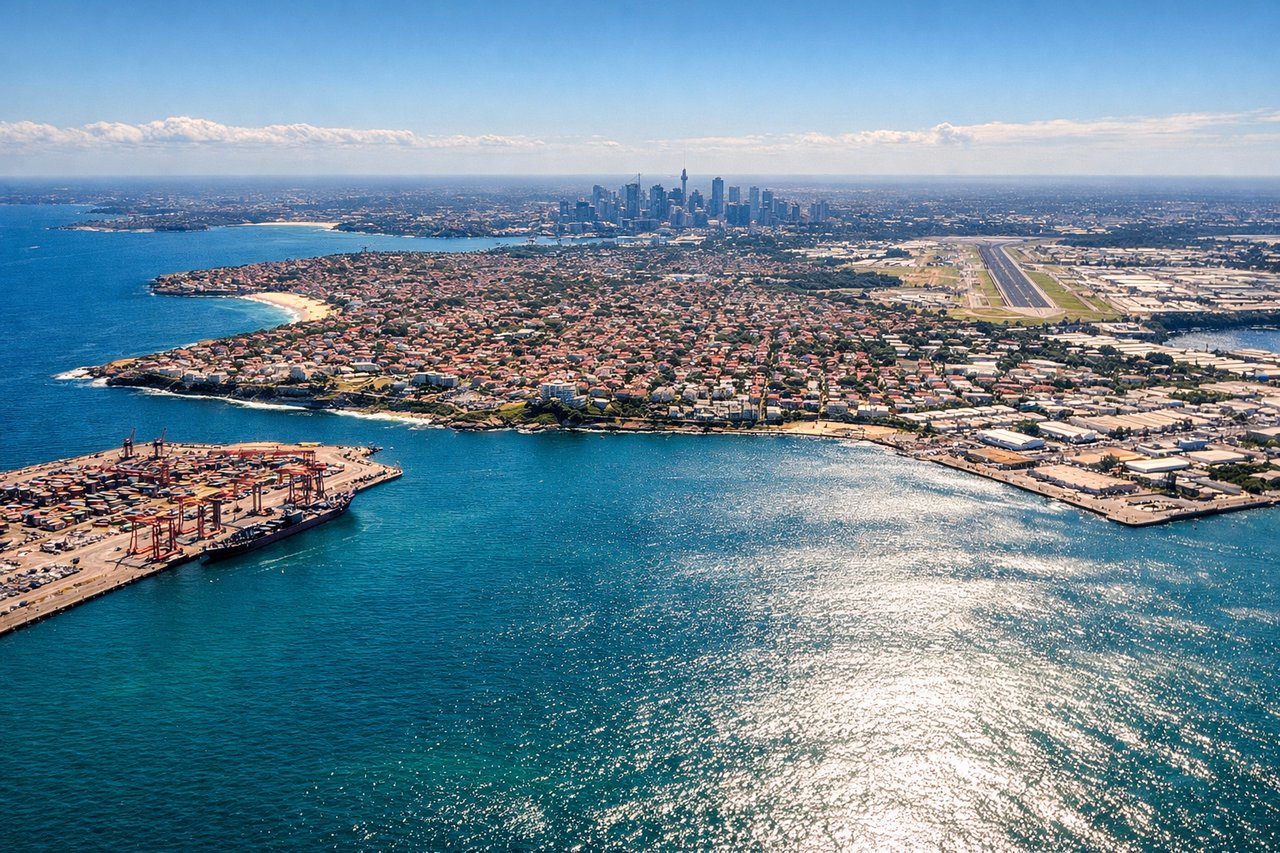
Landing at SYD
LEFTLeft-side seats provide excellent views during the approach to Sydney as the aircraft descends over the Blue Mountains to the west, then over the Nepean River valley. The mountains create a distinctive ridged landscape visible from 15,000+ feet during the descent corridor.
Landmarks on this routeAll landmarks →
Will your flight be in sunlight?
See exactly which side of the plane gets sun and shade at your departure time.
About This Route
Which side of the plane should I sit on flying from Barajas (MAD) to Kingsford Smith International Airport (SYD)?
Sit on the Right side of the plane for the best views on flights from Madrid to Sydney. Right-side seats capture the most dramatic scenery at both ends: the Sierra de Guadarrama during Madrid departure and the approach over the Blue Mountains during Sydney arrival. The takeoff views are particularly striking.
What can I see during takeoff from Barajas in Madrid?
During takeoff from Barajas (MAD), sit on the Right side for the best views. Right-side seats offer views of the Sierra de Guadarrama mountain range as the aircraft climbs northeast from Madrid-Barajas. The mountains form a dramatic backdrop to the city's northern edge and are clearly visible during the initial climb-out phase. Notable sights include: Sierra de Guadarrama (northeast), Madrid city sprawl (directly below), Tagus River valley (south), Meseta Central plateau (receding eastward).
What can I see when landing at Kingsford Smith International Airport in Sydney?
When landing at Kingsford Smith International Airport (SYD), sit on the Left side for the best views. Left-side seats provide excellent views during the approach to Sydney as the aircraft descends over the Blue Mountains to the west, then over the Nepean River valley. The mountains create a distinctive ridged landscape visible from 15,000+ feet during the descent corridor. Notable sights include: Blue Mountains (western approach), Nepean River valley, Sydney Harbour (final approach), Tasman Sea coastline.
How long is the flight from Madrid to Sydney?
The flight from Barajas (MAD) to Kingsford Smith International Airport (SYD) takes Approximately 22-24 hours (including typical routing via Middle East or North Africa).
What does the Madrid to Sydney flight path pass over?
This ultra-long-haul route typically routes southeast over the Mediterranean, then across North Africa (Atlas Mountains visible on some routes), the Sahara Desert, and the Red Sea. The flight then crosses the Arabian Peninsula, the Indian Ocean, and approaches Australia from the west. Notable midpoint landmarks include the Suez Canal region, the Persian Gulf, and the vast Indian Ocean. However, most of this flight occurs over open water or sparsely populated desert with limited scenic landmarks visible from cruise altitude.