Madrid to Vigo is 288 miles (464 km), a flight of about 1 hour 15 minutes.
While left wins on takeoff, right dominates the longer descent phase with coastal scenery. The Rias Baixas and Atlantic approach are more visually distinctive than Madrid's urban sprawl, and occupy more flight time.
Flight Path
The flight crosses the Spanish interior plateau (Meseta Central) heading northwest. Notable features include the Duero River valley (visible as a darker linear feature around 41.5°N), scattered mountain ranges of the Sistema Central, and the transition from central Spanish plateau to Galician hills and green valleys. The landscape shifts from arid, flat terrain to increasingly forested and agricultural land as the aircraft approaches the Atlantic coast.
Great circle distance and headings ›Phase by phase
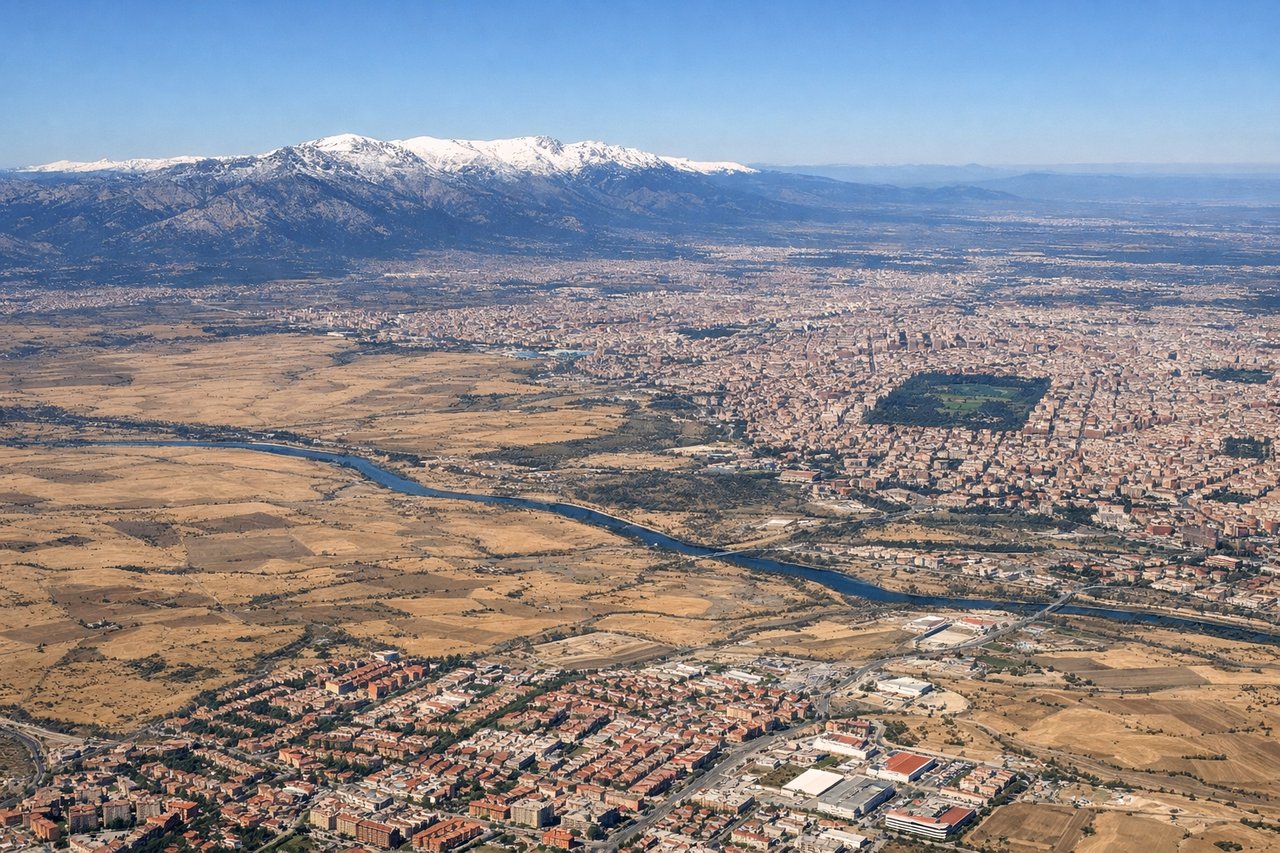
Takeoff from MAD
LEFTLeft seats face northwest on departure, capturing the Sierra de Guadarrama mountain range and the sprawl of Madrid's urban landscape receding beneath the aircraft. Right seats show only flat central Spanish plateau.
Landing at VGO
RIGHTRight seats face the Atlantic coast and Galician rias (coastal inlets) during the final approach into Vigo. Left seats see only inland agricultural terrain and low hills.
Will your flight be in sunlight?
Pick a date and time in the Sun Map to watch the sun move across your whole flight.
About This Route
Which side of the plane should I sit on flying from Barajas (MAD) to Vigo (VGO)?
Sit on the Right side of the plane for the best views on flights from Madrid to Vigo. While left wins on takeoff, right dominates the longer descent phase with coastal scenery. The Rias Baixas and Atlantic approach are more visually distinctive than Madrid's urban sprawl, and occupy more flight time.
What can I see during takeoff from Barajas in Madrid?
During takeoff from Barajas (MAD), sit on the Left side for the best views. Left seats face northwest on departure, capturing the Sierra de Guadarrama mountain range and the sprawl of Madrid's urban landscape receding beneath the aircraft. Right seats show only flat central Spanish plateau. Notable sights include: Sierra de Guadarrama (snow-capped peaks in winter), Madrid city grid and Retiro Park, Tagus River valley, Toledo's hilltop silhouette in the distance.
What can I see when landing at Vigo in Vigo?
When landing at Vigo (VGO), sit on the Right side for the best views. Right seats face the Atlantic coast and Galician rias (coastal inlets) during the final approach into Vigo. Left seats see only inland agricultural terrain and low hills. Notable sights include: Vigo's harbor and urban waterfront, Rias Baixas (Galician coastal inlets with distinctive branching water patterns), Atlantic coastline with rocky headlands, Cies Islands offshore.
How long is the flight from Madrid to Vigo?
The flight from Barajas (MAD) to Vigo (VGO) takes about 1 hour 15 minutes. The shortest flight path between them is 288 miles (464 km); winds and air traffic control usually add a few percent.
What does the Madrid to Vigo flight path pass over?
The flight crosses the Spanish interior plateau (Meseta Central) heading northwest. Notable features include the Duero River valley (visible as a darker linear feature around 41.5°N), scattered mountain ranges of the Sistema Central, and the transition from central Spanish plateau to Galician hills and green valleys. The landscape shifts from arid, flat terrain to increasingly forested and agricultural land as the aircraft approaches the Atlantic coast.