Melbourne to Christchurch is 1,478 miles (2,379 km), a flight of about 3 hours 30 minutes.
Right-side seats capture the most visually distinctive features: Port Phillip Bay and the Dandenong Ranges during departure, then the Southern Alps and Canterbury Plains during descent. The left side offers good landing views but less compelling takeoff scenery.
Flight Path
The flight path crosses the Tasman Sea between Australia and New Zealand's South Island. En route, passengers may glimpse the Strait of Cook (between North and South Islands) if flying slightly north of the direct route, though most of the journey crosses open ocean. The transition from Australian coastline to New Zealand's mountainous terrain is the most dramatic midpoint feature, with the Southern Alps becoming increasingly prominent as the aircraft approaches the South Island.
Great circle distance and headings ›.JPG?width=600)


Phase by phase
Takeoff from MBW
RIGHTRight-side seats offer views of Port Phillip Bay and the Dandenong Ranges as the aircraft climbs southeast from Moorabbin. Left side faces inland toward the western suburbs with less dramatic scenery.
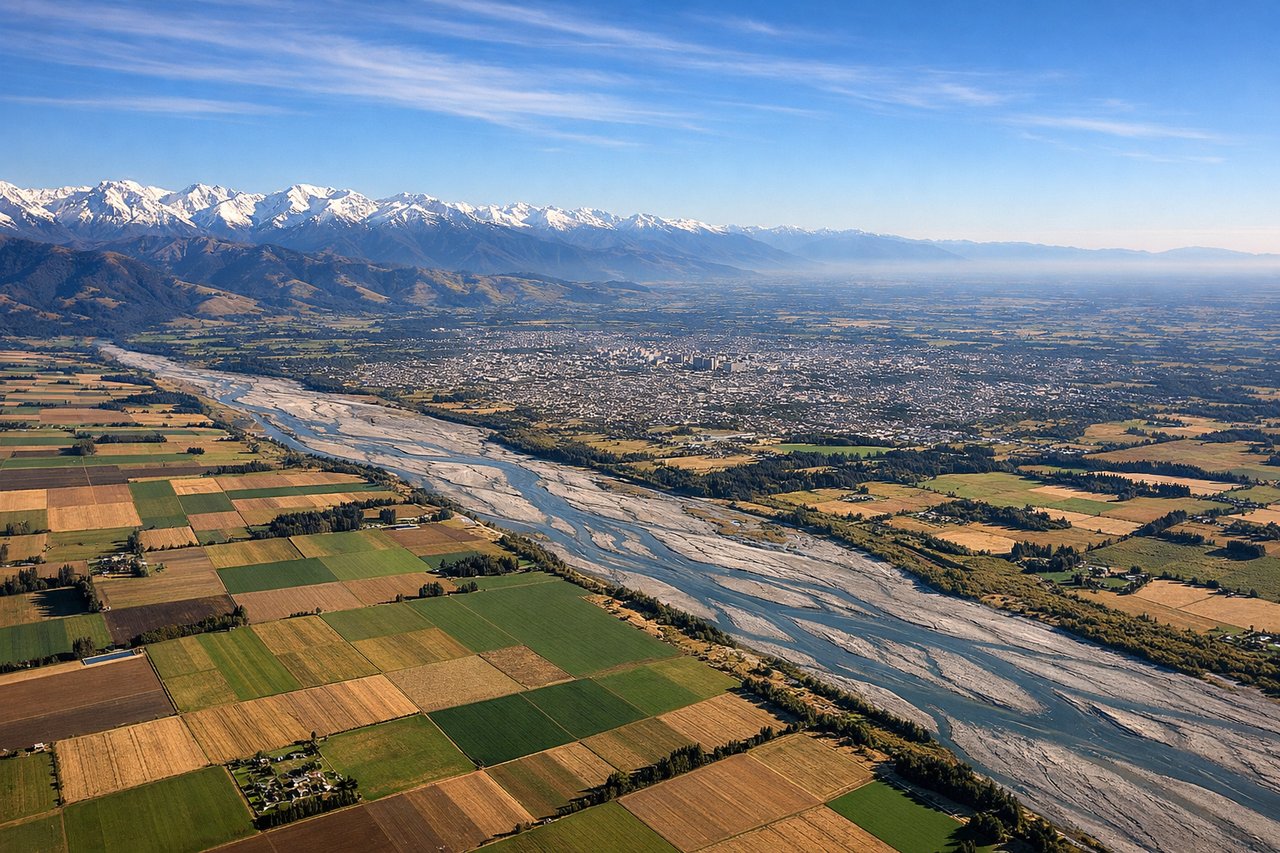
Landing at CHC
LEFTLeft-side seats provide excellent views of the Southern Alps and Canterbury Plains during descent into Christchurch. The aircraft approaches from the northeast, making the left side ideal for viewing the mountain range and the patchwork farmland of the Canterbury region.
Landmarks on this routeAll landmarks →
Will your flight be in sunlight?
Pick a date and time in the Sun Map to watch the sun move across your whole flight.
About This Route
Which side of the plane should I sit on flying from Melbourne Moorabbin (MBW) to Christchurch International (CHC)?
Sit on the Right side of the plane for the best views on flights from Melbourne to Christchurch. Right-side seats capture the most visually distinctive features: Port Phillip Bay and the Dandenong Ranges during departure, then the Southern Alps and Canterbury Plains during descent. The left side offers good landing views but less compelling takeoff scenery.
What can I see during takeoff from Melbourne Moorabbin in Melbourne?
During takeoff from Melbourne Moorabbin (MBW), sit on the Right side for the best views. Right-side seats offer views of Port Phillip Bay and the Dandenong Ranges as the aircraft climbs southeast from Moorabbin. Left side faces inland toward the western suburbs with less dramatic scenery. Notable sights include: Port Phillip Bay (immediate south), Dandenong Ranges (southeast), Yarra River valley (east), Melbourne CBD skyline (north).
What can I see when landing at Christchurch International in Christchurch?
When landing at Christchurch International (CHC), sit on the Left side for the best views. Left-side seats provide excellent views of the Southern Alps and Canterbury Plains during descent into Christchurch. The aircraft approaches from the northeast, making the left side ideal for viewing the mountain range and the patchwork farmland of the Canterbury region. Notable sights include: Southern Alps (Mount Cook region visible on clear days), Canterbury Plains (agricultural grid), Rakaia River valley, Banks Peninsula (distinctive peninsula east of Christchurch).
How long is the flight from Melbourne to Christchurch?
The flight from Melbourne Moorabbin (MBW) to Christchurch International (CHC) takes about 3 hours 30 minutes. The shortest flight path between them is 1,478 miles (2,379 km); winds and air traffic control usually add a few percent.
What does the Melbourne to Christchurch flight path pass over?
The flight path crosses the Tasman Sea between Australia and New Zealand's South Island. En route, passengers may glimpse the Strait of Cook (between North and South Islands) if flying slightly north of the direct route, though most of the journey crosses open ocean. The transition from Australian coastline to New Zealand's mountainous terrain is the most dramatic midpoint feature, with the Southern Alps becoming increasingly prominent as the aircraft approaches the South Island.