Muscat to Abu Dhabi is 237 miles (381 km), a flight of about 1 hour 15 minutes.
While takeoff favors the right for mountain views, the landing approach provides superior visual interest with the Persian Gulf, coastal salt flats, and Abu Dhabi's urban landscape. Left seats capture the most dramatic segment of the flight.
Flight Path
The flight path crosses the coastal plain of northern Oman, then transitions over open desert and the border region. The Strait of Hormuz lies to the north but remains beyond typical cruise altitude visibility. The flight passes over relatively featureless desert terrain between the two airports, with occasional wadi systems visible from altitude. The Persian Gulf becomes visible on approach to Abu Dhabi, with shallow water and coastal features dominating the final descent.
Great circle distance and headings ›Phase by phase
Takeoff from MCT
RIGHTMuscat typically departs runway 30 (northwest heading). Right-side seats face toward the Hajar Mountains as you climb out, with the coastal plain and Muscat city spreading below. Left seats look back over the Arabian Sea with minimal terrain interest.
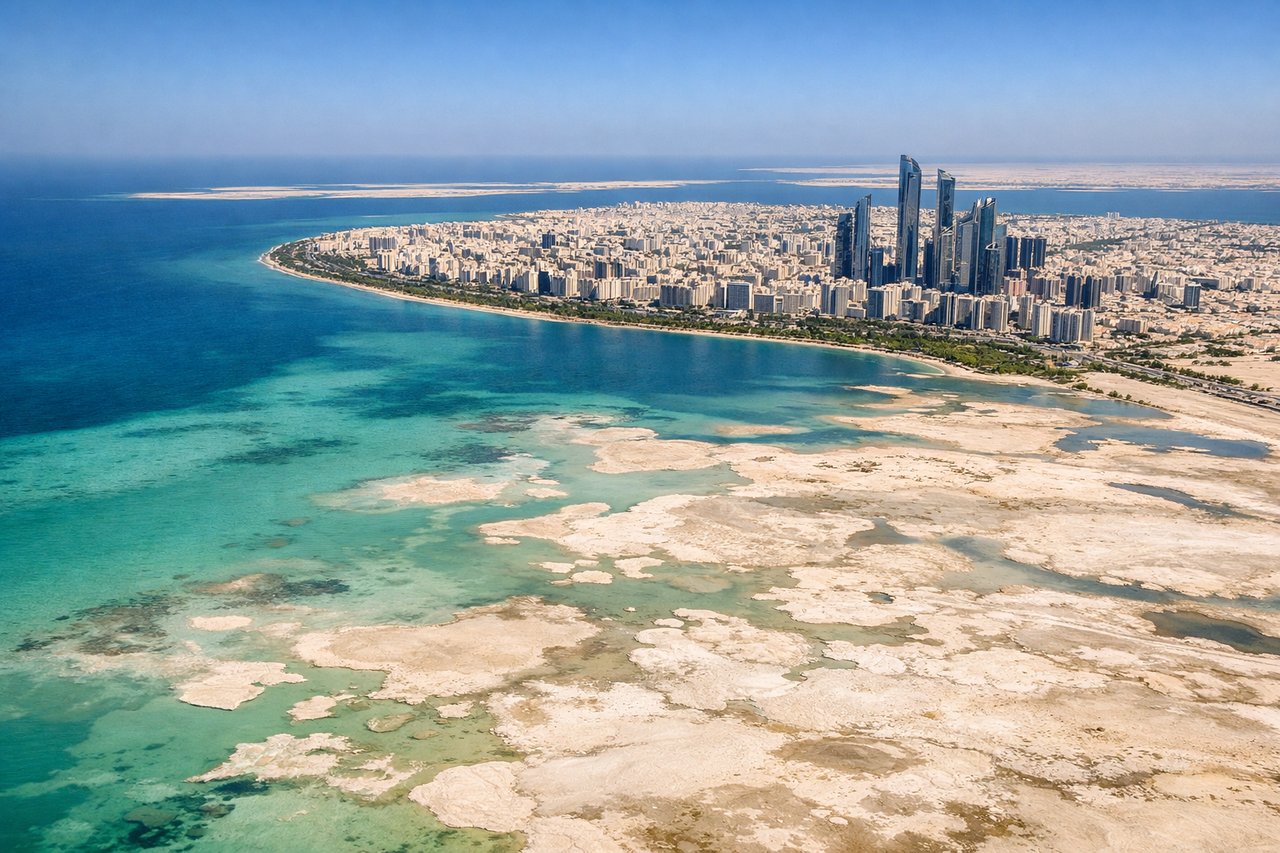
Landing at AUH
LEFTAbu Dhabi typically lands runway 31L or 31R (both northwest approaches). Left-side seats on descent toward runway 31L provide views of the Persian Gulf, coastal salt flats, and the city grid of Abu Dhabi spreading across the coastal plain. Right seats face inland toward empty desert.
Will your flight be in sunlight?
Pick a date and time in the Sun Map to watch the sun move across your whole flight.
About This Route
Which side of the plane should I sit on flying from Seeb International (MCT) to Abu Dhabi International (AUH)?
Sit on the Left side of the plane for the best views on flights from Muscat to Abu Dhabi. While takeoff favors the right for mountain views, the landing approach provides superior visual interest with the Persian Gulf, coastal salt flats, and Abu Dhabi's urban landscape. Left seats capture the most dramatic segment of the flight.
What can I see during takeoff from Seeb International in Muscat?
During takeoff from Seeb International (MCT), sit on the Right side for the best views. Muscat typically departs runway 30 (northwest heading). Right-side seats face toward the Hajar Mountains as you climb out, with the coastal plain and Muscat city spreading below. Left seats look back over the Arabian Sea with minimal terrain interest. Notable sights include: Hajar Mountains (Al Hajar al Gharbi range), Muscat city and harbor, Wadi systems cutting through coastal plains, Arabian Sea coastline.
What can I see when landing at Abu Dhabi International in Abu Dhabi?
When landing at Abu Dhabi International (AUH), sit on the Left side for the best views. Abu Dhabi typically lands runway 31L or 31R (both northwest approaches). Left-side seats on descent toward runway 31L provide views of the Persian Gulf, coastal salt flats, and the city grid of Abu Dhabi spreading across the coastal plain. Right seats face inland toward empty desert. Notable sights include: Persian Gulf with shallow turquoise waters, Abu Dhabi city and Sheikh Zayed Road corridor, coastal salt flats and sabkha (white salt marshes), Jebel Dhanna peninsula.
How long is the flight from Muscat to Abu Dhabi?
The flight from Seeb International (MCT) to Abu Dhabi International (AUH) takes about 1 hour 15 minutes. The shortest flight path between them is 237 miles (381 km); winds and air traffic control usually add a few percent.
What does the Muscat to Abu Dhabi flight path pass over?
The flight path crosses the coastal plain of northern Oman, then transitions over open desert and the border region. The Strait of Hormuz lies to the north but remains beyond typical cruise altitude visibility. The flight passes over relatively featureless desert terrain between the two airports, with occasional wadi systems visible from altitude. The Persian Gulf becomes visible on approach to Abu Dhabi, with shallow water and coastal features dominating the final descent.