The right side dominates this route: the Hajar Mountains during departure are visually dramatic, and the flight path northwestward over the Arabian Peninsula, Persian Gulf region, and into the Zagros Mountains of Iran offers sustained mountain scenery. The landing approach favors the left, but the takeoff and midpoint features give the right side the edge overall.
Flight Path
Persian Gulf coastlines (UAE and Iran), Zagros Mountains in southwestern Iran with distinctive parallel ridges, Mesopotamian plains approaching Iraq-Syria border, Taurus Mountains in southern Turkey, Danube River valley in Hungary and Austria before reaching the Rhine-Main region
Great circle distance and headings ›.jpg?width=600)

.jpg?width=600)

Phase by phase
Takeoff from MCT
RIGHTRight-side seats capture the Hajar Mountains as the aircraft climbs northwestward from Muscat. The range rises dramatically inland from the coastal plain, creating a striking visual contrast against the Arabian Sea to the left.
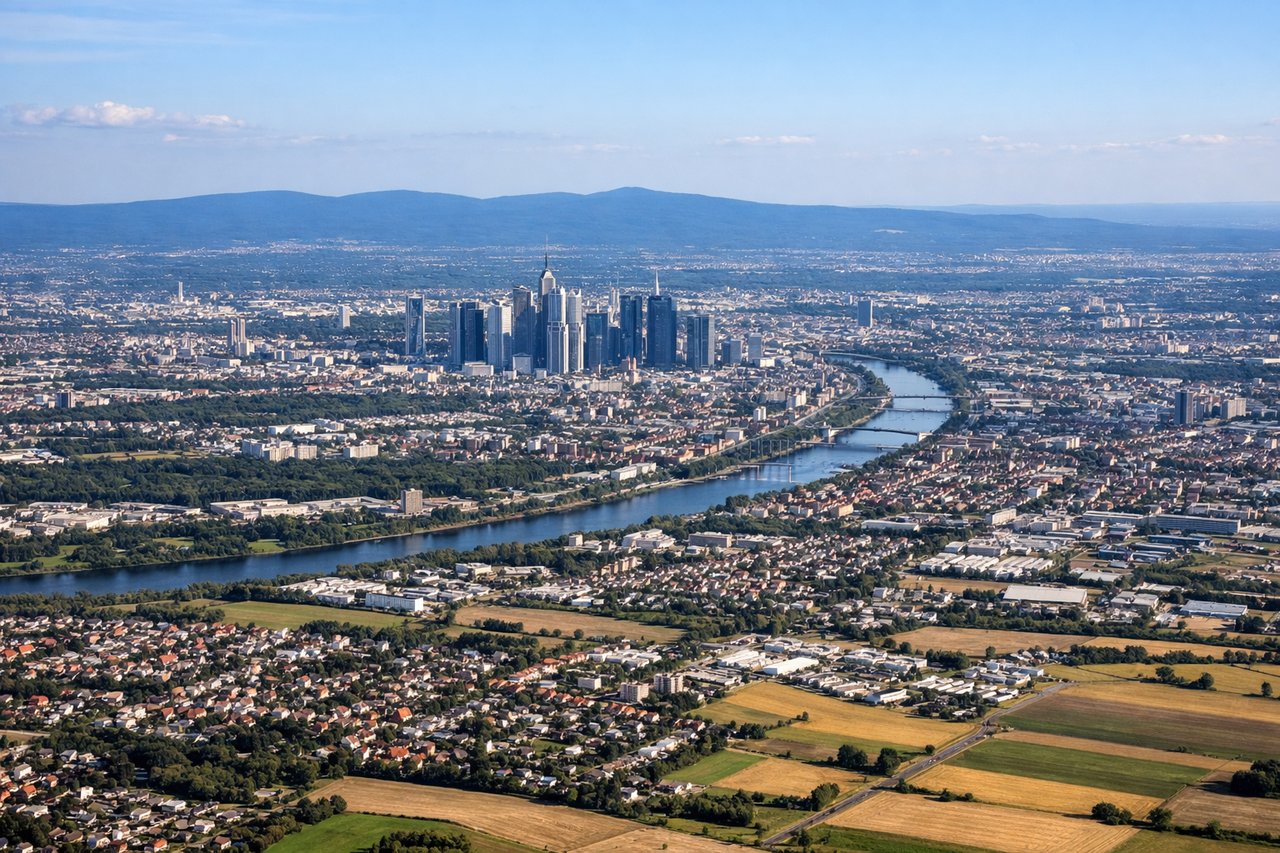
Landing at FRA
LEFTLeft-side seats offer views of the Rhine River valley and the Main River confluence as the aircraft descends into Frankfurt. The river systems create distinctive meandering patterns visible from altitude, and the surrounding forested terrain of Hesse provides strong visual contrast to the urban sprawl.
Landmarks on this routeAll landmarks →
Will your flight be in sunlight?
See exactly which side of the plane gets sun and shade at your departure time.
About This Route
Which side of the plane should I sit on flying from Seeb International (MCT) to Frankfurt Main (FRA)?
Sit on the Right side of the plane for the best views on flights from Muscat to Frankfurt. The right side dominates this route: the Hajar Mountains during departure are visually dramatic, and the flight path northwestward over the Arabian Peninsula, Persian Gulf region, and into the Zagros Mountains of Iran offers sustained mountain scenery. The landing approach favors the left, but the takeoff and midpoint features give the right side the edge overall.
What can I see during takeoff from Seeb International in Muscat?
During takeoff from Seeb International (MCT), sit on the Right side for the best views. Right-side seats capture the Hajar Mountains as the aircraft climbs northwestward from Muscat. The range rises dramatically inland from the coastal plain, creating a striking visual contrast against the Arabian Sea to the left. Notable sights include: Hajar Mountains, Arabian Sea coastline, Muscat city sprawl, Wadi systems cutting through foothills.
What can I see when landing at Frankfurt Main in Frankfurt?
When landing at Frankfurt Main (FRA), sit on the Left side for the best views. Left-side seats offer views of the Rhine River valley and the Main River confluence as the aircraft descends into Frankfurt. The river systems create distinctive meandering patterns visible from altitude, and the surrounding forested terrain of Hesse provides strong visual contrast to the urban sprawl. Notable sights include: Rhine River valley, Main River, Frankfurt city center and skyline, Taunus Mountains to the north.
How long is the flight from Muscat to Frankfurt?
The flight from Seeb International (MCT) to Frankfurt Main (FRA) takes 7h 15m.
What does the Muscat to Frankfurt flight path pass over?
Persian Gulf coastlines (UAE and Iran), Zagros Mountains in southwestern Iran with distinctive parallel ridges, Mesopotamian plains approaching Iraq-Syria border, Taurus Mountains in southern Turkey, Danube River valley in Hungary and Austria before reaching the Rhine-Main region