Left wins at both ends of the flight. Departing MCT left gives the Hajar Mountains; arriving LHR left gives the Thames and London. During the cruise the flight tracks northwest over Iran, Turkey, the Bosphorus area, and across Europe — the left side broadly faces south and west, keeping more landmass in view including the Anatolian plateau and the Alps on the distant horizon in the final European leg.
Flown MCT to LHR? Did we get it right?
Flight Path
Muscat to London is 3,624 miles (5,833 km), a flight of about 7 hours 45 minutes.
The route crosses the Strait of Hormuz and southern Iran (Zagros Mountains visible as a vast corrugated plateau), then over central Iran's salt deserts, into eastern Turkey and the Anatolian plateau, across the Bosphorus and into the Balkans, over the Alps or northern Italy depending on routing, then across France and the English Channel into southern England
Great circle distance and headings ›


Phase by phase
Takeoff from MCT
LEFTMCT's primary departure runway is 26L/26R, meaning aircraft head westward over the coast. The left side faces south toward the Hajar Mountains and the rugged Omani interior, giving a dramatic view of the Al Hajar range rising sharply from the coastal plain. The right side looks north over open Gulf of Oman water with little of interest.
Landing at LHR
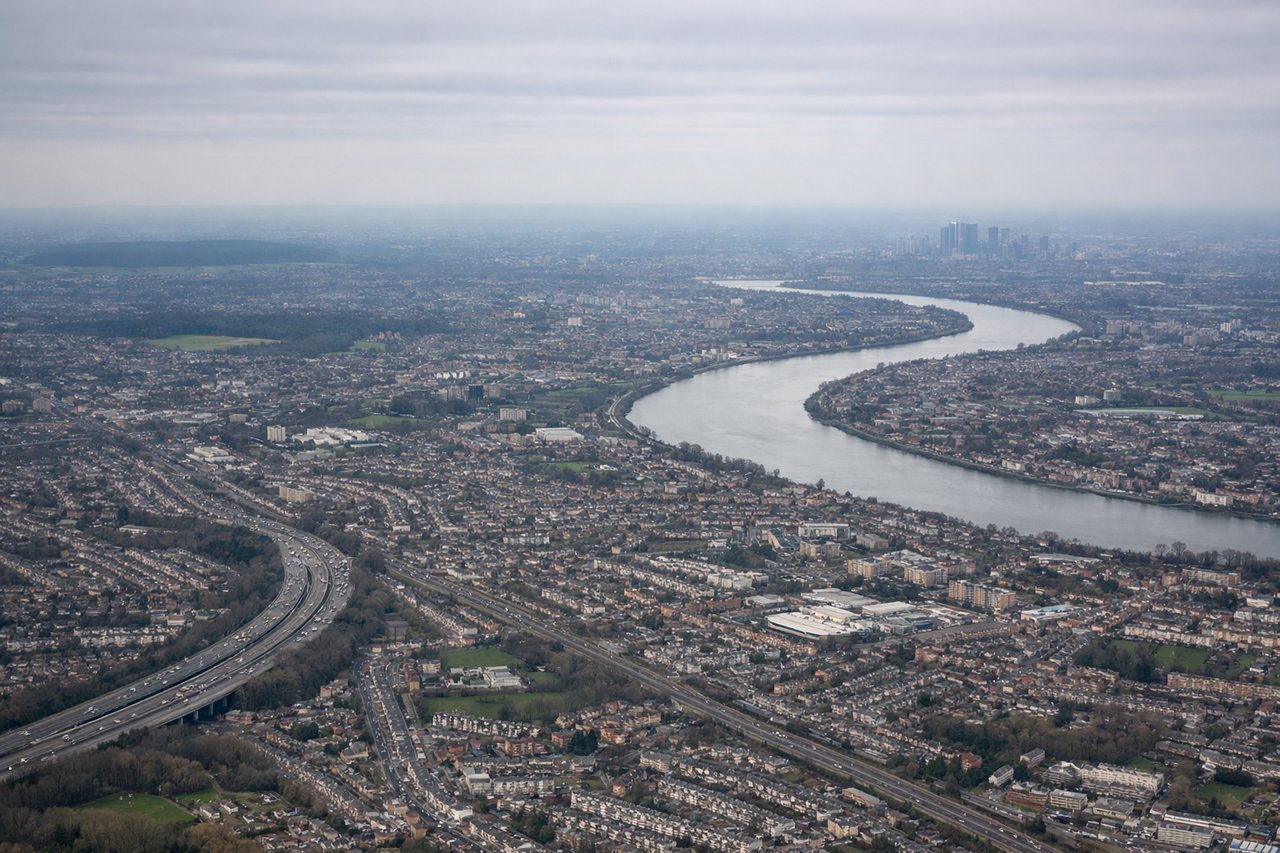
LEFTHeathrow's dominant arrival flow is from the east on runways 27L/27R, meaning aircraft approach heading west. The left side faces south over central London, giving clear views of the Thames, the City, and major landmarks during the descent. The right side looks north over suburban Middlesex with far less to see.
Will your flight be in sunlight?
Pick a date and time in the Sun Map to watch the sun move across your whole flight.
About This Route
Which side of the plane should I sit on flying from Seeb International (MCT) to Heathrow (LHR)?
Sit on the Left side of the plane for the best views on flights from Muscat to London. Left wins at both ends of the flight. Departing MCT left gives the Hajar Mountains; arriving LHR left gives the Thames and London. During the cruise the flight tracks northwest over Iran, Turkey, the Bosphorus area, and across Europe — the left side broadly faces south and west, keeping more landmass in view including the Anatolian plateau and the Alps on the distant horizon in the final European leg.
What can I see during takeoff from Seeb International in Muscat?
During takeoff from Seeb International (MCT), sit on the Left side for the best views. MCT's primary departure runway is 26L/26R, meaning aircraft head westward over the coast. The left side faces south toward the Hajar Mountains and the rugged Omani interior, giving a dramatic view of the Al Hajar range rising sharply from the coastal plain. The right side looks north over open Gulf of Oman water with little of interest. Notable sights include: Al Hajar Mountains (rising to 3,000m), Muscat's old city and corniche coastline, Qurm Natural Reserve lagoon, the dramatic escarpment edge where mountains meet the coastal plain.
What can I see when landing at Heathrow in London?
When landing at Heathrow (LHR), sit on the Left side for the best views. Heathrow's dominant arrival flow is from the east on runways 27L/27R, meaning aircraft approach heading west. The left side faces south over central London, giving clear views of the Thames, the City, and major landmarks during the descent. The right side looks north over suburban Middlesex with far less to see. Notable sights include: River Thames snaking through central London, Wembley Stadium arch, Windsor Castle and Windsor Great Park to the southwest, the dense urban grid of West London and Hammersmith.
How long is the flight from Muscat to London?
The flight from Seeb International (MCT) to Heathrow (LHR) takes about 7 hours 45 minutes. The shortest flight path between them is 3,624 miles (5,833 km); winds and air traffic control usually add a few percent.
What does the Muscat to London flight path pass over?
The route crosses the Strait of Hormuz and southern Iran (Zagros Mountains visible as a vast corrugated plateau), then over central Iran's salt deserts, into eastern Turkey and the Anatolian plateau, across the Bosphorus and into the Balkans, over the Alps or northern Italy depending on routing, then across France and the English Channel into southern England