While takeoff offers Lake Michigan views, the landing approach into Doha provides more sustained and dramatic scenery—the Persian Gulf, modern coastal development, and the stark desert-to-sea transition. Right side captures this better during descent.
Flown MDW to DOH? Did we get it right?
Flight Path
Chicago to Doha is 7,126 miles (11,468 km), a flight of about 13 hours 45 minutes.
The flight path crosses the Atlantic over the North Atlantic (Greenland and Iceland visible on clear days during initial eastbound climb), then transitions over the UK and continental Europe. Over Europe, the Alps and Carpathian Mountains may be visible on clear days. The route then crosses the Mediterranean Sea, with southern Europe and North Africa visible. Continuing southeast, the flight passes over the Levant region (Syria, Lebanon, Israel visible), then crosses into Iraq and Iran. The Persian Gulf becomes visible in the final descent phase. Notable water features include the Atlantic, Mediterranean, and Persian Gulf; mountain ranges include the Alps and Carpathians; major cities visible include London, Paris, and Baghdad (depending on exact routing and weather).
Great circle distance and headings ›


Phase by phase
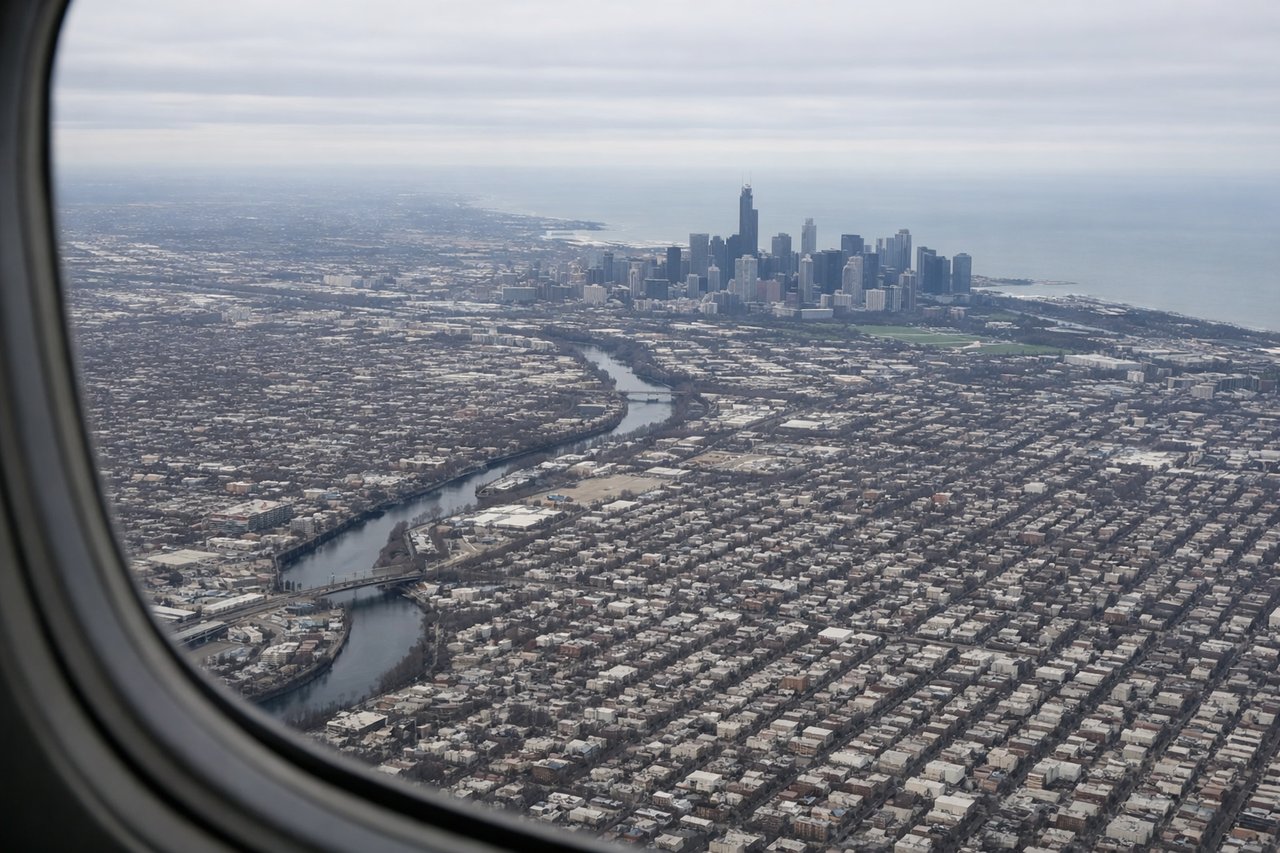
Takeoff from MDW
LEFTLeft side offers views of Lake Michigan and the Chicago shoreline during climb-out heading northeast over the lake. Right side faces inland toward suburban sprawl with minimal scenic value.
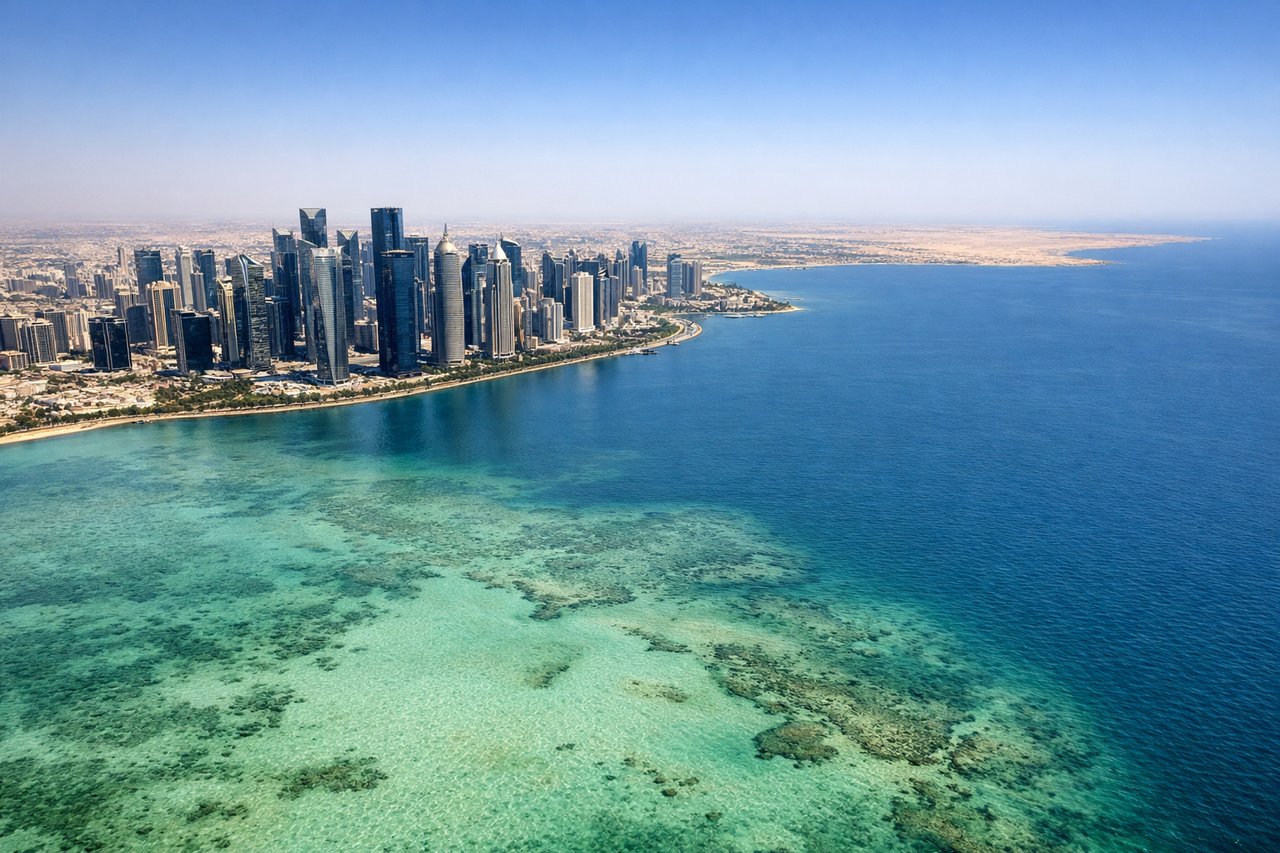
Landing at DOH
RIGHTRight side provides views of the Persian Gulf coastline, Doha's waterfront development, and the distinctive coastal geography as the aircraft descends into Hamad International. Left side faces inland desert with less distinctive features.
Will your flight be in sunlight?
Pick a date and time in the Sun Map to watch the sun move across your whole flight.
About This Route
Which side of the plane should I sit on flying from Chicago Midway International (MDW) to Hamad International Airport (DOH)?
Sit on the Right side of the plane for the best views on flights from Chicago to Doha. While takeoff offers Lake Michigan views, the landing approach into Doha provides more sustained and dramatic scenery—the Persian Gulf, modern coastal development, and the stark desert-to-sea transition. Right side captures this better during descent.
What can I see during takeoff from Chicago Midway International in Chicago?
During takeoff from Chicago Midway International (MDW), sit on the Left side for the best views. Left side offers views of Lake Michigan and the Chicago shoreline during climb-out heading northeast over the lake. Right side faces inland toward suburban sprawl with minimal scenic value. Notable sights include: Lake Michigan, Chicago downtown skyline (receding), Indiana shoreline to the east.
What can I see when landing at Hamad International Airport in Doha?
When landing at Hamad International Airport (DOH), sit on the Right side for the best views. Right side provides views of the Persian Gulf coastline, Doha's waterfront development, and the distinctive coastal geography as the aircraft descends into Hamad International. Left side faces inland desert with less distinctive features. Notable sights include: Persian Gulf, Doha's modern waterfront skyline, Doha Bay, Qatar's flat coastal plain.
How long is the flight from Chicago to Doha?
The flight from Chicago Midway International (MDW) to Hamad International Airport (DOH) takes about 13 hours 45 minutes. The shortest flight path between them is 7,126 miles (11,468 km); winds and air traffic control usually add a few percent.
What does the Chicago to Doha flight path pass over?
The flight path crosses the Atlantic over the North Atlantic (Greenland and Iceland visible on clear days during initial eastbound climb), then transitions over the UK and continental Europe. Over Europe, the Alps and Carpathian Mountains may be visible on clear days. The route then crosses the Mediterranean Sea, with southern Europe and North Africa visible. Continuing southeast, the flight passes over the Levant region (Syria, Lebanon, Israel visible), then crosses into Iraq and Iran. The Persian Gulf becomes visible in the final descent phase. Notable water features include the Atlantic, Mediterranean, and Persian Gulf; mountain ranges include the Alps and Carpathians; major cities visible include London, Paris, and Baghdad (depending on exact routing and weather).