Takeoff views of Lake Michigan and Chicago's waterfront are more visually striking than landing views of farmland. The westbound route over central Illinois offers limited dramatic scenery, making the departure experience the highlight.
Flown MDW to DSM? Did we get it right?
Flight Path
Chicago to Des Moines is 305 miles (491 km), a flight of about 55 minutes.
Illinois farmland with geometric field patterns, scattered small towns and county roads, occasional small lakes and ponds in central Illinois, the transition from Chicago's urban sprawl to rural agricultural landscape
Great circle distance and headings ›Phase by phase
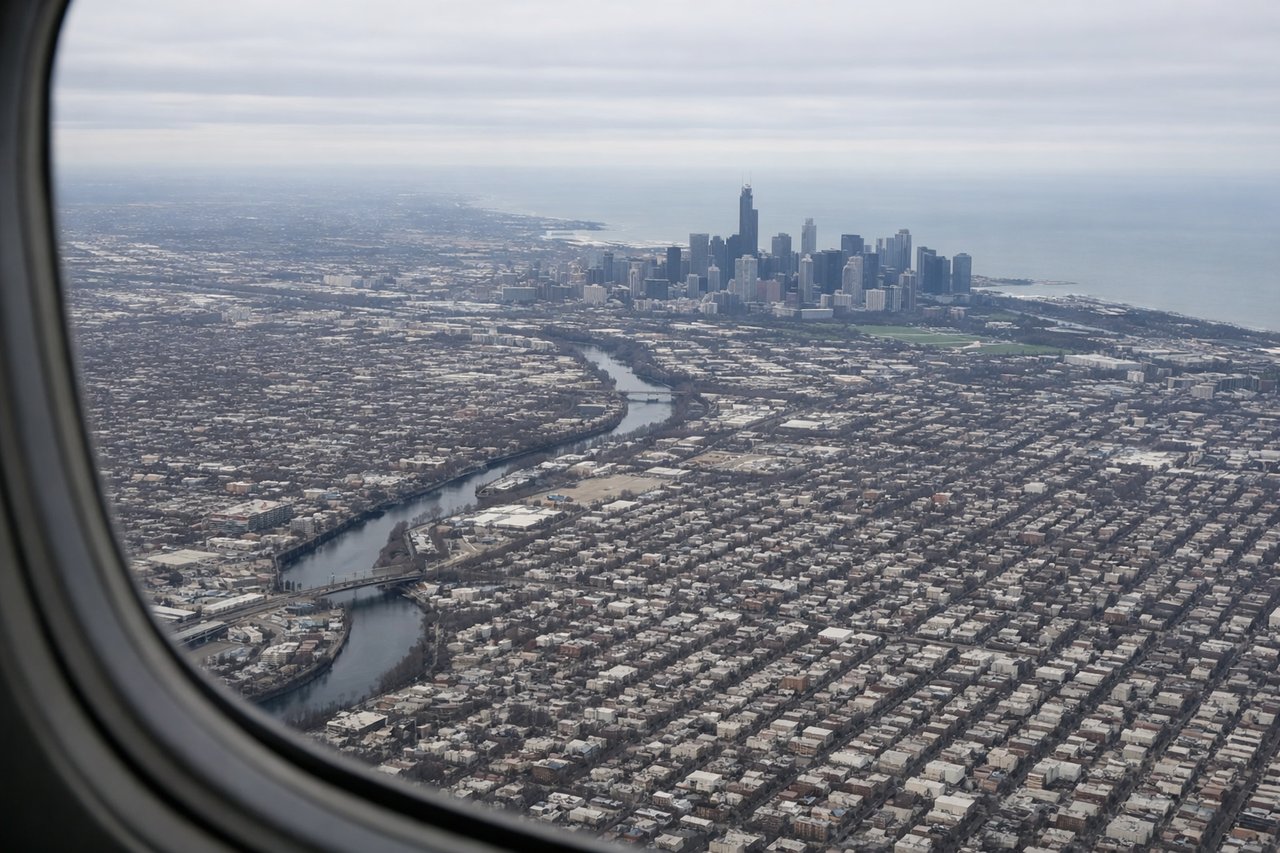
Takeoff from MDW
LEFTLeft seats offer views of Chicago's downtown skyline and Lake Michigan as you climb westward. The city's grid and waterfront are distinctive from altitude, and you'll see the lake's eastern shoreline clearly during the initial climb.
Landing at DSM
RIGHTRight seats provide views of the Des Moines River valley and the city's downtown area as you descend from the east. You'll see the river's distinctive curves and the urban core clearly during final approach.
Will your flight be in sunlight?
Pick a date and time in the Sun Map to watch the sun move across your whole flight.
About This Route
Which side of the plane should I sit on flying from Chicago Midway International (MDW) to Des Moines International (DSM)?
Sit on the Left side of the plane for the best views on flights from Chicago to Des Moines. Takeoff views of Lake Michigan and Chicago's waterfront are more visually striking than landing views of farmland. The westbound route over central Illinois offers limited dramatic scenery, making the departure experience the highlight.
What can I see during takeoff from Chicago Midway International in Chicago?
During takeoff from Chicago Midway International (MDW), sit on the Left side for the best views. Left seats offer views of Chicago's downtown skyline and Lake Michigan as you climb westward. The city's grid and waterfront are distinctive from altitude, and you'll see the lake's eastern shoreline clearly during the initial climb. Notable sights include: Lake Michigan shoreline, Chicago downtown high-rise district, Des Plaines River valley, suburban Chicago grid pattern.
What can I see when landing at Des Moines International in Des Moines?
When landing at Des Moines International (DSM), sit on the Right side for the best views. Right seats provide views of the Des Moines River valley and the city's downtown area as you descend from the east. You'll see the river's distinctive curves and the urban core clearly during final approach. Notable sights include: Des Moines River and its meanders, Des Moines downtown skyline, Raccoon River confluence, central Iowa agricultural landscape.
How long is the flight from Chicago to Des Moines?
The flight from Chicago Midway International (MDW) to Des Moines International (DSM) takes about 55 minutes. The shortest flight path between them is 305 miles (491 km); winds and air traffic control usually add a few percent.
What does the Chicago to Des Moines flight path pass over?
Illinois farmland with geometric field patterns, scattered small towns and county roads, occasional small lakes and ponds in central Illinois, the transition from Chicago's urban sprawl to rural agricultural landscape