Chicago to Fort Worth is 813 miles (1,308 km), a flight of about 2 hours 15 minutes.
Right-side seats capture Lake Michigan and Chicago's waterfront during departure, then offer views of the Illinois-Indiana landscape, the Mississippi River valley, and eventually the transition into Texas prairie during the descent. Left-side seats see primarily inland terrain for most of the flight before the Fort Worth approach.
Flight Path
The flight path crosses central Illinois with views of the Illinois River valley, then passes over the Mississippi River near the Illinois-Missouri border (visible as a wide, meandering waterway). The landscape transitions from agricultural flatland in Illinois to gently rolling terrain in Missouri and Oklahoma, with scattered lakes and river systems. The Ozark plateau's eastern edge may be visible to the south around the Missouri-Oklahoma border. As the aircraft approaches Texas, the terrain flattens again into the Red River valley and the North Texas prairie, with sparse vegetation and open grassland dominating the landscape.
Great circle distance and headings ›Phase by phase
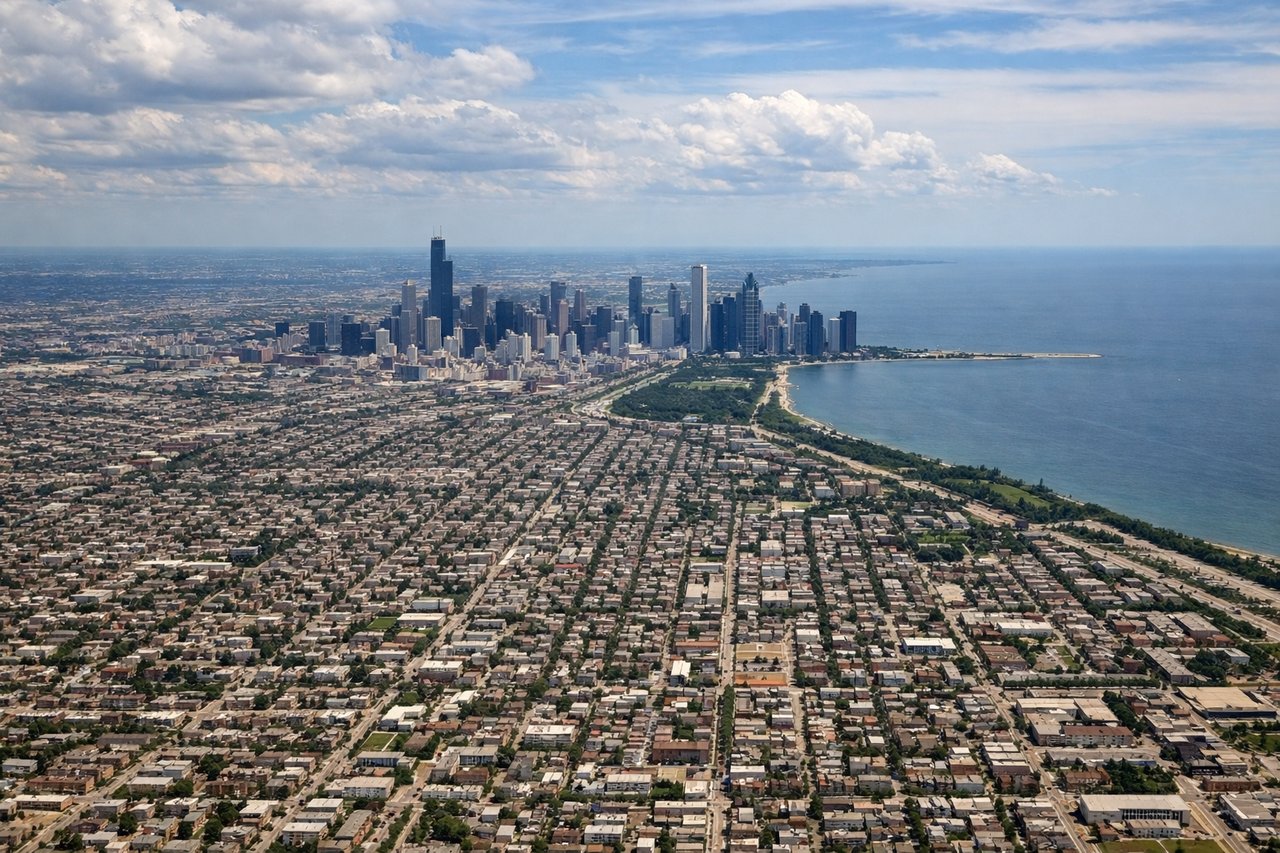
Takeoff from MDW
RIGHTRight-side seats offer views of Lake Michigan and the Chicago shoreline during climb-out. The aircraft departs eastbound or southeastbound from Midway, so right-side passengers see the lake's western shore and downtown Chicago's skyline receding below.
Landing at FTW
LEFTLeft-side seats provide views of the Trinity River and Fort Worth's downtown skyline during approach. Aircraft typically descend from the northeast on final approach to Meacham, so left-side passengers see the city center and surrounding terrain as the airport comes into view.
Landmarks on this routeAll landmarks →
Will your flight be in sunlight?
Pick a date and time in the Sun Map to watch the sun move across your whole flight.
About This Route
Which side of the plane should I sit on flying from Chicago Midway International (MDW) to Fort Worth Meacham International (FTW)?
Sit on the Right side of the plane for the best views on flights from Chicago to Fort Worth. Right-side seats capture Lake Michigan and Chicago's waterfront during departure, then offer views of the Illinois-Indiana landscape, the Mississippi River valley, and eventually the transition into Texas prairie during the descent. Left-side seats see primarily inland terrain for most of the flight before the Fort Worth approach.
What can I see during takeoff from Chicago Midway International in Chicago?
During takeoff from Chicago Midway International (MDW), sit on the Right side for the best views. Right-side seats offer views of Lake Michigan and the Chicago shoreline during climb-out. The aircraft departs eastbound or southeastbound from Midway, so right-side passengers see the lake's western shore and downtown Chicago's skyline receding below. Notable sights include: Lake Michigan, Chicago downtown skyline, Midway Airport grounds, residential neighborhoods of southwest Chicago.
What can I see when landing at Fort Worth Meacham International in Fort Worth?
When landing at Fort Worth Meacham International (FTW), sit on the Left side for the best views. Left-side seats provide views of the Trinity River and Fort Worth's downtown skyline during approach. Aircraft typically descend from the northeast on final approach to Meacham, so left-side passengers see the city center and surrounding terrain as the airport comes into view. Notable sights include: Trinity River, Fort Worth downtown district, Lake Worth (to the north), surrounding Texas prairie and low hills.
How long is the flight from Chicago to Fort Worth?
The flight from Chicago Midway International (MDW) to Fort Worth Meacham International (FTW) takes about 2 hours 15 minutes. The shortest flight path between them is 813 miles (1,308 km); winds and air traffic control usually add a few percent.
What does the Chicago to Fort Worth flight path pass over?
The flight path crosses central Illinois with views of the Illinois River valley, then passes over the Mississippi River near the Illinois-Missouri border (visible as a wide, meandering waterway). The landscape transitions from agricultural flatland in Illinois to gently rolling terrain in Missouri and Oklahoma, with scattered lakes and river systems. The Ozark plateau's eastern edge may be visible to the south around the Missouri-Oklahoma border. As the aircraft approaches Texas, the terrain flattens again into the Red River valley and the North Texas prairie, with sparse vegetation and open grassland dominating the landscape.