While left seats win on takeoff, right seats dominate the landing approach with superior views of the Red River Delta's distinctive geography and Hanoi's approach corridor. The landing view is more dramatic and geographically significant than the takeoff.
Flown MEL to HAN? Did we get it right?
Flight Path
Melbourne to Hanoi is 4,795 miles (7,716 km), a flight of about 9 hours 30 minutes.
The flight crosses the Tasman Sea (no landmarks), then passes over the Australian east coast near Brisbane or further north depending on routing. Over the Coral Sea, the Great Barrier Reef's outer edges may be visible on clear days as a pale blue-green line. The flight then crosses the Australian continent's tropical north (Cape York Peninsula region), followed by the Arafura Sea. Approaching Vietnam, the flight passes over the Gulf of Tonkin's northern waters before descending toward the Red River Delta. The Mekong Delta and Cambodia's plains are typically south of the standard approach corridor.
Great circle distance and headings ›

Phase by phase
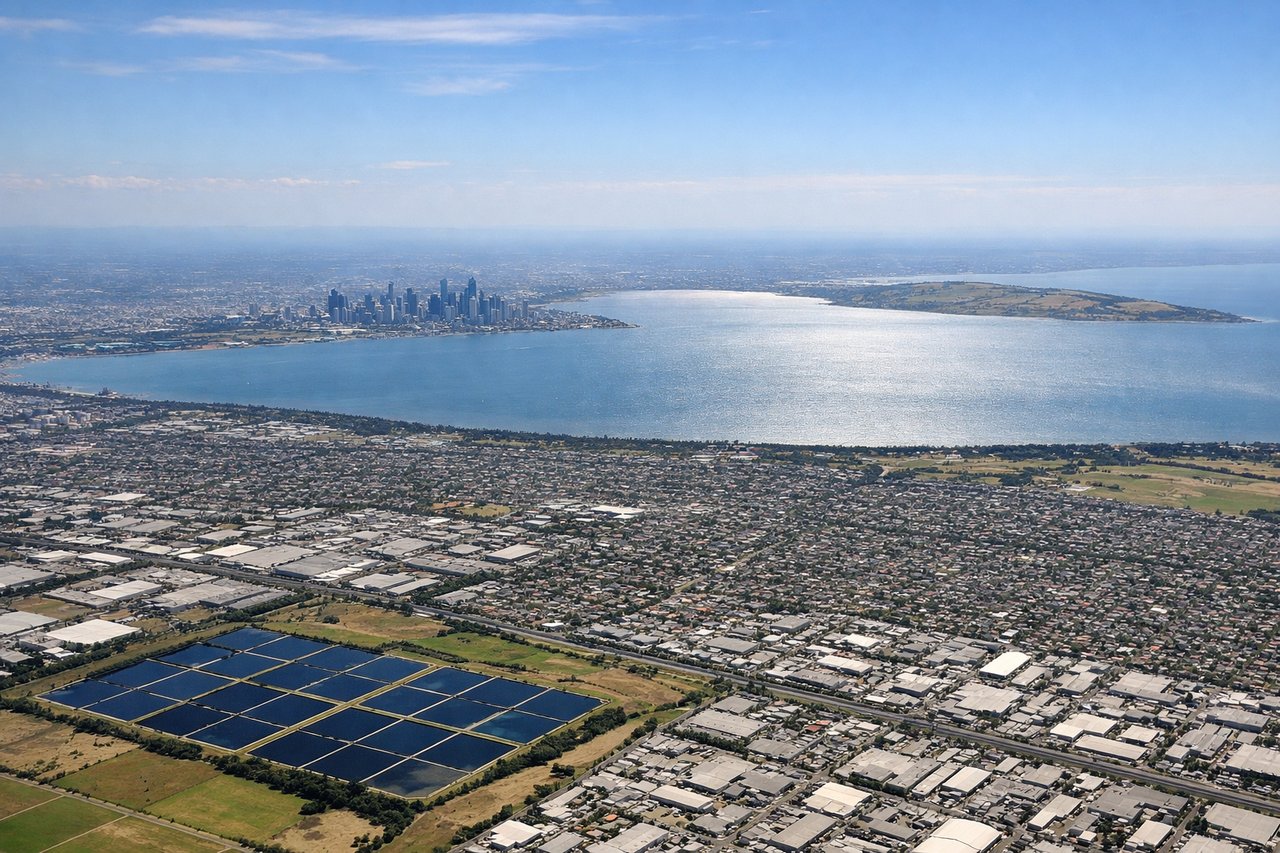
Takeoff from MEL
LEFTMelbourne typically departs runway 27 (westbound) or 09 (eastbound). Left seats on a westbound departure offer views of Port Phillip Bay's western shoreline and the You Yangs volcanic range. Eastbound departures favor right seats, but westbound is more common for northbound international flights.
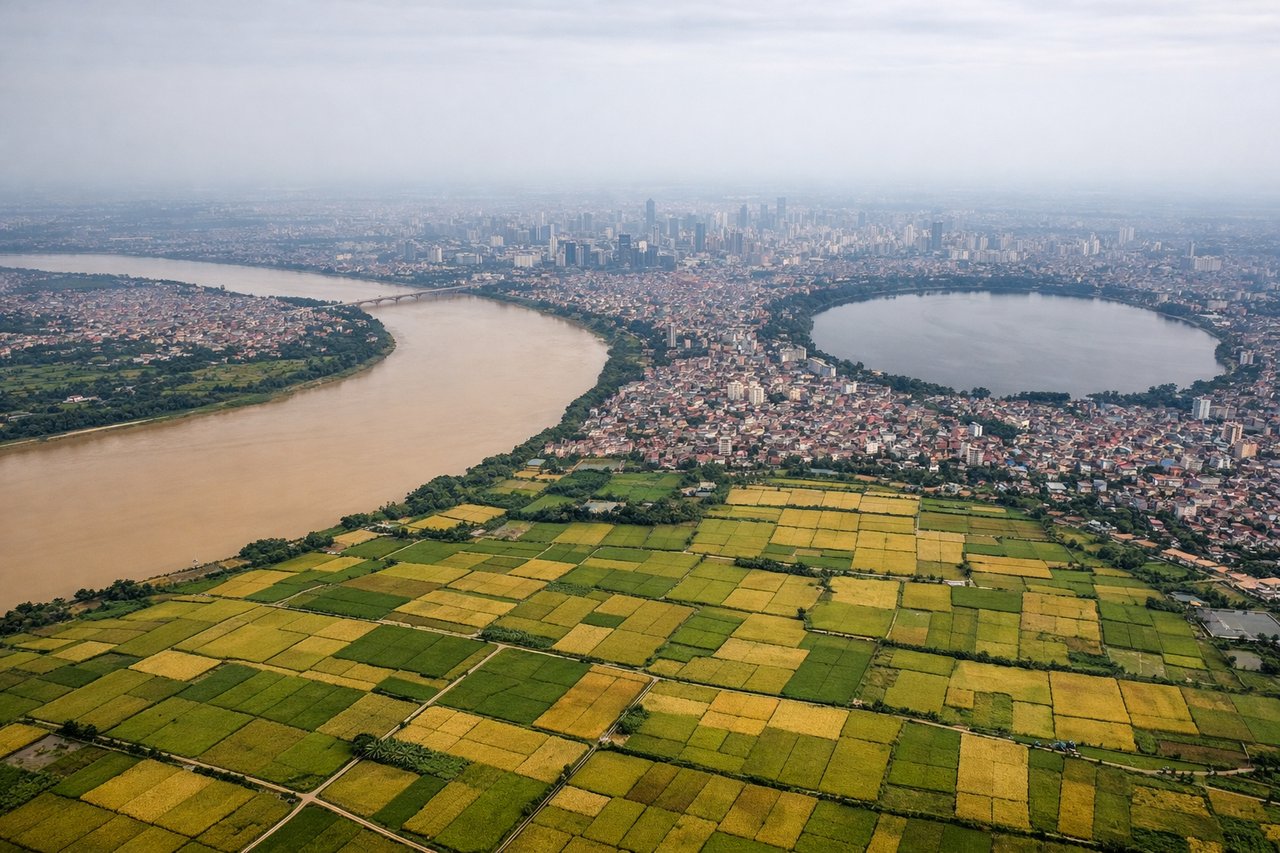
Landing at HAN
RIGHTHanoi's Noibai Airport is north of the city on the Red River Delta. Typical approach is from the east (runway 29L/29R). Right-seat passengers descending from the east see the Red River's distinctive meandering channels, the delta's patchwork rice paddies, and Hanoi's urban sprawl spreading across the flat plain.
Will your flight be in sunlight?
Pick a date and time in the Sun Map to watch the sun move across your whole flight.
About This Route
Which side of the plane should I sit on flying from Melbourne International (MEL) to Noibai International (HAN)?
Sit on the Right side of the plane for the best views on flights from Melbourne to Hanoi. While left seats win on takeoff, right seats dominate the landing approach with superior views of the Red River Delta's distinctive geography and Hanoi's approach corridor. The landing view is more dramatic and geographically significant than the takeoff.
What can I see during takeoff from Melbourne International in Melbourne?
During takeoff from Melbourne International (MEL), sit on the Left side for the best views. Melbourne typically departs runway 27 (westbound) or 09 (eastbound). Left seats on a westbound departure offer views of Port Phillip Bay's western shoreline and the You Yangs volcanic range. Eastbound departures favor right seats, but westbound is more common for northbound international flights. Notable sights include: Port Phillip Bay (immediate left, expanding southward), You Yangs volcanic hills (left, 30 miles west), Dandenong Ranges (right, receding eastward), Western suburbs sprawl (directly below, fading left).
What can I see when landing at Noibai International in Hanoi?
When landing at Noibai International (HAN), sit on the Right side for the best views. Hanoi's Noibai Airport is north of the city on the Red River Delta. Typical approach is from the east (runway 29L/29R). Right-seat passengers descending from the east see the Red River's distinctive meandering channels, the delta's patchwork rice paddies, and Hanoi's urban sprawl spreading across the flat plain. Notable sights include: Red River with its braided channels (right, below), Hanoi city center (left-center, sprawling), Thai Nguyen industrial zone (far left, hazy), rice paddies and fish ponds (foreground and right, geometric patterns).
How long is the flight from Melbourne to Hanoi?
The flight from Melbourne International (MEL) to Noibai International (HAN) takes about 9 hours 30 minutes. The shortest flight path between them is 4,795 miles (7,716 km); winds and air traffic control usually add a few percent.
What does the Melbourne to Hanoi flight path pass over?
The flight crosses the Tasman Sea (no landmarks), then passes over the Australian east coast near Brisbane or further north depending on routing. Over the Coral Sea, the Great Barrier Reef's outer edges may be visible on clear days as a pale blue-green line. The flight then crosses the Australian continent's tropical north (Cape York Peninsula region), followed by the Arafura Sea. Approaching Vietnam, the flight passes over the Gulf of Tonkin's northern waters before descending toward the Red River Delta. The Mekong Delta and Cambodia's plains are typically south of the standard approach corridor.