While left offers good departure views, right seats deliver the superior experience on arrival with unobstructed Andes views during the dramatic final descent into Santiago—the signature moment of this route.
Flight Path
Melbourne to Santiago is 7,019 miles (11,296 km), a flight of about 13 hours 30 minutes.
The flight crosses the Tasman Sea (no landmarks visible, open ocean for ~8 hours), then approaches New Zealand's South Island from the west. The Southern Alps and Fiordland region are visible during the trans-Tasman crossing if altitude and timing permit, though typically at cruise altitude (35,000+ feet) where detail is minimal. The route then tracks across the South Pacific toward South America, with no significant landmass until approaching the Chilean coast near the Atacama Desert and the Andes foothills.
Great circle distance and headings ›

Phase by phase
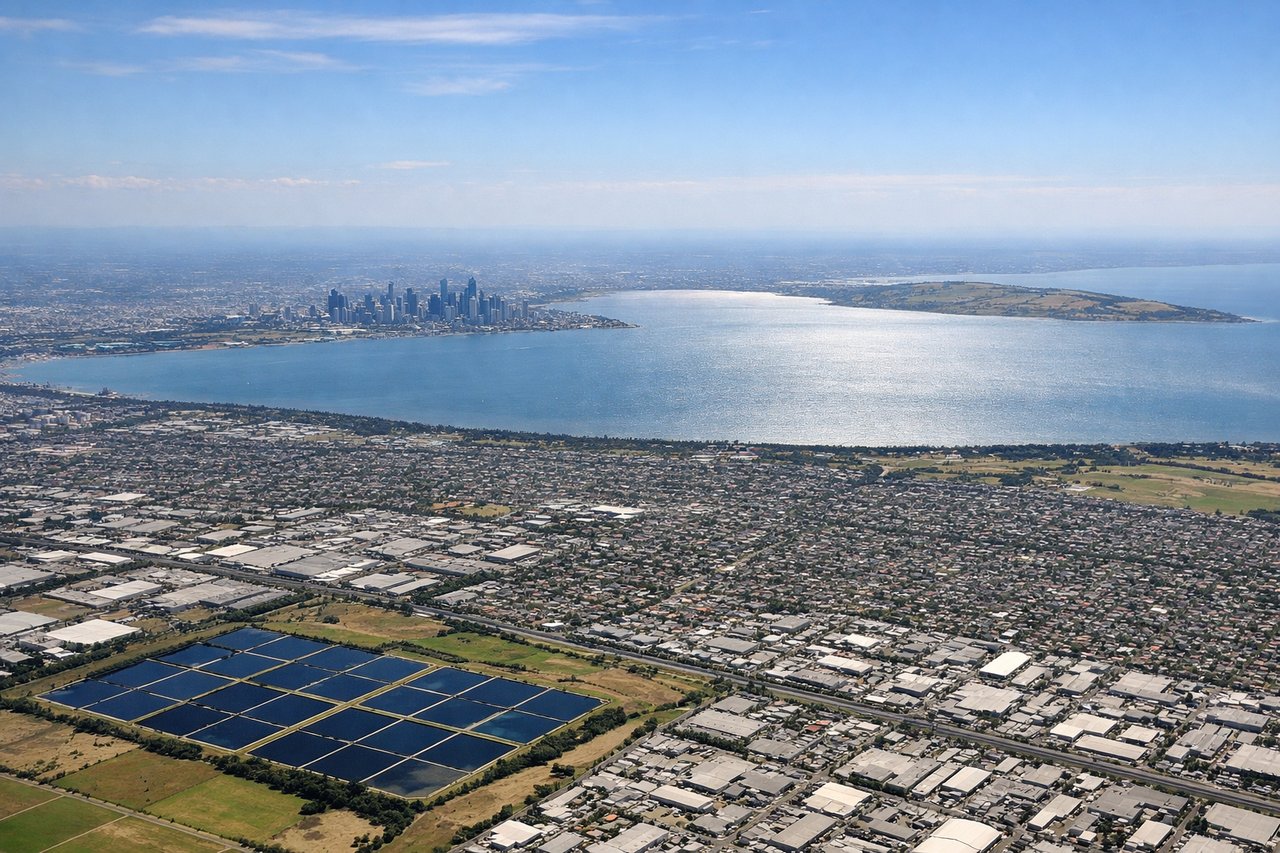
Takeoff from MEL
LEFTMelbourne typically departs runway 27 (westbound) or 09 (eastbound). Left seats on a westbound departure offer views of Port Phillip Bay and the You Yangs ranges. Eastbound departures favor right seats, but westbound is more common for Pacific routes, making left the better general choice.
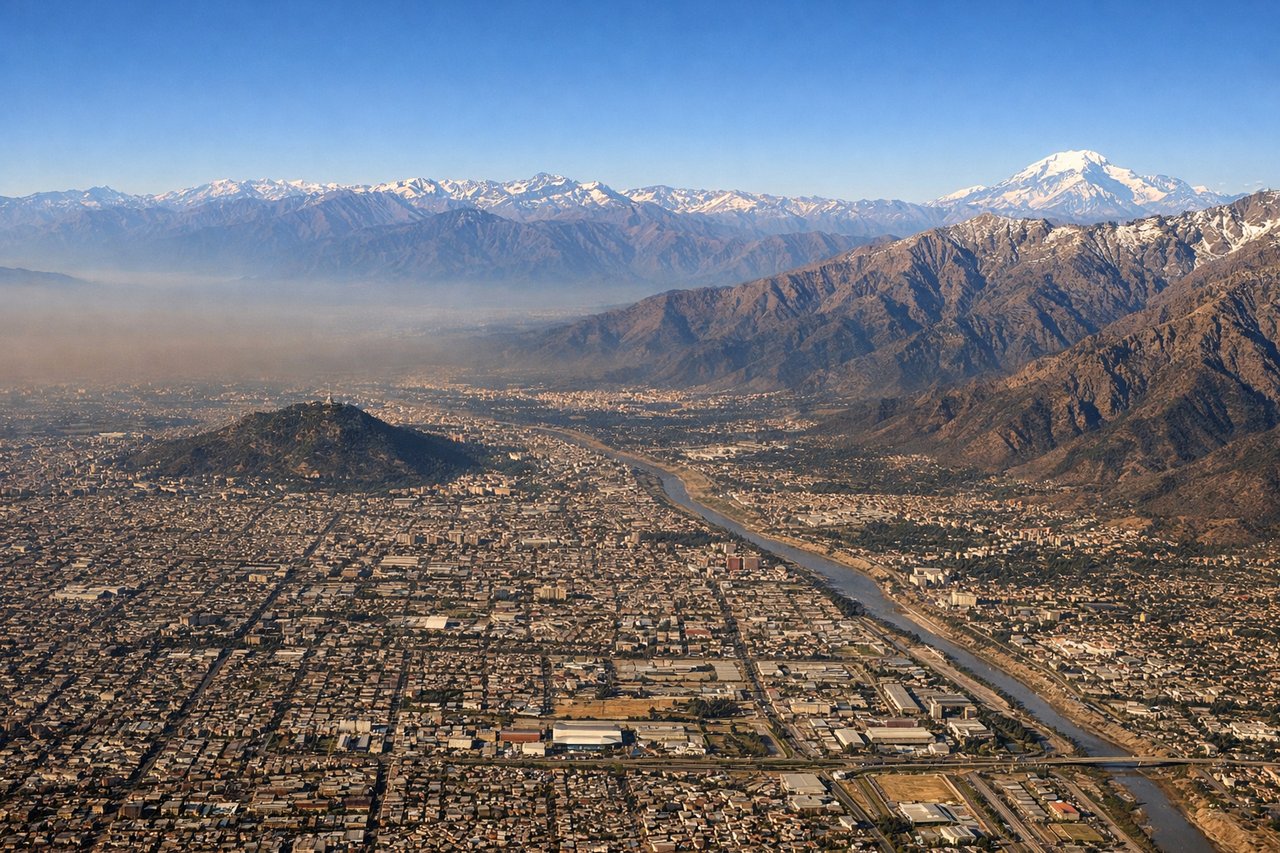
Landing at SCL
RIGHTSantiago typically lands runway 35L/35R (northeast approach) or 17L/17R (southwest). Northeast approaches are standard. Right seats on descent toward runway 35 offer views of the Andes cordillera and the San Cristóbal Hill (Cerro San Cristóbal) marking central Santiago. This is the more dramatic and frequent arrival pattern.
Landmarks on this routeAll landmarks →
Will your flight be in sunlight?
Pick a date and time in the Sun Map to watch the sun move across your whole flight.
About This Route
Which side of the plane should I sit on flying from Melbourne International (MEL) to Arturo Merino Benitez International (SCL)?
Sit on the Right side of the plane for the best views on flights from Melbourne to Santiago. While left offers good departure views, right seats deliver the superior experience on arrival with unobstructed Andes views during the dramatic final descent into Santiago—the signature moment of this route.
What can I see during takeoff from Melbourne International in Melbourne?
During takeoff from Melbourne International (MEL), sit on the Left side for the best views. Melbourne typically departs runway 27 (westbound) or 09 (eastbound). Left seats on a westbound departure offer views of Port Phillip Bay and the You Yangs ranges. Eastbound departures favor right seats, but westbound is more common for Pacific routes, making left the better general choice. Notable sights include: Port Phillip Bay (immediate southwest), You Yangs volcanic range (west-southwest, 30 miles), Dandenong Ranges (east, receding), Western suburbs sprawl.
What can I see when landing at Arturo Merino Benitez International in Santiago?
When landing at Arturo Merino Benitez International (SCL), sit on the Right side for the best views. Santiago typically lands runway 35L/35R (northeast approach) or 17L/17R (southwest). Northeast approaches are standard. Right seats on descent toward runway 35 offer views of the Andes cordillera and the San Cristóbal Hill (Cerro San Cristóbal) marking central Santiago. This is the more dramatic and frequent arrival pattern. Notable sights include: Andes Mountains (dominant eastern horizon), Maipo River valley (foreground), San Cristóbal Hill with statue (city center marker), Santiago urban sprawl.
How long is the flight from Melbourne to Santiago?
The flight from Melbourne International (MEL) to Arturo Merino Benitez International (SCL) takes about 13 hours 30 minutes. The shortest flight path between them is 7,019 miles (11,296 km); winds and air traffic control usually add a few percent.
What does the Melbourne to Santiago flight path pass over?
The flight crosses the Tasman Sea (no landmarks visible, open ocean for ~8 hours), then approaches New Zealand's South Island from the west. The Southern Alps and Fiordland region are visible during the trans-Tasman crossing if altitude and timing permit, though typically at cruise altitude (35,000+ feet) where detail is minimal. The route then tracks across the South Pacific toward South America, with no significant landmass until approaching the Chilean coast near the Atacama Desert and the Andes foothills.