While left seats dominate the Mexico City departure with volcanic views, right seats provide superior scenery for the majority of the flight and especially the approach into Vancouver. The North Shore Mountains and Gulf Islands are more visually striking than the relatively flat terrain visible from left seats during the approach.
Flown MEX to YVR? Did we get it right?
Flight Path
Mexico City to Vancouver is 2,451 miles (3,945 km), a flight of about 5 hours.
The flight path crosses the Sierra Madre Occidental range in northern Mexico (visible around 1.5 hours out), then transitions over the high desert plateau of Chihuahua and Durango. The Colorado River and its canyon system become visible in southern Arizona/New Mexico around the 2.5-hour mark. The Rocky Mountains appear on the horizon around 3.5 hours into the flight, with the Canadian Rockies becoming prominent in the final 90 minutes. Right seats offer better views of the Rockies and Cascades during the approach corridor into British Columbia.
Great circle distance and headings ›


Phase by phase
Takeoff from MEX
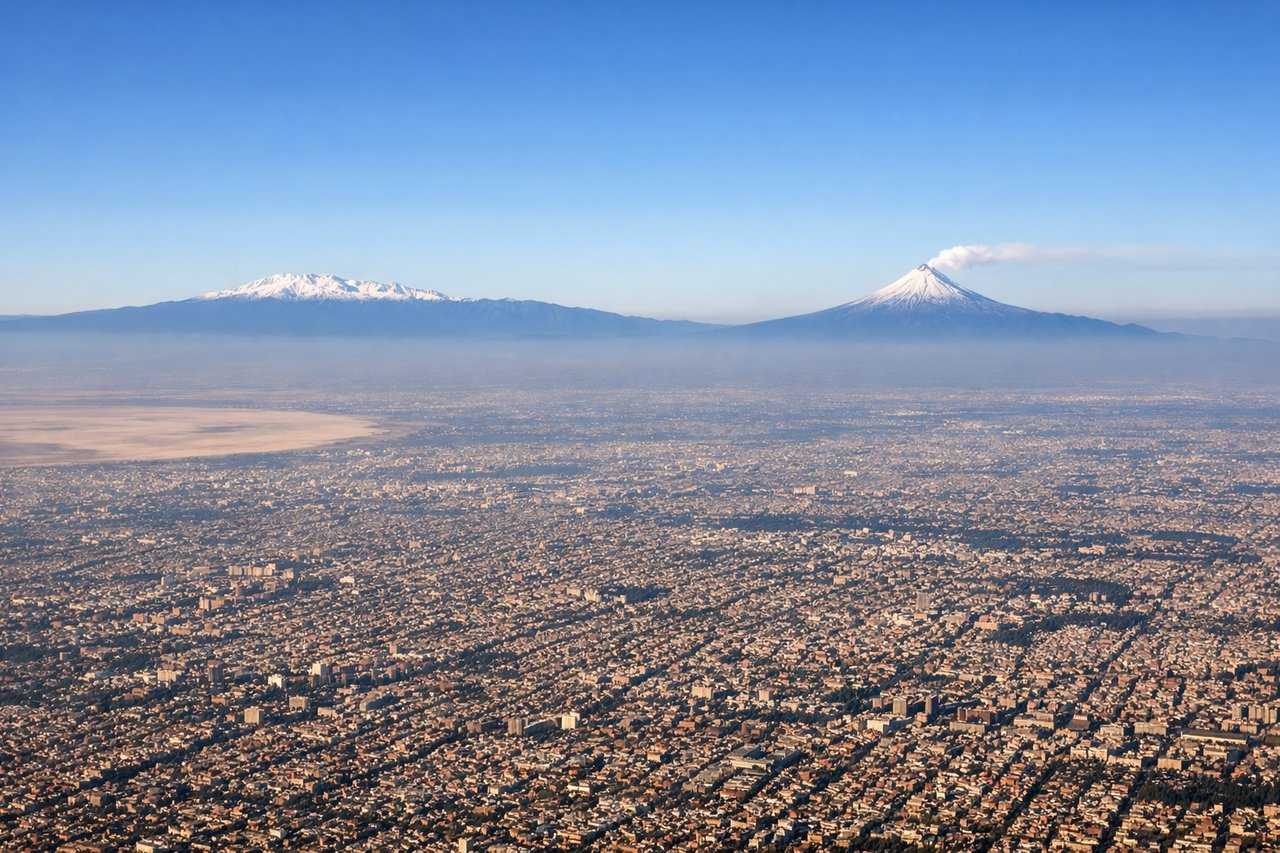
LEFTMEX typically departs runways 05L/05R (northeast heading) or 09L/09R (east heading). Left seats offer views of the Valley of Mexico's eastern rim, including the snow-capped volcanic peaks that dominate the skyline during climb-out. Right seats face the sprawling urban grid of Mexico City itself, which is less visually distinctive at altitude.

Landing at YVR
RIGHTYVR uses runways 08L/08R (east heading) or 26L/26R (west heading) depending on wind. Right seats during approach from the south or southeast offer unobstructed views of the North Shore Mountains, Burrard Inlet, and the Gulf Islands. Left seats face the urban sprawl of Vancouver and Richmond, which lacks the dramatic topography.
Will your flight be in sunlight?
Pick a date and time in the Sun Map to watch the sun move across your whole flight.
About This Route
Which side of the plane should I sit on flying from Licenciado Benito Juarez International (MEX) to Vancouver International (YVR)?
Sit on the Right side of the plane for the best views on flights from Mexico City to Vancouver. While left seats dominate the Mexico City departure with volcanic views, right seats provide superior scenery for the majority of the flight and especially the approach into Vancouver. The North Shore Mountains and Gulf Islands are more visually striking than the relatively flat terrain visible from left seats during the approach.
What can I see during takeoff from Licenciado Benito Juarez International in Mexico City?
During takeoff from Licenciado Benito Juarez International (MEX), sit on the Left side for the best views. MEX typically departs runways 05L/05R (northeast heading) or 09L/09R (east heading). Left seats offer views of the Valley of Mexico's eastern rim, including the snow-capped volcanic peaks that dominate the skyline during climb-out. Right seats face the sprawling urban grid of Mexico City itself, which is less visually distinctive at altitude. Notable sights include: Popocatépetl volcano (5,426m, often snow-capped), Iztaccíhuatl volcano (5,230m), Sierra Nevada range forming the eastern basin rim, Lake Texcoco remnants visible as urban water features.
What can I see when landing at Vancouver International in Vancouver?
When landing at Vancouver International (YVR), sit on the Right side for the best views. YVR uses runways 08L/08R (east heading) or 26L/26R (west heading) depending on wind. Right seats during approach from the south or southeast offer unobstructed views of the North Shore Mountains, Burrard Inlet, and the Gulf Islands. Left seats face the urban sprawl of Vancouver and Richmond, which lacks the dramatic topography. Notable sights include: North Shore Mountains (Grouse, Seymour, Cypress peaks visible), Burrard Inlet and English Bay, Gulf Islands archipelago (Bowen, Hornby, Denman visible as dark forested shapes), Vancouver city skyline in the distance.
How long is the flight from Mexico City to Vancouver?
The flight from Licenciado Benito Juarez International (MEX) to Vancouver International (YVR) takes about 5 hours. The shortest flight path between them is 2,451 miles (3,945 km); winds and air traffic control usually add a few percent.
What does the Mexico City to Vancouver flight path pass over?
The flight path crosses the Sierra Madre Occidental range in northern Mexico (visible around 1.5 hours out), then transitions over the high desert plateau of Chihuahua and Durango. The Colorado River and its canyon system become visible in southern Arizona/New Mexico around the 2.5-hour mark. The Rocky Mountains appear on the horizon around 3.5 hours into the flight, with the Canadian Rockies becoming prominent in the final 90 minutes. Right seats offer better views of the Rockies and Cascades during the approach corridor into British Columbia.