Miami to Oranjestad is 1,136 miles (1,828 km), a flight of about 3 hours.
Right-side seats capture the most scenic departure over Biscayne Bay and the Miami coastline. While the landing favors the left, the takeoff views are more dramatic and visually distinctive, making right the better overall choice for this route.
Flight Path
The flight path crosses the Caribbean Sea south-southwest from Miami. Notable features include the Bahama Banks (shallow turquoise waters visible from altitude if flying over them), the open Caribbean with occasional cumulus cloud formations, and the gradual transition from Florida's coastal waters to deeper Caribbean blue. The Yucatan Channel and deep Caribbean basin occupy the midpoint of the route. No major landmasses are visible during the cruise phase—the flight is primarily over open water with excellent visibility of the sea surface color changes indicating depth variations.
Great circle distance and headings ›Phase by phase
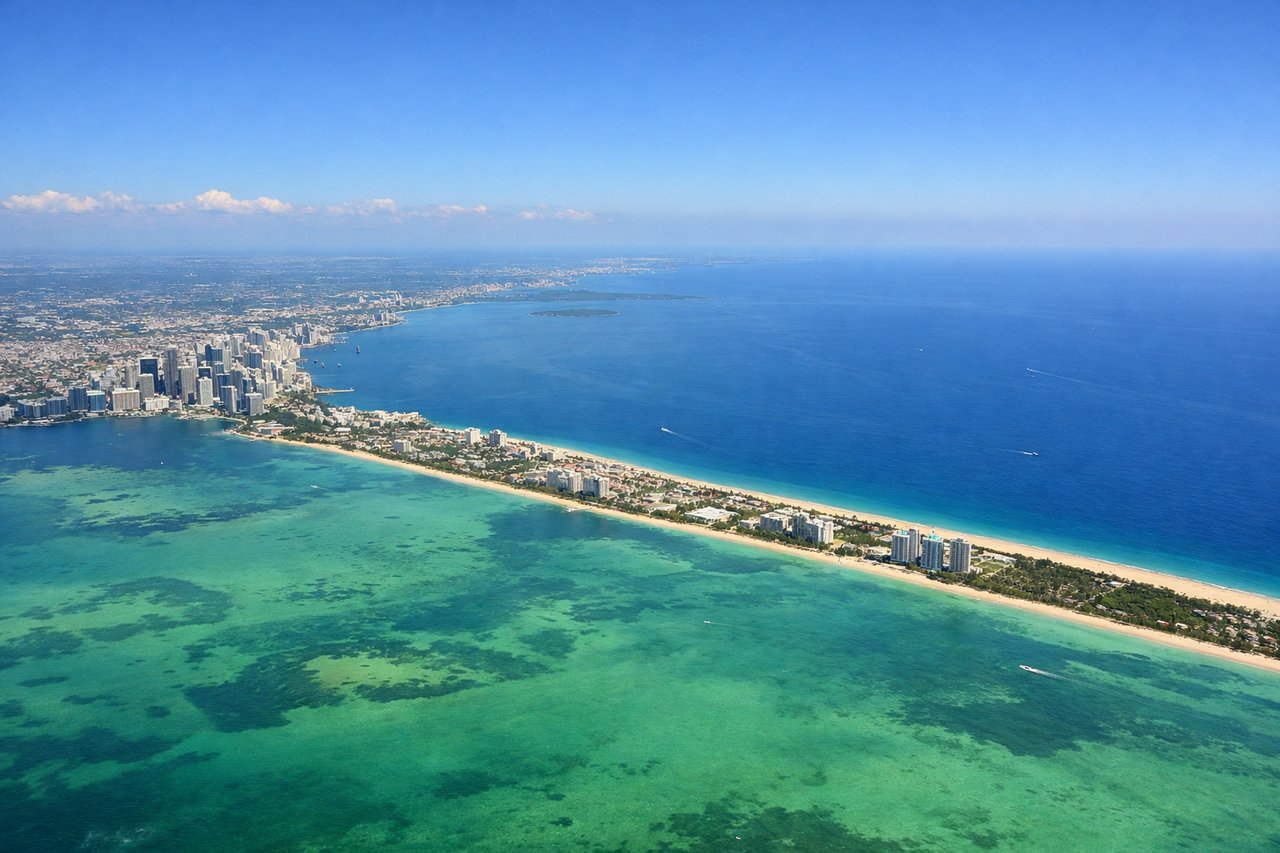
Takeoff from MIA
RIGHTRight-side seats offer views of Biscayne Bay and the Miami coastline as the aircraft climbs southward. You'll see the barrier islands, shallow turquoise waters, and the urban sprawl of Miami and Miami Beach receding beneath you.
Landing at AUA
LEFTLeft-side seats provide views of Aruba's northern coast and the island's distinctive arid landscape during approach. You'll see the island's sparse vegetation, white sand beaches, and the turquoise Caribbean waters surrounding it.
Landmarks on this routeAll landmarks →
Will your flight be in sunlight?
Pick a date and time in the Sun Map to watch the sun move across your whole flight.
About This Route
Which side of the plane should I sit on flying from Miami International (MIA) to Reina Beatrix International (AUA)?
Sit on the Right side of the plane for the best views on flights from Miami to Oranjestad. Right-side seats capture the most scenic departure over Biscayne Bay and the Miami coastline. While the landing favors the left, the takeoff views are more dramatic and visually distinctive, making right the better overall choice for this route.
What can I see during takeoff from Miami International in Miami?
During takeoff from Miami International (MIA), sit on the Right side for the best views. Right-side seats offer views of Biscayne Bay and the Miami coastline as the aircraft climbs southward. You'll see the barrier islands, shallow turquoise waters, and the urban sprawl of Miami and Miami Beach receding beneath you. Notable sights include: Biscayne Bay, Miami Beach barrier islands, Port of Miami container terminals, Atlantic Ocean horizon.
What can I see when landing at Reina Beatrix International in Oranjestad?
When landing at Reina Beatrix International (AUA), sit on the Left side for the best views. Left-side seats provide views of Aruba's northern coast and the island's distinctive arid landscape during approach. You'll see the island's sparse vegetation, white sand beaches, and the turquoise Caribbean waters surrounding it. Notable sights include: Aruba's northern coastline, Eagle Beach, Palm Beach, Caribbean Sea, arid interior landscape.
How long is the flight from Miami to Oranjestad?
The flight from Miami International (MIA) to Reina Beatrix International (AUA) takes about 3 hours. The shortest flight path between them is 1,136 miles (1,828 km); winds and air traffic control usually add a few percent.
What does the Miami to Oranjestad flight path pass over?
The flight path crosses the Caribbean Sea south-southwest from Miami. Notable features include the Bahama Banks (shallow turquoise waters visible from altitude if flying over them), the open Caribbean with occasional cumulus cloud formations, and the gradual transition from Florida's coastal waters to deeper Caribbean blue. The Yucatan Channel and deep Caribbean basin occupy the midpoint of the route. No major landmasses are visible during the cruise phase—the flight is primarily over open water with excellent visibility of the sea surface color changes indicating depth variations.