The right side delivers the dramatic Miami departure over Biscayne Bay and Miami Beach, and throughout the cruise you track southeast over the Bahamas chain where right-side passengers may glimpse the shallow Bahamian banks and cays. The left side wins at landing for St. Martin views, but the right side advantage is stronger and longer-lasting over the full flight.
Flight Path
After departing Miami, the route crosses the Florida Straits and then tracks over or near the Bahamas, with the Great Bahama Bank's impossibly shallow turquoise waters potentially visible on clear days. The route then passes east of Cuba and Hispaniola, crossing the northeastern Caribbean before descending toward the Leeward Islands. Puerto Rico may be visible on the horizon to the south in the final hour of flight.
Great circle distance and headings ›Phase by phase
Takeoff from MIA
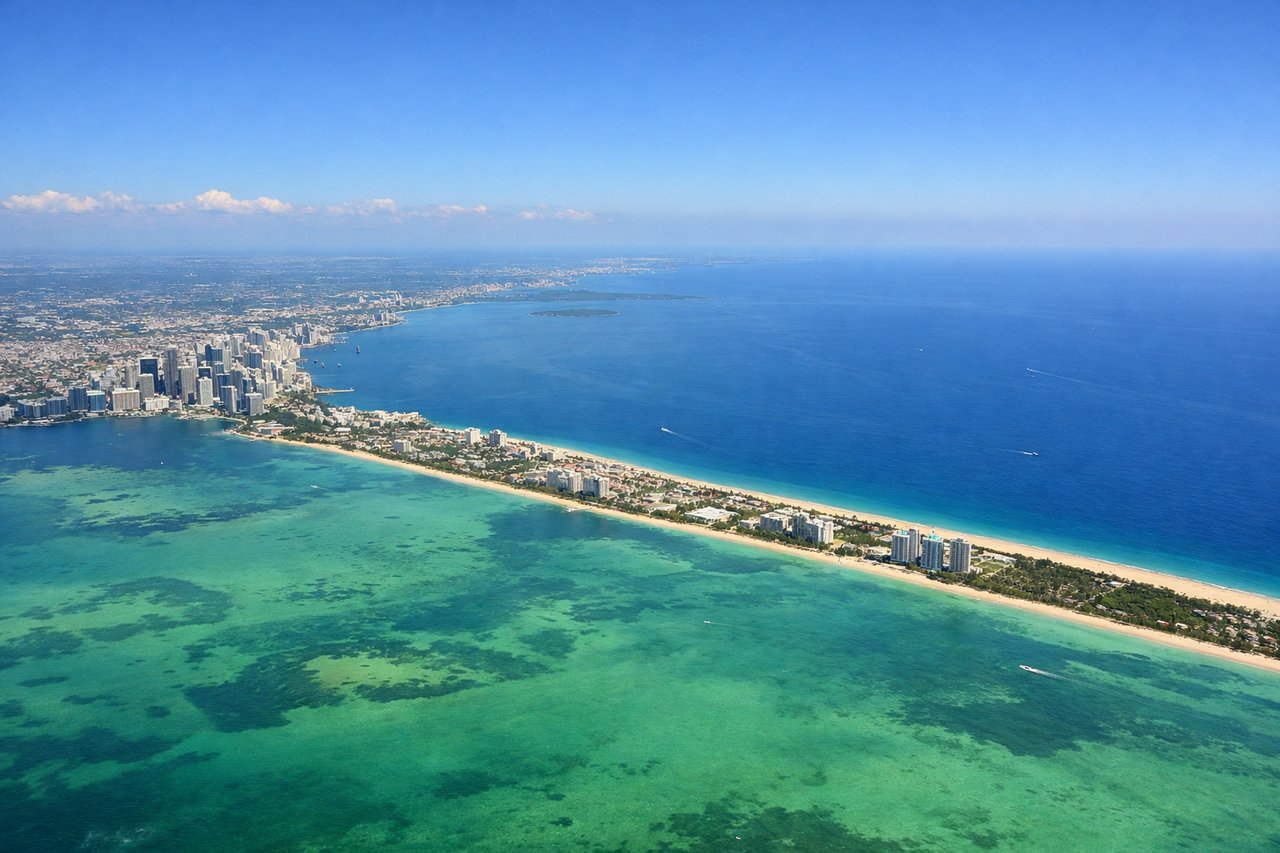
RIGHTMIA typically departs east on runway 08R/09, so the right side faces north and gives you a clear view over Miami Beach, Biscayne Bay, and the barrier islands. The left side looks south over suburban Kendall with little of interest.
Landing at AXA
LEFTWallblake Airport typically serves runway 10/28, with approaches often from the west over the Caribbean. On a westbound approach to runway 10, the left side faces south toward St. Martin/Sint Maarten just 8 miles away, giving a spectacular close view of that island's lagoon and beaches. The right side looks north over open Atlantic.
Landmarks on this routeAll landmarks →
Will your flight be in sunlight?
See exactly which side of the plane gets sun and shade at your departure time.
About This Route
Which side of the plane should I sit on flying from Miami International (MIA) to Wallblake (AXA)?
Sit on the Right side of the plane for the best views on flights from Miami to The Valley. The right side delivers the dramatic Miami departure over Biscayne Bay and Miami Beach, and throughout the cruise you track southeast over the Bahamas chain where right-side passengers may glimpse the shallow Bahamian banks and cays. The left side wins at landing for St. Martin views, but the right side advantage is stronger and longer-lasting over the full flight.
What can I see during takeoff from Miami International in Miami?
During takeoff from Miami International (MIA), sit on the Right side for the best views. MIA typically departs east on runway 08R/09, so the right side faces north and gives you a clear view over Miami Beach, Biscayne Bay, and the barrier islands. The left side looks south over suburban Kendall with little of interest. Notable sights include: Biscayne Bay, Miami Beach barrier island, Port of Miami cruise terminals, downtown Miami skyline.
What can I see when landing at Wallblake in The Valley?
When landing at Wallblake (AXA), sit on the Left side for the best views. Wallblake Airport typically serves runway 10/28, with approaches often from the west over the Caribbean. On a westbound approach to runway 10, the left side faces south toward St. Martin/Sint Maarten just 8 miles away, giving a spectacular close view of that island's lagoon and beaches. The right side looks north over open Atlantic. Notable sights include: Sint Maarten/St. Martin island, Simpson Bay Lagoon, Anguilla's white sand beaches and salt ponds, the Caribbean Sea's vivid color gradients.
How long is the flight from Miami to The Valley?
The flight from Miami International (MIA) to Wallblake (AXA) takes Approximately 3 hours 15 minutes.
What does the Miami to The Valley flight path pass over?
After departing Miami, the route crosses the Florida Straits and then tracks over or near the Bahamas, with the Great Bahama Bank's impossibly shallow turquoise waters potentially visible on clear days. The route then passes east of Cuba and Hispaniola, crossing the northeastern Caribbean before descending toward the Leeward Islands. Puerto Rico may be visible on the horizon to the south in the final hour of flight.