Miami to Belem is 2,835 miles (4,562 km), a flight of about 4 hours 50 minutes.
While takeoff offers good coastal views, the landing approach over the Amazon delta and Pará River estuary is the more dramatic and geographically distinctive segment. Left-side seats capture the world's largest river system and its complex island network during descent, making it the superior choice for scenic value on this route.
Flight Path
Caribbean Sea (crossing open water southeast of Florida), northern coast of Venezuela and Colombia (Maracaibo region visible as distant landmass), Orinoco River delta region, Atlantic approaches to the Amazon basin, transition from Caribbean waters to equatorial Atlantic
Great circle distance and headings ›
.jpg?width=600)

Phase by phase
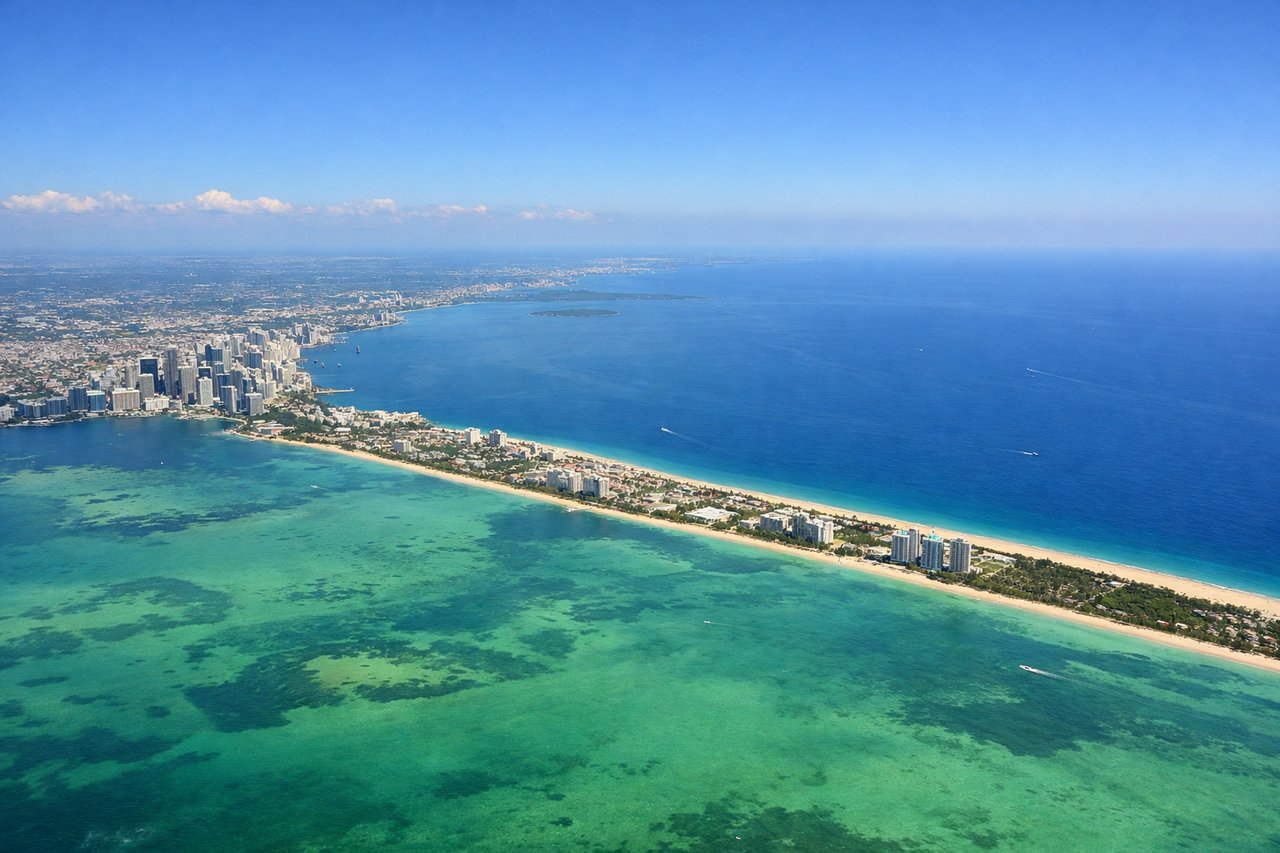
Takeoff from MIA
RIGHTRight-side seats offer views of Biscayne Bay and the Florida Keys extending south. The aircraft departs Miami heading southeast over water, and right-side windows capture the shallow turquoise waters, barrier islands, and the chain of keys receding toward the horizon.
Landing at BEL
LEFTLeft-side seats provide views of the Amazon River delta and the Pará River estuary as the aircraft descends toward Belém. The approach path brings the aircraft over the massive river system, and left-side windows capture the intricate network of channels, islands, and the brown water of the Amazon meeting the Atlantic.
Landmarks on this routeAll landmarks →
Will your flight be in sunlight?
Pick a date and time in the Sun Map to watch the sun move across your whole flight.
About This Route
Which side of the plane should I sit on flying from Miami International (MIA) to Val De Caes (BEL)?
Sit on the Left side of the plane for the best views on flights from Miami to Belem. While takeoff offers good coastal views, the landing approach over the Amazon delta and Pará River estuary is the more dramatic and geographically distinctive segment. Left-side seats capture the world's largest river system and its complex island network during descent, making it the superior choice for scenic value on this route.
What can I see during takeoff from Miami International in Miami?
During takeoff from Miami International (MIA), sit on the Right side for the best views. Right-side seats offer views of Biscayne Bay and the Florida Keys extending south. The aircraft departs Miami heading southeast over water, and right-side windows capture the shallow turquoise waters, barrier islands, and the chain of keys receding toward the horizon. Notable sights include: Biscayne Bay, Florida Keys (Key Largo, Islamorada visible as thin linear islands), Atlantic Ocean, Miami Beach and downtown Miami skyline (receding westward).
What can I see when landing at Val De Caes in Belem?
When landing at Val De Caes (BEL), sit on the Left side for the best views. Left-side seats provide views of the Amazon River delta and the Pará River estuary as the aircraft descends toward Belém. The approach path brings the aircraft over the massive river system, and left-side windows capture the intricate network of channels, islands, and the brown water of the Amazon meeting the Atlantic. Notable sights include: Pará River estuary, Amazon River delta (Marajó Island visible as large landmass), Atlantic coastline, Belém city and port facilities on the eastern bank.
How long is the flight from Miami to Belem?
The flight from Miami International (MIA) to Val De Caes (BEL) takes about 4 hours 50 minutes. The shortest flight path between them is 2,835 miles (4,562 km); winds and air traffic control usually add a few percent.
What does the Miami to Belem flight path pass over?
Caribbean Sea (crossing open water southeast of Florida), northern coast of Venezuela and Colombia (Maracaibo region visible as distant landmass), Orinoco River delta region, Atlantic approaches to the Amazon basin, transition from Caribbean waters to equatorial Atlantic