Right-side seats score higher (3.5 vs 2.5) due to superior scenery on both takeoff and landing. Departure offers the visual drama of transitioning from urban Miami to the Everglades wetlands. Arrival provides the standout feature of this route: the volcanic Pitons du Carbet rising dramatically from the Caribbean, creating genuine terrain drama that elevates the entire flight experience. Left side is dominated by open ocean during cruise and offers limited mountain views on approach.
Flown MIA to FDF? Did we get it right?
Flight Path
Miami to Fort-de-France is 1,468 miles (2,362 km), a flight of about 3 hours 15 minutes.
Open Caribbean Sea with no major landmarks; the flight path crosses approximately 450 nautical miles of open water between the Florida Keys and Martinique. The Bahamas and Turks and Caicos Islands lie north of the direct routing and are not typically visible. The route passes south of Puerto Rico and the Virgin Islands. Arrival into Martinique is marked by the transition from deep ocean to the island's volcanic topography.
Great circle distance and headings ›

Phase by phase
Takeoff from MIA
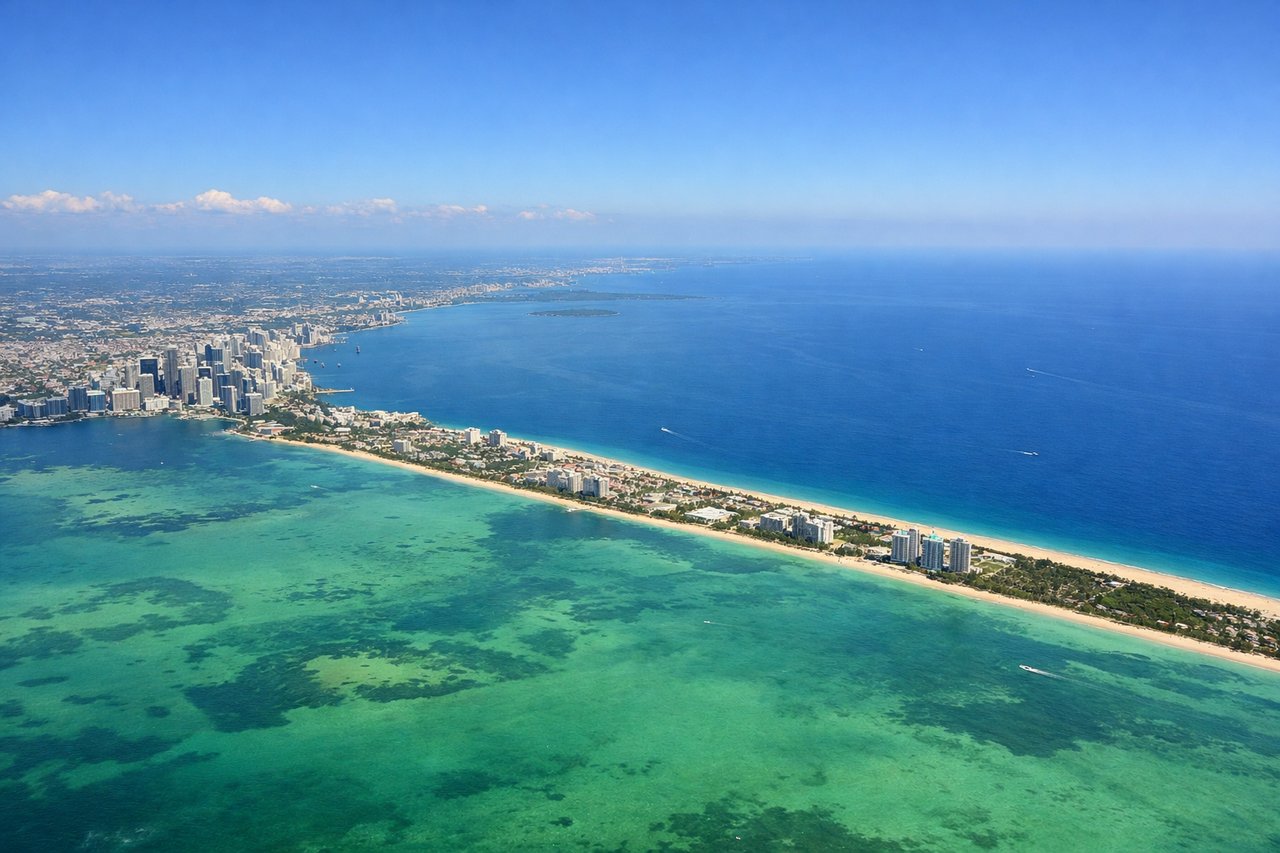
RIGHTRight-side departures from MIA typically use runways 08L/08R heading west-southwest, banking right over the Everglades and Florida Bay. This provides immediate views of wetland patterns, shallow water channels, and the transition from urban Miami to natural landscape. Left-side departures would see primarily urban sprawl and inland terrain with less dramatic visual interest.
Landing at FDF
RIGHTRight-side arrivals into FDF approach from the west over the Caribbean Sea, then turn northeast to land on runway 10. This provides extended views of the open Caribbean, then the dramatic volcanic terrain of Martinique's western coast, including the Pitons du Carbet mountain range rising steeply from sea level. Left-side arrivals would see primarily ocean with limited mountain visibility during the final approach.
Will your flight be in sunlight?
Pick a date and time in the Sun Map to watch the sun move across your whole flight.
About This Route
Which side of the plane should I sit on flying from Miami International (MIA) to Le Lamentin (FDF)?
Sit on the Right side of the plane for the best views on flights from Miami to Fort-de-France. Right-side seats score higher (3.5 vs 2.5) due to superior scenery on both takeoff and landing. Departure offers the visual drama of transitioning from urban Miami to the Everglades wetlands. Arrival provides the standout feature of this route: the volcanic Pitons du Carbet rising dramatically from the Caribbean, creating genuine terrain drama that elevates the entire flight experience. Left side is dominated by open ocean during cruise and offers limited mountain views on approach.
What can I see during takeoff from Miami International in Miami?
During takeoff from Miami International (MIA), sit on the Right side for the best views. Right-side departures from MIA typically use runways 08L/08R heading west-southwest, banking right over the Everglades and Florida Bay. This provides immediate views of wetland patterns, shallow water channels, and the transition from urban Miami to natural landscape. Left-side departures would see primarily urban sprawl and inland terrain with less dramatic visual interest. Notable sights include: Biscayne Bay (shallow turquoise waters), Florida Bay mangrove patterns, Miami urban grid, Everglades wetland channels.
What can I see when landing at Le Lamentin in Fort-de-France?
When landing at Le Lamentin (FDF), sit on the Right side for the best views. Right-side arrivals into FDF approach from the west over the Caribbean Sea, then turn northeast to land on runway 10. This provides extended views of the open Caribbean, then the dramatic volcanic terrain of Martinique's western coast, including the Pitons du Carbet mountain range rising steeply from sea level. Left-side arrivals would see primarily ocean with limited mountain visibility during the final approach. Notable sights include: Caribbean Sea (deep blue water), Pitons du Carbet volcanic peaks (1,196 m), Martinique's western coastline, Fort-de-France harbor and urban area.
How long is the flight from Miami to Fort-de-France?
The flight from Miami International (MIA) to Le Lamentin (FDF) takes about 3 hours 15 minutes. The shortest flight path between them is 1,468 miles (2,362 km); winds and air traffic control usually add a few percent.
What does the Miami to Fort-de-France flight path pass over?
Open Caribbean Sea with no major landmarks; the flight path crosses approximately 450 nautical miles of open water between the Florida Keys and Martinique. The Bahamas and Turks and Caicos Islands lie north of the direct routing and are not typically visible. The route passes south of Puerto Rico and the Virgin Islands. Arrival into Martinique is marked by the transition from deep ocean to the island's volcanic topography.