Miami to Freeport is 112 miles (180 km), a flight of about 45 minutes.
Right-side seats capture the most visually distinctive scenery: Biscayne Bay's turquoise waters and Miami's coastal geography during takeoff, plus the shallow turquoise banks and coral formations around Grand Bahama during approach.
Flight Path
The flight crosses the Northwest Providence Channel, a deep-water passage between Miami and the Bahamas. At cruise altitude, you'll see the transition from Florida's coastal waters to the Bahama Banks' distinctive turquoise shallows, with occasional small cays and islands dotting the route.
Great circle distance and headings ›Phase by phase
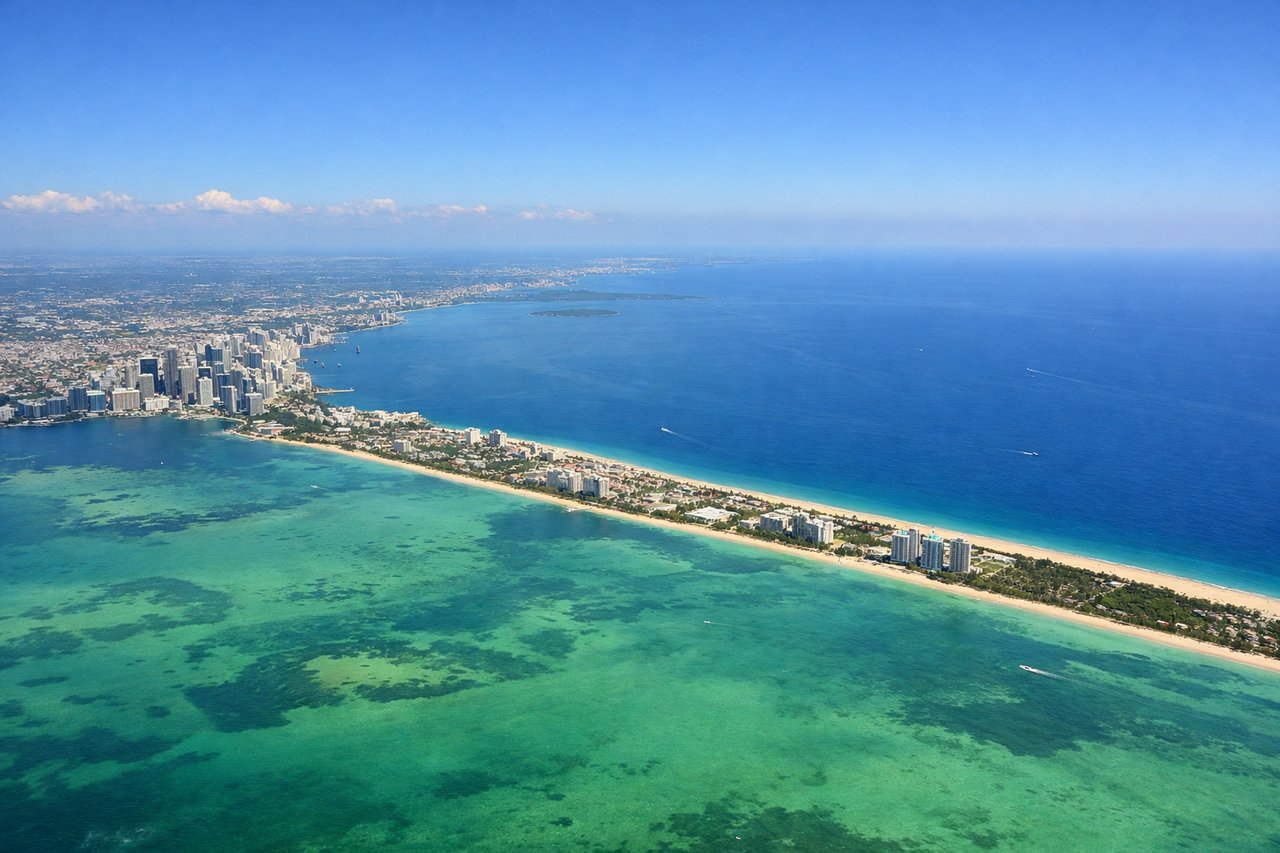
Takeoff from MIA
RIGHTRight-side seats offer views of Biscayne Bay and the Miami coastline as you climb out northeastward. You'll see the barrier islands, shallow turquoise waters, and the Miami skyline receding behind.
Landing at FPO
LEFTLeft-side seats provide the best views during approach to Grand Bahama. You'll see the island's distinctive shallow banks, coral reefs in turquoise water, and the Freeport settlement as you descend from the southwest.
Will your flight be in sunlight?
Pick a date and time in the Sun Map to watch the sun move across your whole flight.
About This Route
Which side of the plane should I sit on flying from Miami International (MIA) to Grand Bahama International (FPO)?
Sit on the Right side of the plane for the best views on flights from Miami to Freeport. Right-side seats capture the most visually distinctive scenery: Biscayne Bay's turquoise waters and Miami's coastal geography during takeoff, plus the shallow turquoise banks and coral formations around Grand Bahama during approach.
What can I see during takeoff from Miami International in Miami?
During takeoff from Miami International (MIA), sit on the Right side for the best views. Right-side seats offer views of Biscayne Bay and the Miami coastline as you climb out northeastward. You'll see the barrier islands, shallow turquoise waters, and the Miami skyline receding behind. Notable sights include: Biscayne Bay, Miami Beach and barrier islands, Downtown Miami skyline, Port of Miami container terminals.
What can I see when landing at Grand Bahama International in Freeport?
When landing at Grand Bahama International (FPO), sit on the Left side for the best views. Left-side seats provide the best views during approach to Grand Bahama. You'll see the island's distinctive shallow banks, coral reefs in turquoise water, and the Freeport settlement as you descend from the southwest. Notable sights include: Grand Bahama Island, Little Bahama Bank (shallow turquoise waters), Freeport settlement, coral reef formations.
How long is the flight from Miami to Freeport?
The flight from Miami International (MIA) to Grand Bahama International (FPO) takes about 45 minutes. The shortest flight path between them is 112 miles (180 km); winds and air traffic control usually add a few percent.
What does the Miami to Freeport flight path pass over?
The flight crosses the Northwest Providence Channel, a deep-water passage between Miami and the Bahamas. At cruise altitude, you'll see the transition from Florida's coastal waters to the Bahama Banks' distinctive turquoise shallows, with occasional small cays and islands dotting the route.