Right seats win for the takeoff experience over Biscayne Bay and the Atlantic, which is more visually dramatic than the landing approach. However, both sides offer distinct scenic value at different phases of the flight.
Flown MIA to OKC? Did we get it right?
Flight Path
Miami to Oklahoma City is 1,222 miles (1,966 km), a flight of about 3 hours 15 minutes.
The flight path crosses the Gulf of Mexico coastal plains, the Mississippi River valley near Memphis, the Arkansas River valley, and the Ouachita Mountains. Notable geographic features include the Mississippi River itself (visible around the 1h 45m mark), the transition from humid subtropical landscape to drier Great Plains terrain, and the gradual elevation increase as the aircraft approaches Oklahoma. The terrain shifts from swampy lowlands to rolling hills to prairie grasslands.
Great circle distance and headings ›

Phase by phase
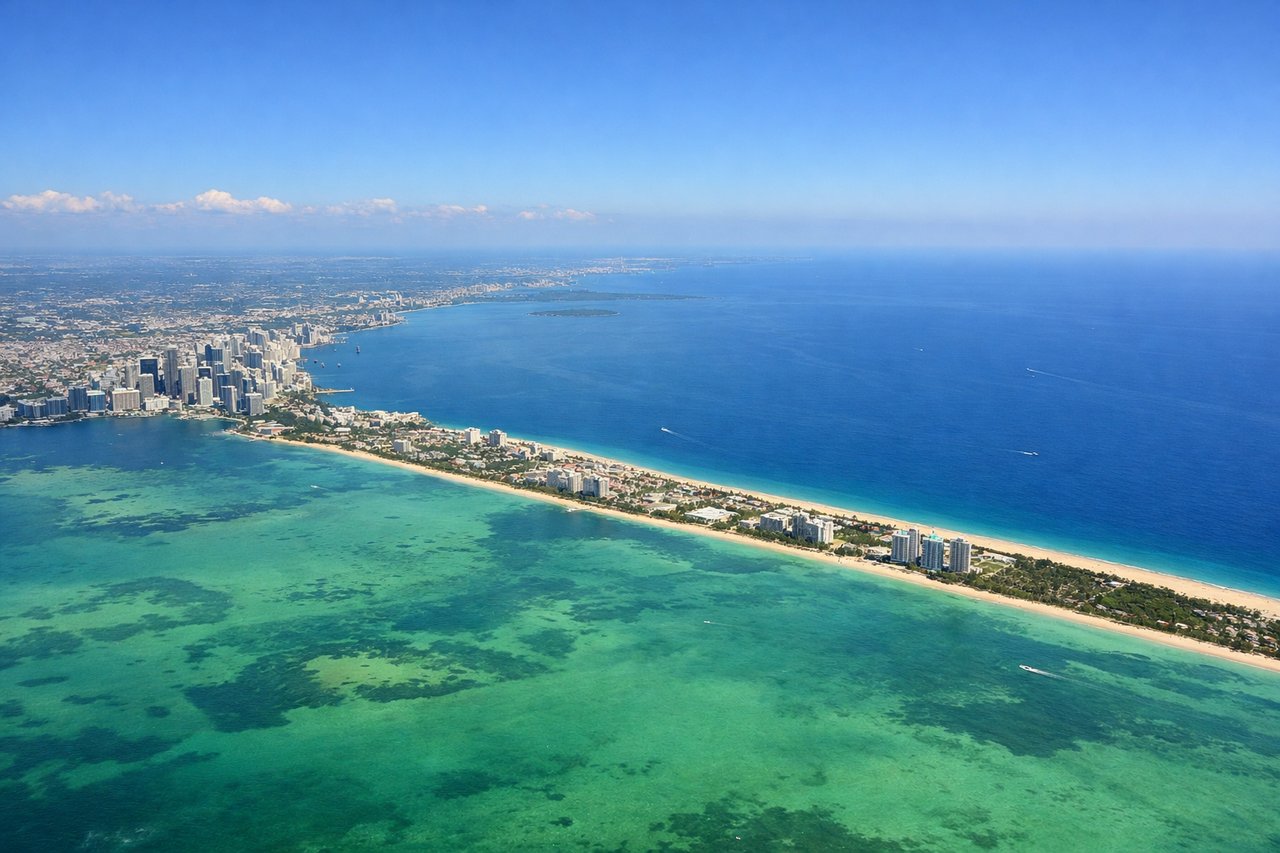
Takeoff from MIA
RIGHTRight-side seats offer views of Biscayne Bay and the Atlantic coastline as the aircraft climbs out over water. You'll see the barrier islands and reef structures that define Miami's eastern edge before the plane turns northwest toward Oklahoma.
Landing at OKC
LEFTLeft-side seats provide views of the Red River valley and the Canadian River as the aircraft descends into Oklahoma City. These waterways are visually distinctive and frame the approach to Will Rogers World Airport from the north.
Will your flight be in sunlight?
Pick a date and time in the Sun Map to watch the sun move across your whole flight.
About This Route
Which side of the plane should I sit on flying from Miami International (MIA) to Will Rogers World (OKC)?
Sit on the Right side of the plane for the best views on flights from Miami to Oklahoma City. Right seats win for the takeoff experience over Biscayne Bay and the Atlantic, which is more visually dramatic than the landing approach. However, both sides offer distinct scenic value at different phases of the flight.
What can I see during takeoff from Miami International in Miami?
During takeoff from Miami International (MIA), sit on the Right side for the best views. Right-side seats offer views of Biscayne Bay and the Atlantic coastline as the aircraft climbs out over water. You'll see the barrier islands and reef structures that define Miami's eastern edge before the plane turns northwest toward Oklahoma. Notable sights include: Biscayne Bay, Miami Beach and barrier islands, Atlantic Ocean, Port of Miami container terminals.
What can I see when landing at Will Rogers World in Oklahoma City?
When landing at Will Rogers World (OKC), sit on the Left side for the best views. Left-side seats provide views of the Red River valley and the Canadian River as the aircraft descends into Oklahoma City. These waterways are visually distinctive and frame the approach to Will Rogers World Airport from the north. Notable sights include: Canadian River, Red River valley, Oklahoma City urban area, Fort Washita plateau region.
How long is the flight from Miami to Oklahoma City?
The flight from Miami International (MIA) to Will Rogers World (OKC) takes about 3 hours 15 minutes. The shortest flight path between them is 1,222 miles (1,966 km); winds and air traffic control usually add a few percent.
What does the Miami to Oklahoma City flight path pass over?
The flight path crosses the Gulf of Mexico coastal plains, the Mississippi River valley near Memphis, the Arkansas River valley, and the Ouachita Mountains. Notable geographic features include the Mississippi River itself (visible around the 1h 45m mark), the transition from humid subtropical landscape to drier Great Plains terrain, and the gradual elevation increase as the aircraft approaches Oklahoma. The terrain shifts from swampy lowlands to rolling hills to prairie grasslands.