The right side wins overall. The Miami departure delivers the most dramatic scenery — Biscayne Bay and the Atlantic coastline are spectacular on climb-out. Over the Atlantic the views are similar on both sides, but the right side also picks up the Azores archipelago if routing passes nearby. At Orly the left side is better for landing, but the Miami departure spectacle tips the balance to the right for the full journey.
Flight Path
The route tracks northeast over the Bahamas and then out over the open North Atlantic, typically passing north of Bermuda. The Azores islands (Flores, Faial, Pico with its prominent volcanic cone) may be visible to the right depending on the exact routing. The flight then crosses the Bay of Biscay and enters France over the Loire Valley or Brittany before descending into the Paris basin.
Great circle distance and headings ›
.jpg?width=600)
Phase by phase
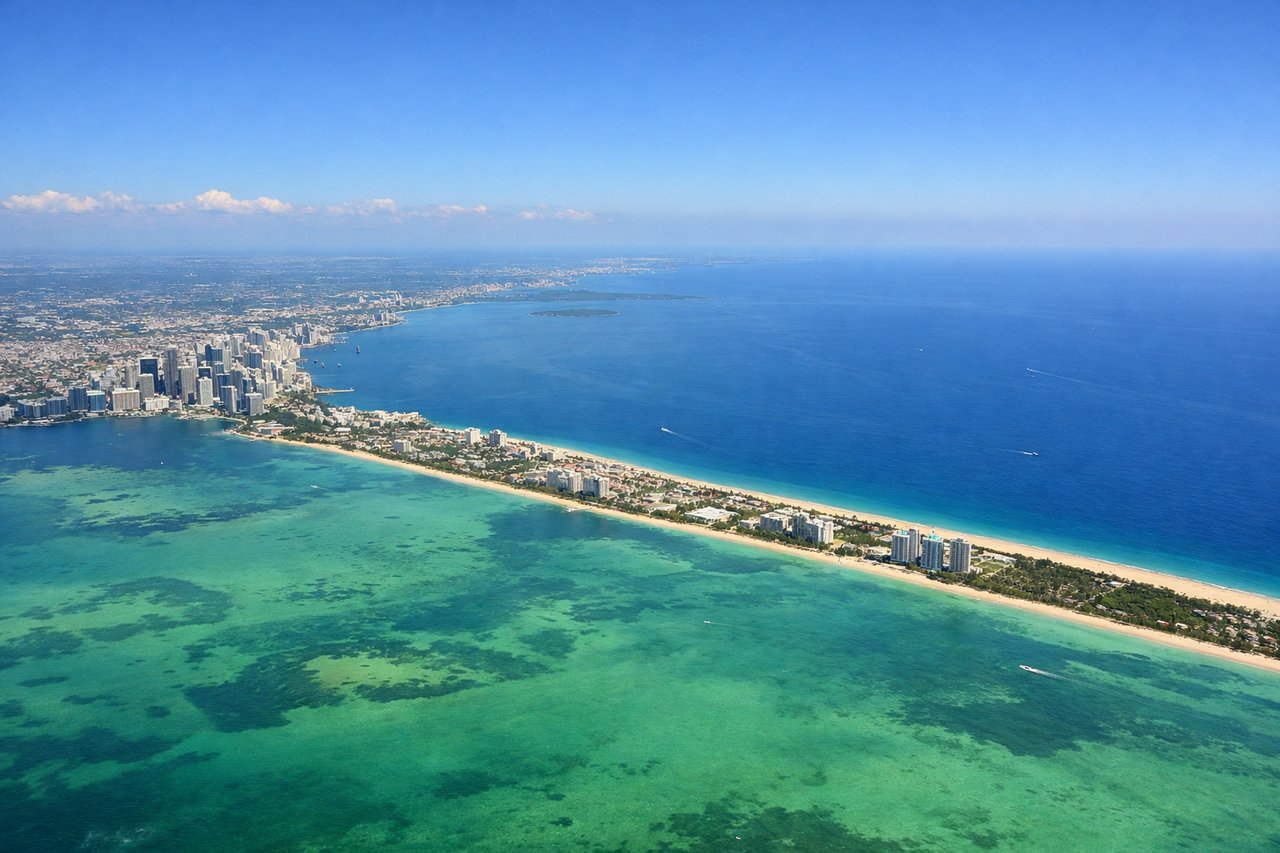
Takeoff from MIA
RIGHTMIA typically departs eastward on runway 09 or northeast on 12, putting the right side over Biscayne Bay, Miami Beach, and the Atlantic. You get a clear view of the barrier islands, the Port of Miami, and downtown Miami's skyline as the aircraft banks northeast toward the ocean.
Landing at ORY
LEFTOrly typically lands from the west on runway 26 or from the east on runway 08. On the common westward approach over the Paris basin, the left side faces north and gives a panoramic view of central Paris — the Seine, the Eiffel Tower, Notre-Dame island, and the La Défense towers are all visible to the north as you descend over the southern suburbs.
Landmarks on this routeAll landmarks →
Will your flight be in sunlight?
See exactly which side of the plane gets sun and shade at your departure time.
About This Route
Which side of the plane should I sit on flying from Miami International (MIA) to Orly (ORY)?
Sit on the Right side of the plane for the best views on flights from Miami to Paris. The right side wins overall. The Miami departure delivers the most dramatic scenery — Biscayne Bay and the Atlantic coastline are spectacular on climb-out. Over the Atlantic the views are similar on both sides, but the right side also picks up the Azores archipelago if routing passes nearby. At Orly the left side is better for landing, but the Miami departure spectacle tips the balance to the right for the full journey.
What can I see during takeoff from Miami International in Miami?
During takeoff from Miami International (MIA), sit on the Right side for the best views. MIA typically departs eastward on runway 09 or northeast on 12, putting the right side over Biscayne Bay, Miami Beach, and the Atlantic. You get a clear view of the barrier islands, the Port of Miami, and downtown Miami's skyline as the aircraft banks northeast toward the ocean. Notable sights include: Biscayne Bay, Miami Beach barrier island, Port of Miami, downtown Miami skyline.
What can I see when landing at Orly in Paris?
When landing at Orly (ORY), sit on the Left side for the best views. Orly typically lands from the west on runway 26 or from the east on runway 08. On the common westward approach over the Paris basin, the left side faces north and gives a panoramic view of central Paris — the Seine, the Eiffel Tower, Notre-Dame island, and the La Défense towers are all visible to the north as you descend over the southern suburbs. Notable sights include: Eiffel Tower, Seine River bends, La Défense towers, Notre-Dame island.
How long is the flight from Miami to Paris?
The flight from Miami International (MIA) to Orly (ORY) takes Approximately 9 to 10 hours.
What does the Miami to Paris flight path pass over?
The route tracks northeast over the Bahamas and then out over the open North Atlantic, typically passing north of Bermuda. The Azores islands (Flores, Faial, Pico with its prominent volcanic cone) may be visible to the right depending on the exact routing. The flight then crosses the Bay of Biscay and enters France over the Loire Valley or Brittany before descending into the Paris basin.