The right side provides the only meaningful scenic value on this short flight, with coastal Florida views at takeoff and the Delaware River/Philadelphia skyline on approach, while the left side mostly overlooks flat, featureless inland terrain.
Flight Path
Flat coastal plains of Georgia and the Carolinas, with the Atlantic coastline occasionally visible to the east during cruise
Great circle distance and headings ›Phase by phase
Takeoff from MIA
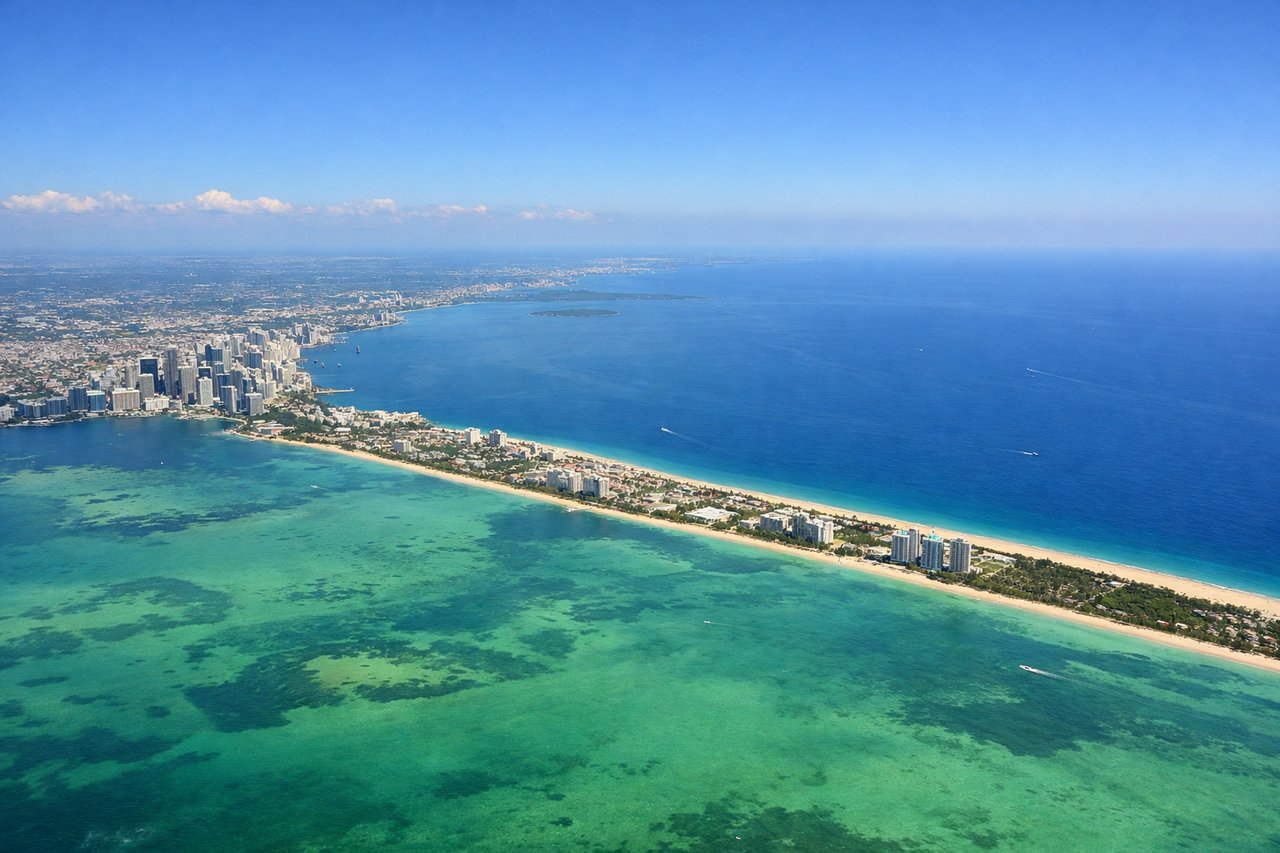
RIGHTDeparting MIA to the north, the right side offers a good look at Biscayne Bay, the barrier islands, and Miami Beach's hotel skyline before the aircraft turns inland over Florida's flat interior.

Landing at PHL
RIGHTOn approach into PHL from the south, the right side typically overlooks the wide Delaware River and Delaware Bay wetlands before the final turn toward the runway, with glimpses of Camden and Philadelphia's skyline along the water.
Landmarks on this routeAll landmarks →
Will your flight be in sunlight?
See exactly which side of the plane gets sun and shade at your departure time.
About This Route
Which side of the plane should I sit on flying from Miami International (MIA) to Philadelphia International (PHL)?
Sit on the Right side of the plane for the best views on flights from Miami to Philadelphia. The right side provides the only meaningful scenic value on this short flight, with coastal Florida views at takeoff and the Delaware River/Philadelphia skyline on approach, while the left side mostly overlooks flat, featureless inland terrain.
What can I see during takeoff from Miami International in Miami?
During takeoff from Miami International (MIA), sit on the Right side for the best views. Departing MIA to the north, the right side offers a good look at Biscayne Bay, the barrier islands, and Miami Beach's hotel skyline before the aircraft turns inland over Florida's flat interior. Notable sights include: Biscayne Bay, Miami Beach, Virginia Key, Atlantic barrier islands.
What can I see when landing at Philadelphia International in Philadelphia?
When landing at Philadelphia International (PHL), sit on the Right side for the best views. On approach into PHL from the south, the right side typically overlooks the wide Delaware River and Delaware Bay wetlands before the final turn toward the runway, with glimpses of Camden and Philadelphia's skyline along the water. Notable sights include: Delaware Bay, Delaware River, Camden waterfront, Philadelphia skyline.
How long is the flight from Miami to Philadelphia?
The flight from Miami International (MIA) to Philadelphia International (PHL) takes 2h 25m.
What does the Miami to Philadelphia flight path pass over?
Flat coastal plains of Georgia and the Carolinas, with the Atlantic coastline occasionally visible to the east during cruise