Right-side seats win overall because the takeoff views of Biscayne Bay and the Atlantic coastline are more visually distinctive than the landing approach. The turquoise waters and barrier islands create stronger visual contrast than the forested Piedmont terrain on descent.
Flight Path
The flight path crosses over central Florida's interior (mostly flat terrain with scattered lakes and forest), then transitions into Georgia's Piedmont region. Notable features include the Savannah River valley on the Georgia-South Carolina border, and the transition from coastal plain to Piedmont topography around the South Carolina-North Carolina border. The Appalachian foothills become visible on the western horizon as you approach North Carolina.
Great circle distance and headings ›Phase by phase
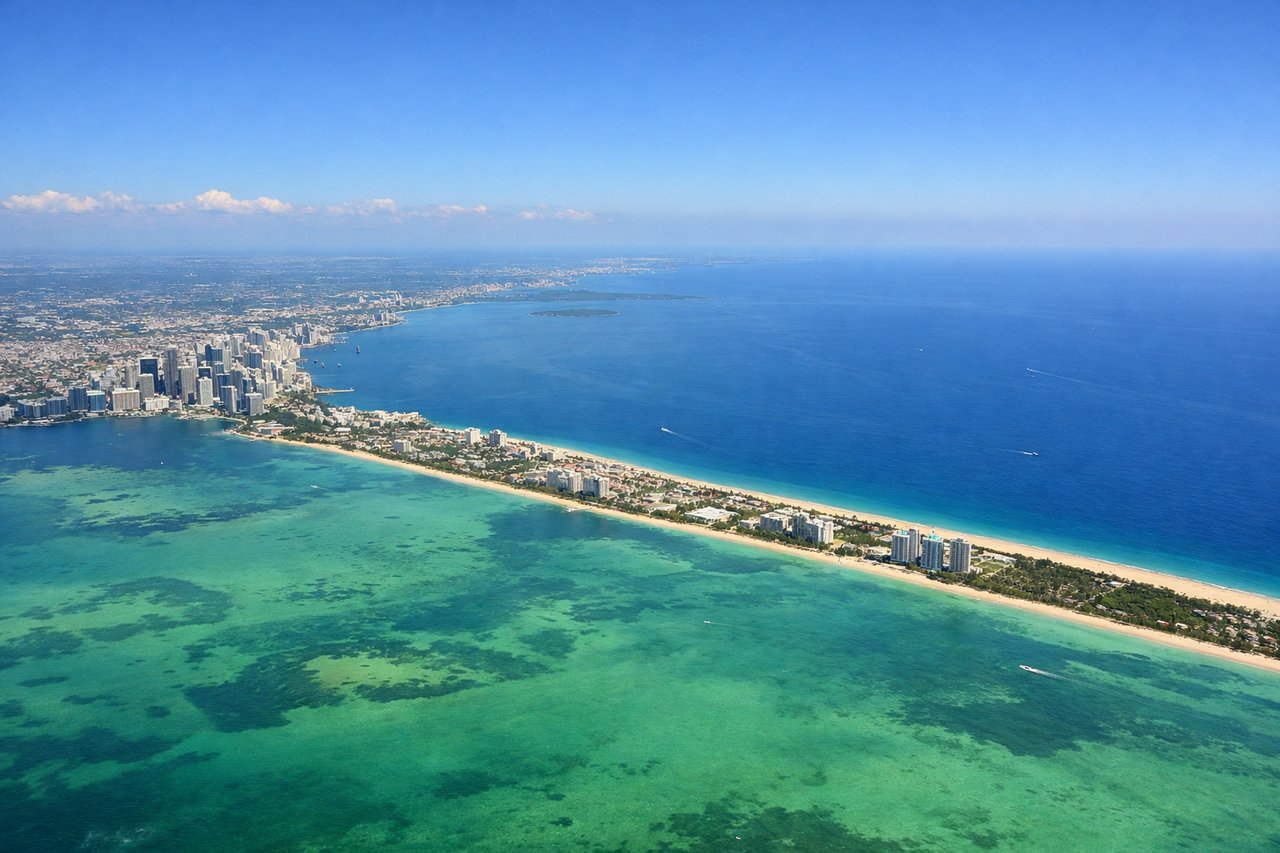
Takeoff from MIA
RIGHTRight-side seats offer views of Biscayne Bay and the Atlantic coastline as the aircraft climbs northward. You'll see the barrier islands and shallow turquoise waters that define Miami's geography.

Landing at RDU
LEFTLeft-side seats provide views of the Piedmont terrain, including the Durham-Chapel Hill urban area and surrounding forested landscape as you descend into RDU. The approach from the south gives good visibility of the regional topography.
Will your flight be in sunlight?
See exactly which side of the plane gets sun and shade at your departure time.
About This Route
Which side of the plane should I sit on flying from Miami International (MIA) to Raleigh Durham International (RDU)?
Sit on the Right side of the plane for the best views on flights from Miami to Raleigh-Durham. Right-side seats win overall because the takeoff views of Biscayne Bay and the Atlantic coastline are more visually distinctive than the landing approach. The turquoise waters and barrier islands create stronger visual contrast than the forested Piedmont terrain on descent.
What can I see during takeoff from Miami International in Miami?
During takeoff from Miami International (MIA), sit on the Right side for the best views. Right-side seats offer views of Biscayne Bay and the Atlantic coastline as the aircraft climbs northward. You'll see the barrier islands and shallow turquoise waters that define Miami's geography. Notable sights include: Biscayne Bay, Miami Beach barrier islands, Atlantic Ocean, Port of Miami container terminals.
What can I see when landing at Raleigh Durham International in Raleigh-Durham?
When landing at Raleigh Durham International (RDU), sit on the Left side for the best views. Left-side seats provide views of the Piedmont terrain, including the Durham-Chapel Hill urban area and surrounding forested landscape as you descend into RDU. The approach from the south gives good visibility of the regional topography. Notable sights include: Durham-Chapel Hill metropolitan area, Neuse River valley, Piedmont forest canopy, Research Triangle Park.
How long is the flight from Miami to Raleigh-Durham?
The flight from Miami International (MIA) to Raleigh Durham International (RDU) takes Approximately 2 hours 45 minutes to 3 hours.
What does the Miami to Raleigh-Durham flight path pass over?
The flight path crosses over central Florida's interior (mostly flat terrain with scattered lakes and forest), then transitions into Georgia's Piedmont region. Notable features include the Savannah River valley on the Georgia-South Carolina border, and the transition from coastal plain to Piedmont topography around the South Carolina-North Carolina border. The Appalachian foothills become visible on the western horizon as you approach North Carolina.