While takeoff offers brief Biscayne Bay scenery on the right, the landing approach on the left provides more sustained and dramatic views of the Cordillera Septentrional mountains and Dominican coastline, making it the superior choice for the overall flight.
Flown MIA to STI? Did we get it right?
Flight Path
Miami to Santiago is 759 miles (1,221 km), a flight of about 2 hours 10 minutes.
The flight path crosses the Windward Passage between Cuba and Hispaniola. At cruise altitude, you may glimpse the northern coast of Cuba (Oriente region) to the left and the Bahama Banks to the right, though these are distant. The majority of the flight is over open water with no significant landmarks visible at cruise altitude.
Great circle distance and headings ›Phase by phase
Takeoff from MIA
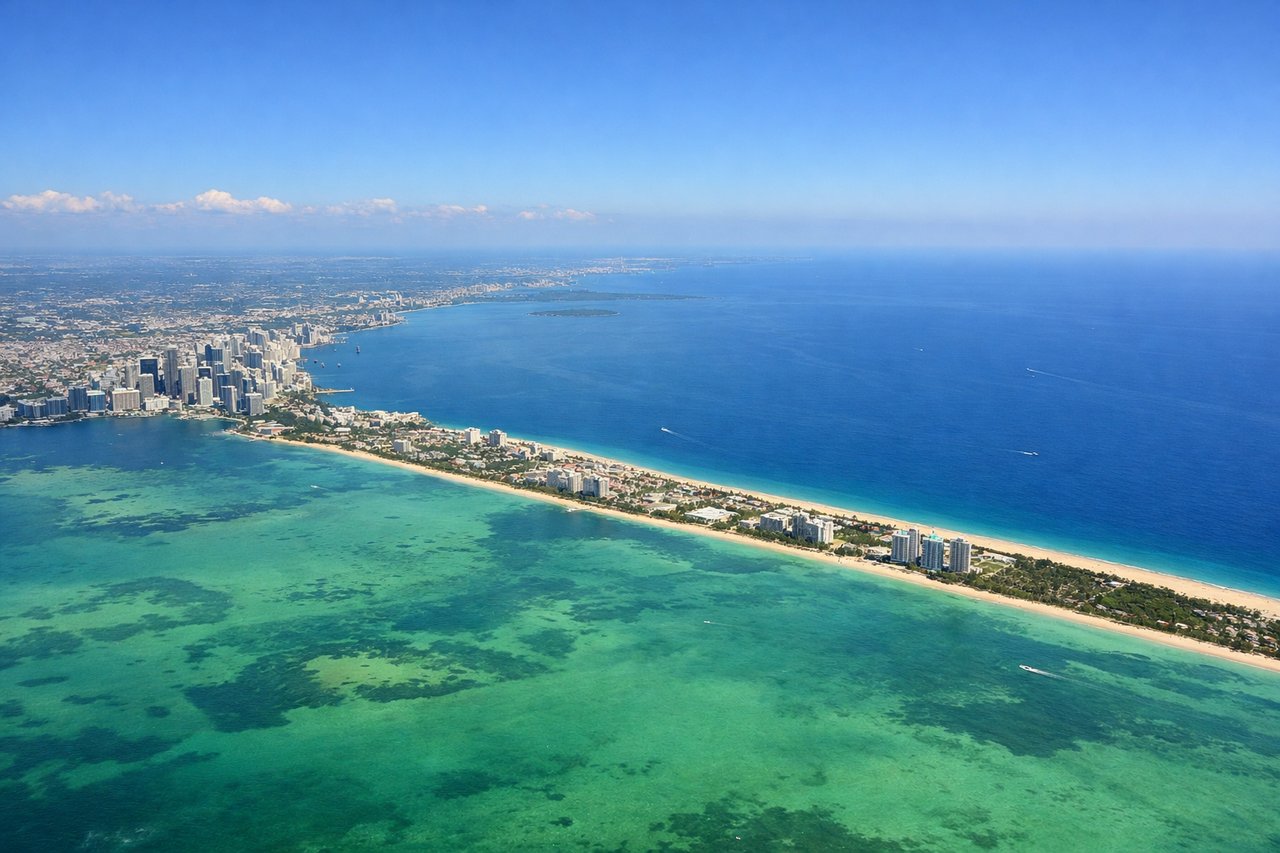
RIGHTRight-side seats capture the departure over Biscayne Bay and the Miami coastline as the aircraft climbs westward. You'll see the bay's shallow turquoise waters, barrier islands, and the urban sprawl of Miami and Miami Beach receding beneath you.
Landing at STI
LEFTLeft-side seats offer the best views during descent into Santiago. As the aircraft approaches from the northeast over the Atlantic, you'll see the Dominican coastline, the Cordillera Septentrional mountain range, and the Cibao Valley where Santiago sits.
Will your flight be in sunlight?
Pick a date and time in the Sun Map to watch the sun move across your whole flight.
About This Route
Which side of the plane should I sit on flying from Miami International (MIA) to Cibao International (STI)?
Sit on the Left side of the plane for the best views on flights from Miami to Santiago. While takeoff offers brief Biscayne Bay scenery on the right, the landing approach on the left provides more sustained and dramatic views of the Cordillera Septentrional mountains and Dominican coastline, making it the superior choice for the overall flight.
What can I see during takeoff from Miami International in Miami?
During takeoff from Miami International (MIA), sit on the Right side for the best views. Right-side seats capture the departure over Biscayne Bay and the Miami coastline as the aircraft climbs westward. You'll see the bay's shallow turquoise waters, barrier islands, and the urban sprawl of Miami and Miami Beach receding beneath you. Notable sights include: Biscayne Bay, Miami Beach barrier islands, Port of Miami, Atlantic Ocean horizon.
What can I see when landing at Cibao International in Santiago?
When landing at Cibao International (STI), sit on the Left side for the best views. Left-side seats offer the best views during descent into Santiago. As the aircraft approaches from the northeast over the Atlantic, you'll see the Dominican coastline, the Cordillera Septentrional mountain range, and the Cibao Valley where Santiago sits. Notable sights include: Cordillera Septentrional mountains, Dominican coastline, Cibao Valley, Atlantic Ocean.
How long is the flight from Miami to Santiago?
The flight from Miami International (MIA) to Cibao International (STI) takes about 2 hours 10 minutes. The shortest flight path between them is 759 miles (1,221 km); winds and air traffic control usually add a few percent.
What does the Miami to Santiago flight path pass over?
The flight path crosses the Windward Passage between Cuba and Hispaniola. At cruise altitude, you may glimpse the northern coast of Cuba (Oriente region) to the left and the Bahama Banks to the right, though these are distant. The majority of the flight is over open water with no significant landmarks visible at cruise altitude.