Miami to St. Criox Island is 1,139 miles (1,833 km), a flight of about 2 hours 55 minutes.
The right side wins overall because it captures the most visually varied stretch of the flight: Miami's coastline at takeoff and, during cruise, the turquoise banks and cays of the Bahamas and Turks and Caicos, which the routing passes directly over or alongside. The left side's advantage is limited to the final few minutes of the STX approach, not enough to outweigh the richer scenery on the right across takeoff and cruise.
Flight Path
The flight's midpoint falls near the Turks and Caicos Islands and the Caicos Bank, where shallow turquoise water contrasts sharply with the deep blue Atlantic; the route also threads near Mayaguana and the southeastern Bahamian cays before continuing over open water toward the Virgin Islands.
Great circle distance and headings ›

Phase by phase
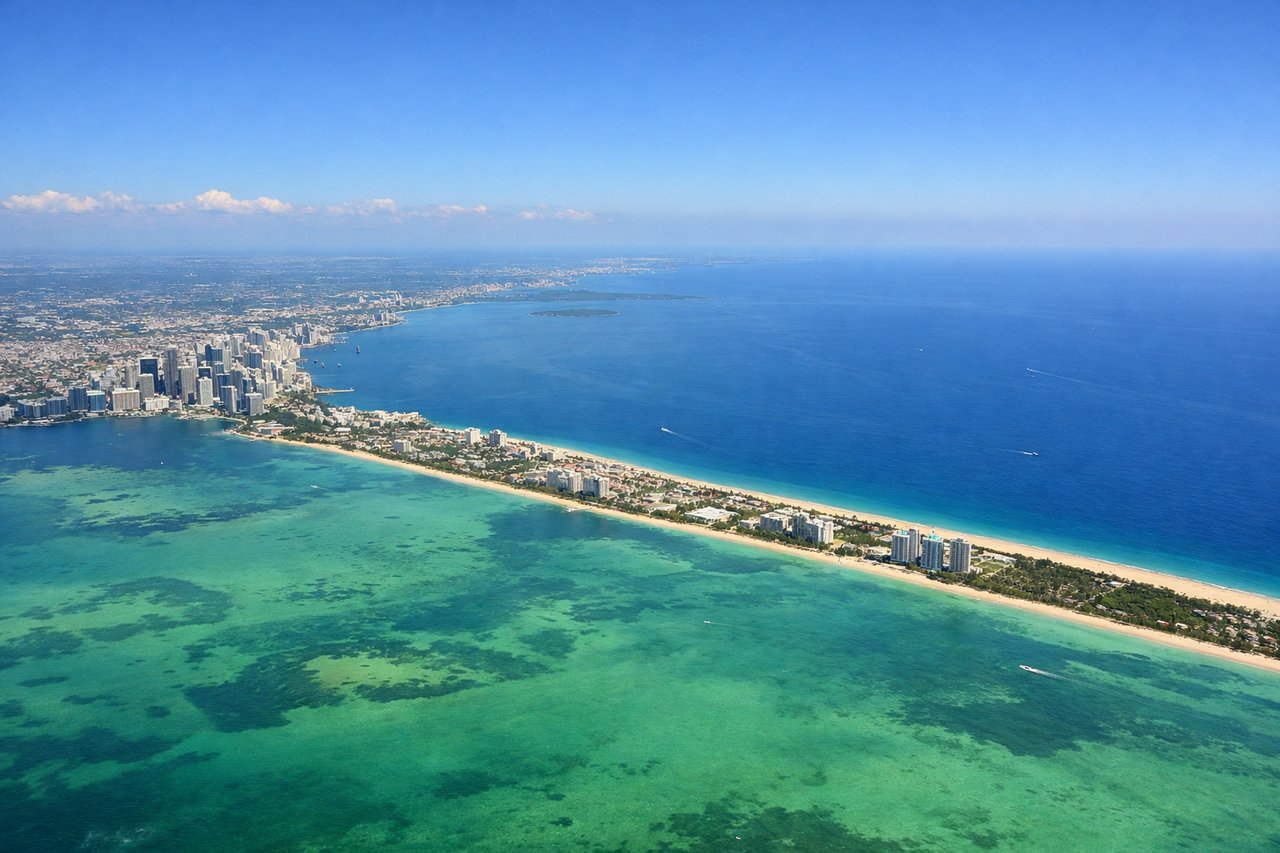
Takeoff from MIA
RIGHTDepartures from MIA toward the Caribbean typically climb out on runway 09 then bank south/southeast, putting Miami Beach's barrier island, Biscayne Bay, and Key Biscayne right outside the right-side windows as the city recedes. The left side mostly shows flat suburban Miami-Dade and Everglades edge, which is far less distinctive.
Landing at STX
LEFTWith easterly trade winds favoring Runway 10, arrivals approach STX from the west and track along the island's south coast heading east. That puts St. Croix's hilly, forested north side and the coastline toward Christiansted on the left, while the right side faces only open Caribbean Sea.
Landmarks on this routeAll landmarks →
Will your flight be in sunlight?
Pick a date and time in the Sun Map to watch the sun move across your whole flight.
About This Route
Which side of the plane should I sit on flying from Miami International (MIA) to Henry E Rohlsen (STX)?
Sit on the Right side of the plane for the best views on flights from Miami to St. Criox Island. The right side wins overall because it captures the most visually varied stretch of the flight: Miami's coastline at takeoff and, during cruise, the turquoise banks and cays of the Bahamas and Turks and Caicos, which the routing passes directly over or alongside. The left side's advantage is limited to the final few minutes of the STX approach, not enough to outweigh the richer scenery on the right across takeoff and cruise.
What can I see during takeoff from Miami International in Miami?
During takeoff from Miami International (MIA), sit on the Right side for the best views. Departures from MIA toward the Caribbean typically climb out on runway 09 then bank south/southeast, putting Miami Beach's barrier island, Biscayne Bay, and Key Biscayne right outside the right-side windows as the city recedes. The left side mostly shows flat suburban Miami-Dade and Everglades edge, which is far less distinctive. Notable sights include: Miami Beach coastline, Biscayne Bay, Key Biscayne, downtown Miami skyline in the distance.
What can I see when landing at Henry E Rohlsen in St. Criox Island?
When landing at Henry E Rohlsen (STX), sit on the Left side for the best views. With easterly trade winds favoring Runway 10, arrivals approach STX from the west and track along the island's south coast heading east. That puts St. Croix's hilly, forested north side and the coastline toward Christiansted on the left, while the right side faces only open Caribbean Sea. Notable sights include: St. Croix's northwestern hills and rainforest ridge, the south coast shoreline near the airport, distant Christiansted harbor, Caribbean Sea shallows.
How long is the flight from Miami to St. Criox Island?
The flight from Miami International (MIA) to Henry E Rohlsen (STX) takes about 2 hours 55 minutes. The shortest flight path between them is 1,139 miles (1,833 km); winds and air traffic control usually add a few percent.
What does the Miami to St. Criox Island flight path pass over?
The flight's midpoint falls near the Turks and Caicos Islands and the Caicos Bank, where shallow turquoise water contrasts sharply with the deep blue Atlantic; the route also threads near Mayaguana and the southeastern Bahamian cays before continuing over open water toward the Virgin Islands.