While takeoff offers brief island scenery, the landing approach over Chennai's delta and harbor provides more sustained and dramatic views. Left seats dominate the approach phase, which is longer and more visually rewarding than the brief Mauritius departure.
Flown MRU to MAA? Did we get it right?
Flight Path
Plaisance to Madras is 2,769 miles (4,456 km), a flight of about 5 hours 50 minutes.
The flight crosses the Indian Ocean at cruising altitude (typically 33,000-35,000 feet). At midpoint, you're over open ocean with no visible landmarks. The Laccadive Islands (Lakshadweep) lie south of the direct flight path and are rarely visible. The Maldives archipelago is further south. The approach to India's west coast brings the Western Ghats mountain range into view on descent, but this route approaches from the east over the Bay of Bengal, so the Ghats remain inland and not prominently visible from the window.
Great circle distance and headings ›


Phase by phase
Takeoff from MRU
RIGHTRight-side seats capture the island's dramatic eastern coastline and the lagoon system as you climb out. The aircraft departs runway 09/27 (typically 09 westbound), so right seats face north initially, showing the reef-protected waters and coastal settlements.
Landing at MAA
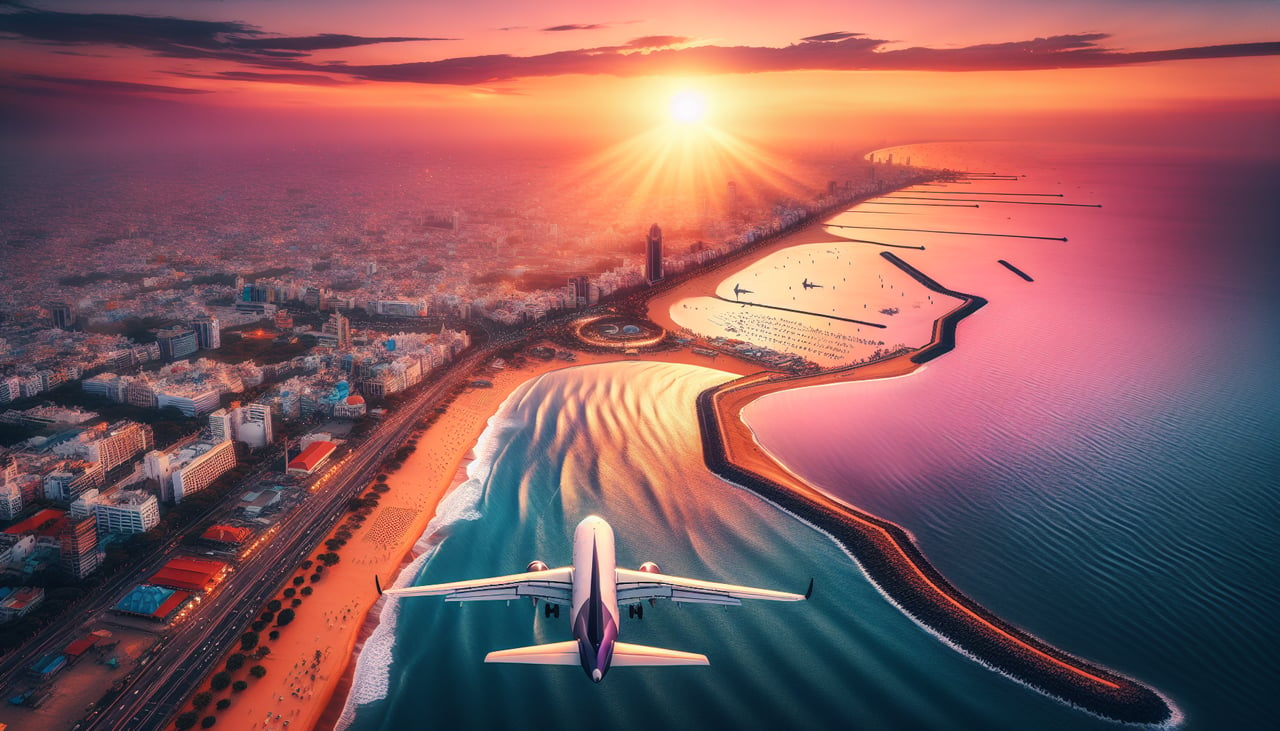
LEFTLeft-side seats provide the best views during approach to Chennai. The aircraft descends from the northeast over the Bay of Bengal, and left seats face the Coromandel Coast with the city's urban sprawl, harbor infrastructure, and the Cooum River delta clearly visible.
Will your flight be in sunlight?
Pick a date and time in the Sun Map to watch the sun move across your whole flight.
About This Route
Which side of the plane should I sit on flying from Sir Seewoosagur Ramgoolam International (MRU) to Chennai International (MAA)?
Sit on the Left side of the plane for the best views on flights from Plaisance to Madras. While takeoff offers brief island scenery, the landing approach over Chennai's delta and harbor provides more sustained and dramatic views. Left seats dominate the approach phase, which is longer and more visually rewarding than the brief Mauritius departure.
What can I see during takeoff from Sir Seewoosagur Ramgoolam International in Plaisance?
During takeoff from Sir Seewoosagur Ramgoolam International (MRU), sit on the Right side for the best views. Right-side seats capture the island's dramatic eastern coastline and the lagoon system as you climb out. The aircraft departs runway 09/27 (typically 09 westbound), so right seats face north initially, showing the reef-protected waters and coastal settlements. Notable sights include: Lagoon reef system (bright turquoise against deep blue), Black River Gorges National Park (forested highlands inland), Port Louis harbor area (urban sprawl on northwest coast), Piton du Milieu (central plateau elevation).
What can I see when landing at Chennai International in Madras?
When landing at Chennai International (MAA), sit on the Left side for the best views. Left-side seats provide the best views during approach to Chennai. The aircraft descends from the northeast over the Bay of Bengal, and left seats face the Coromandel Coast with the city's urban sprawl, harbor infrastructure, and the Cooum River delta clearly visible. Notable sights include: Cooum River delta and backwaters (branching waterways), Chennai harbor and port facilities (container cranes, ship anchorages), Coromandel Coast beaches (sandy stretches), Bay of Bengal (open water to the east).
How long is the flight from Plaisance to Madras?
The flight from Sir Seewoosagur Ramgoolam International (MRU) to Chennai International (MAA) takes about 5 hours 50 minutes. The shortest flight path between them is 2,769 miles (4,456 km); winds and air traffic control usually add a few percent.
What does the Plaisance to Madras flight path pass over?
The flight crosses the Indian Ocean at cruising altitude (typically 33,000-35,000 feet). At midpoint, you're over open ocean with no visible landmarks. The Laccadive Islands (Lakshadweep) lie south of the direct flight path and are rarely visible. The Maldives archipelago is further south. The approach to India's west coast brings the Western Ghats mountain range into view on descent, but this route approaches from the east over the Bay of Bengal, so the Ghats remain inland and not prominently visible from the window.