New Orleans to Las Vegas is 1,497 miles (2,409 km), a flight of about 3 hours 15 minutes.
The right side captures the two most memorable visual moments of the flight — Lake Pontchartrain at departure and the Las Vegas Strip with Lake Mead on arrival — while the left side offers mostly flat, featureless terrain throughout.
Flight Path
Flat plains of northern Texas near Abilene/Midland, the Permian Basin oil fields, eastern New Mexico grasslands, and the Mogollon Rim/White Mountains of Arizona before descending toward the Colorado River basin near Lake Mead
Great circle distance and headings ›
.jpg?width=600)


.jpeg?width=600)


Phase by phase

Takeoff from MSY
RIGHTDeparting MSY to the west-northwest, the right side of the aircraft faces north, giving a brief but clear view of Lake Pontchartrain and the bayous/swamps north of the airport during initial climb. The left side only shows flat marshland and agricultural fields toward the Gulf coast.
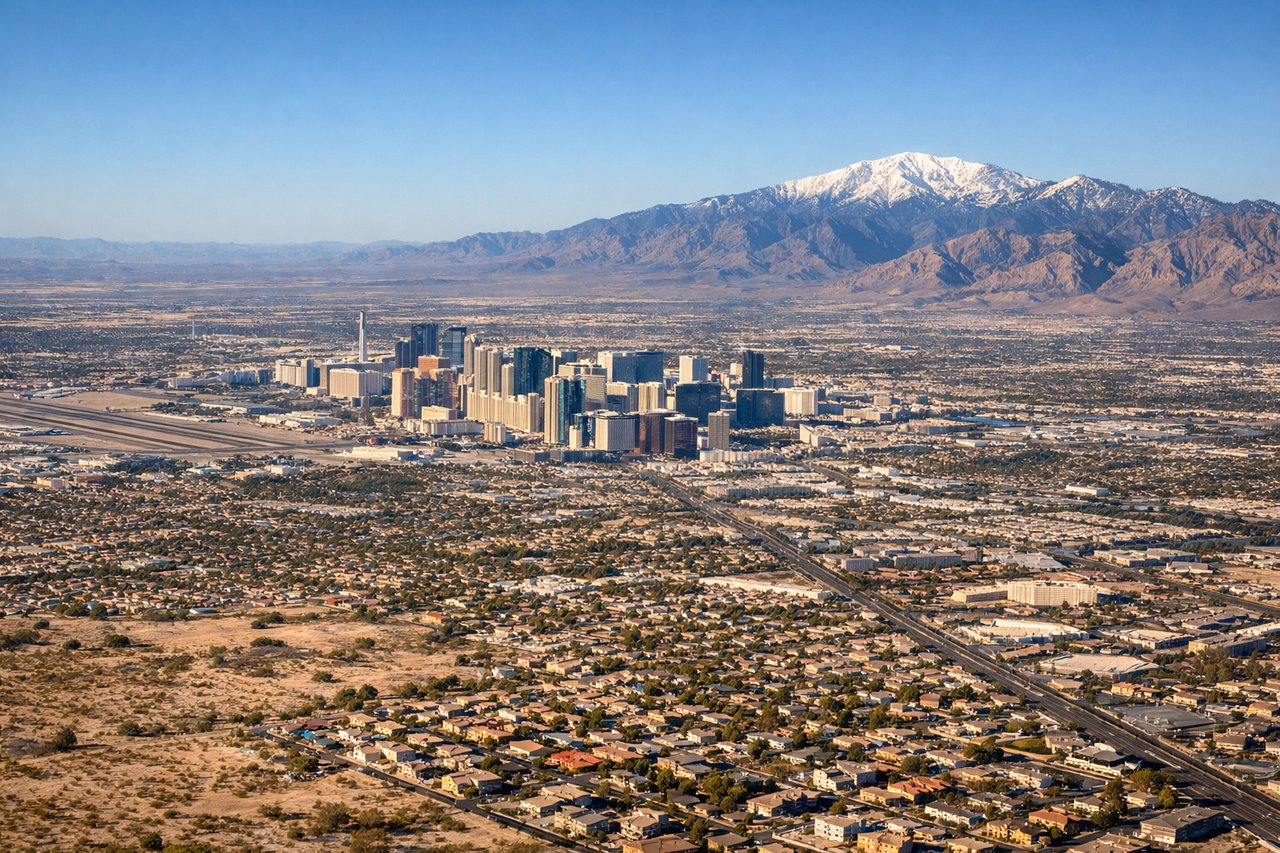
Landing at LAS
RIGHTOn the typical westbound approach into LAS over Lake Mead, the aircraft aligns with runway 26, and the Las Vegas Strip sits north of the flight path — placing it on the right side of the cabin during final approach. Passengers get a strong view of the Strip's towers and the Spring Mountains beyond, while the left side mostly sees Henderson suburbs and desert.
Landmarks on this routeAll landmarks →
Will your flight be in sunlight?
Pick a date and time in the Sun Map to watch the sun move across your whole flight.
About This Route
Which side of the plane should I sit on flying from Louis Armstrong New Orleans International (MSY) to Mc Carran International (LAS)?
Sit on the Right side of the plane for the best views on flights from New Orleans to Las Vegas. The right side captures the two most memorable visual moments of the flight — Lake Pontchartrain at departure and the Las Vegas Strip with Lake Mead on arrival — while the left side offers mostly flat, featureless terrain throughout.
What can I see during takeoff from Louis Armstrong New Orleans International in New Orleans?
During takeoff from Louis Armstrong New Orleans International (MSY), sit on the Right side for the best views. Departing MSY to the west-northwest, the right side of the aircraft faces north, giving a brief but clear view of Lake Pontchartrain and the bayous/swamps north of the airport during initial climb. The left side only shows flat marshland and agricultural fields toward the Gulf coast. Notable sights include: Lake Pontchartrain, Bonnet Carre Spillway, Louisiana bayous, Mississippi River floodplain.
What can I see when landing at Mc Carran International in Las Vegas?
When landing at Mc Carran International (LAS), sit on the Right side for the best views. On the typical westbound approach into LAS over Lake Mead, the aircraft aligns with runway 26, and the Las Vegas Strip sits north of the flight path — placing it on the right side of the cabin during final approach. Passengers get a strong view of the Strip's towers and the Spring Mountains beyond, while the left side mostly sees Henderson suburbs and desert. Notable sights include: Lake Mead, Hoover Dam, Las Vegas Strip skyline, Spring Mountains.
How long is the flight from New Orleans to Las Vegas?
The flight from Louis Armstrong New Orleans International (MSY) to Mc Carran International (LAS) takes about 3 hours 15 minutes. The shortest flight path between them is 1,497 miles (2,409 km); winds and air traffic control usually add a few percent.
What does the New Orleans to Las Vegas flight path pass over?
Flat plains of northern Texas near Abilene/Midland, the Permian Basin oil fields, eastern New Mexico grasslands, and the Mogollon Rim/White Mountains of Arizona before descending toward the Colorado River basin near Lake Mead